Commercial Roofing for Manufacturers in Mesquite, TX
A leak above a production line needs a work boundary before a crew opens the roof. We locate the reported entry, identify equipment and material below it, and plan temporary protection around the operating shift. The roof check follows the symptom uphill across seams, curbs, drains, and prior patches. A stain over a machine does not identify the membrane failure. Our inspection records the assembly and what is wet, then separates immediate water control from the permanent repair option.
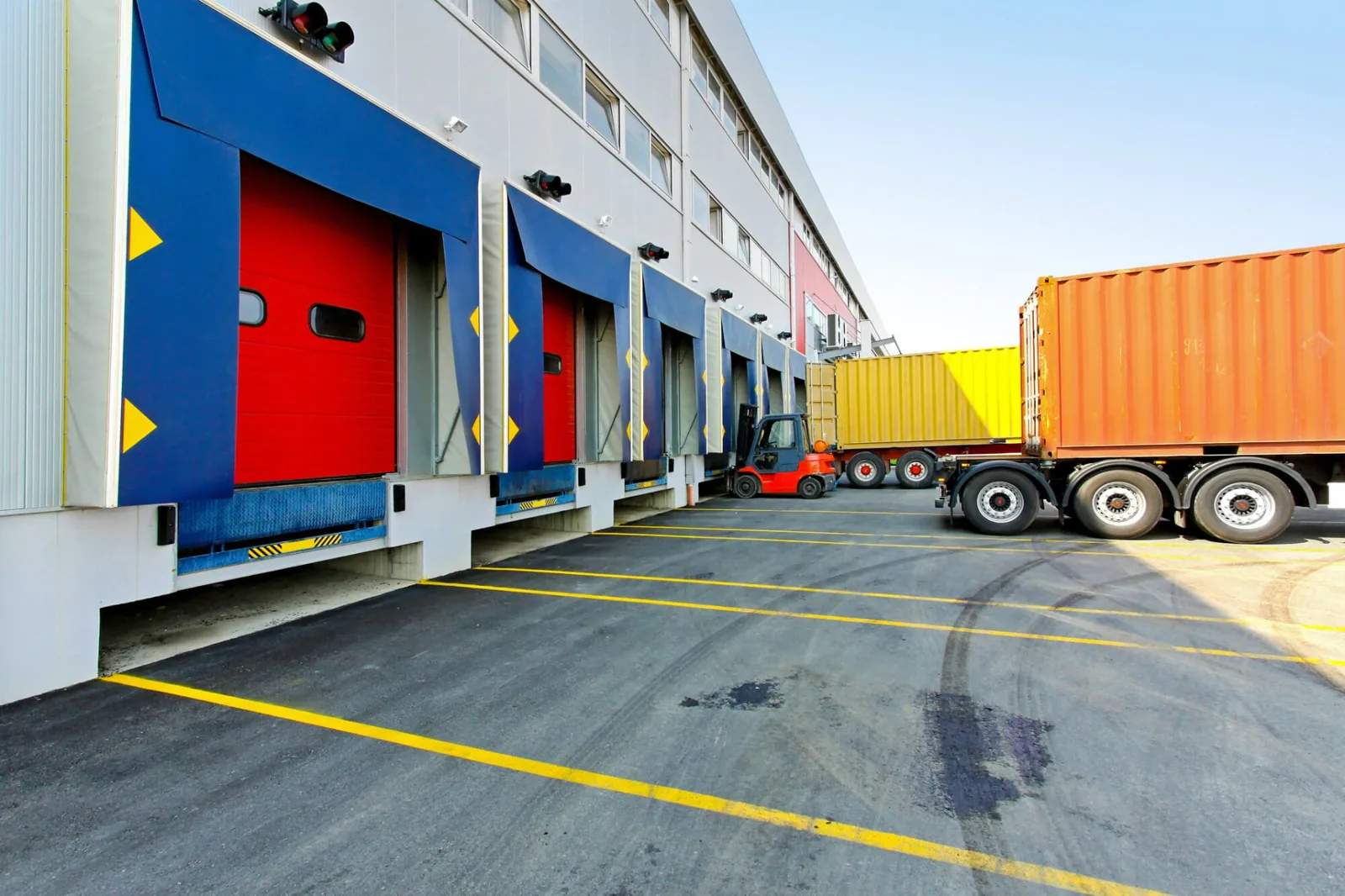
Mesquite's local industry mix includes food processing, manufacturing, distribution and logistics, chemical products, production technology and machinery, furniture, media, and retail. The variety matters at the work-planning stage: a manufacturing building's line schedule and safety controls must come from its own facility team. Manufacturing and logistics are part of Mesquite’s local business activity. The Skyline Logistics Hub is a named industrial district. We use that location to route the request, then confirm delivery, staging, and roof access with the facility contact.
How Do We Protect the Line Below the Repair?
We confirm the affected bay, overhead equipment, electrical exposure, and any production step that cannot be interrupted. The facility contact identifies safe access and who can release the work zone. We position containment or temporary cover before disturbing the membrane. If the leak is active, the first scope controls water and records what remains exposed. The permanent repair is priced after the crew checks the surrounding seam, flashing, insulation, and attachment, not from the interior symptom alone.
Skyline Logistics Hub is a named Mesquite district. For a production site there, we confirm the receiving slot and equipment-access plan with facility staff before opening the roof. Our field plan names the bay, roof section, loading route, and shift window supplied by the facility. A rapid roof response can secure an opening, while a separate permanent repair scope states the materials, finish point, and any follow-up test.
Which Roof Details Can Stop Production?
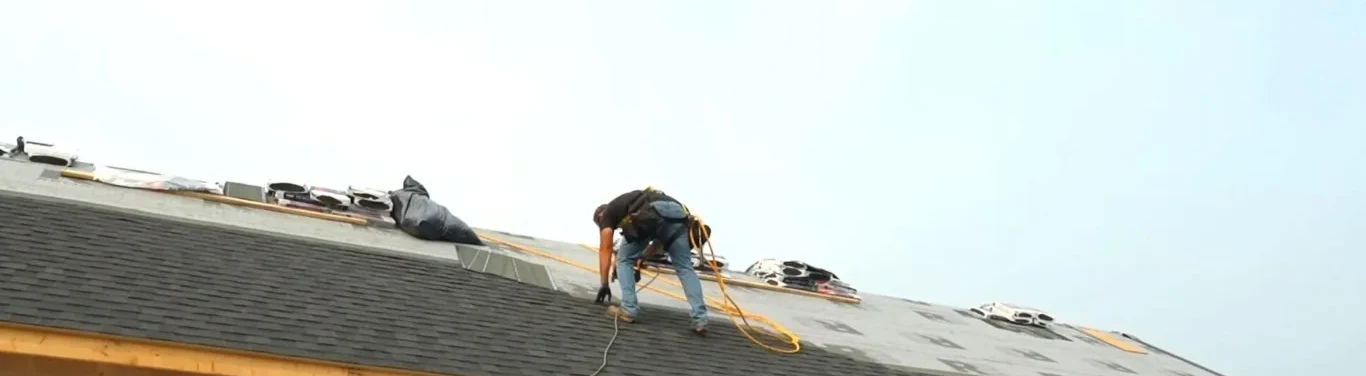
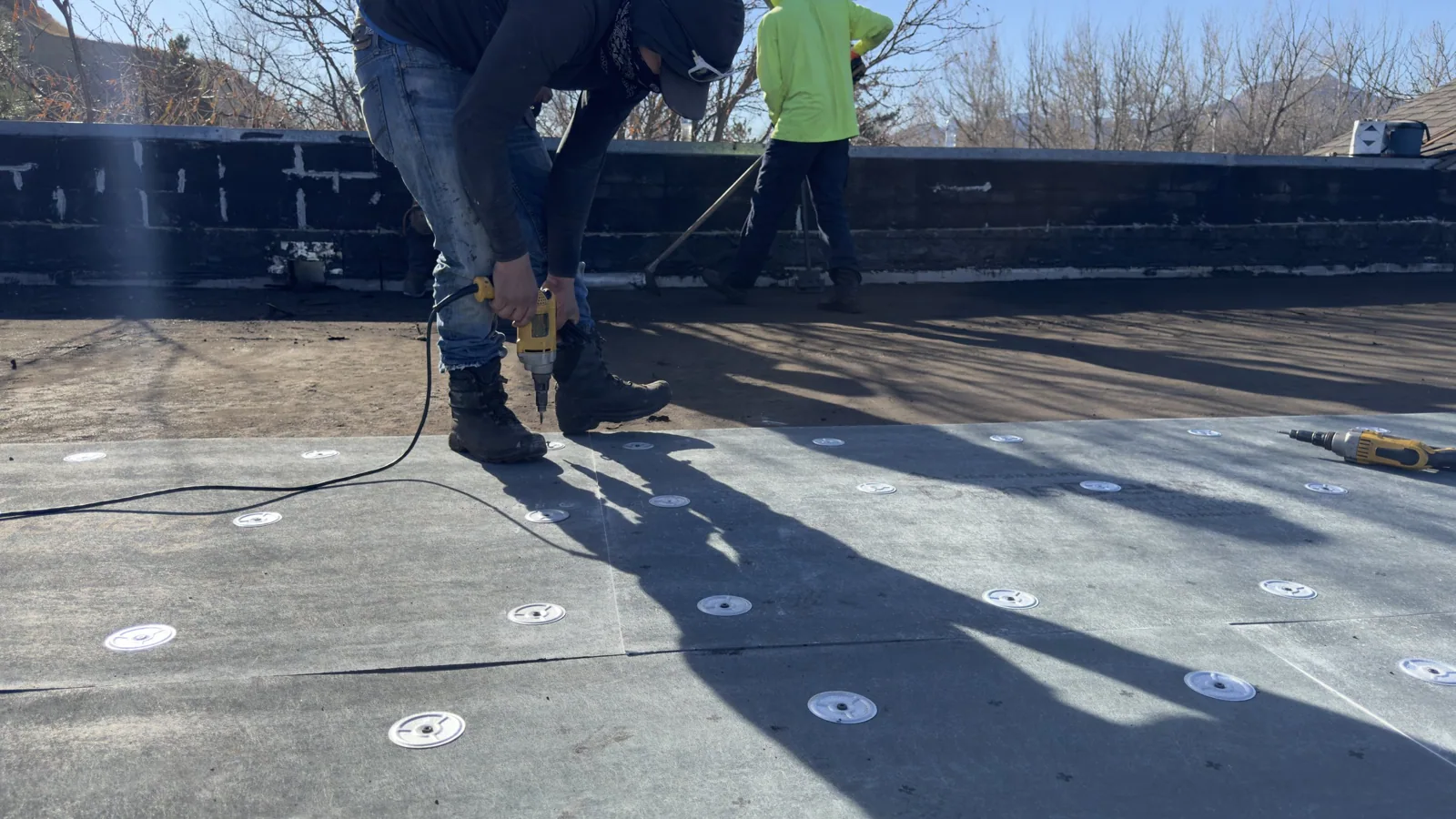
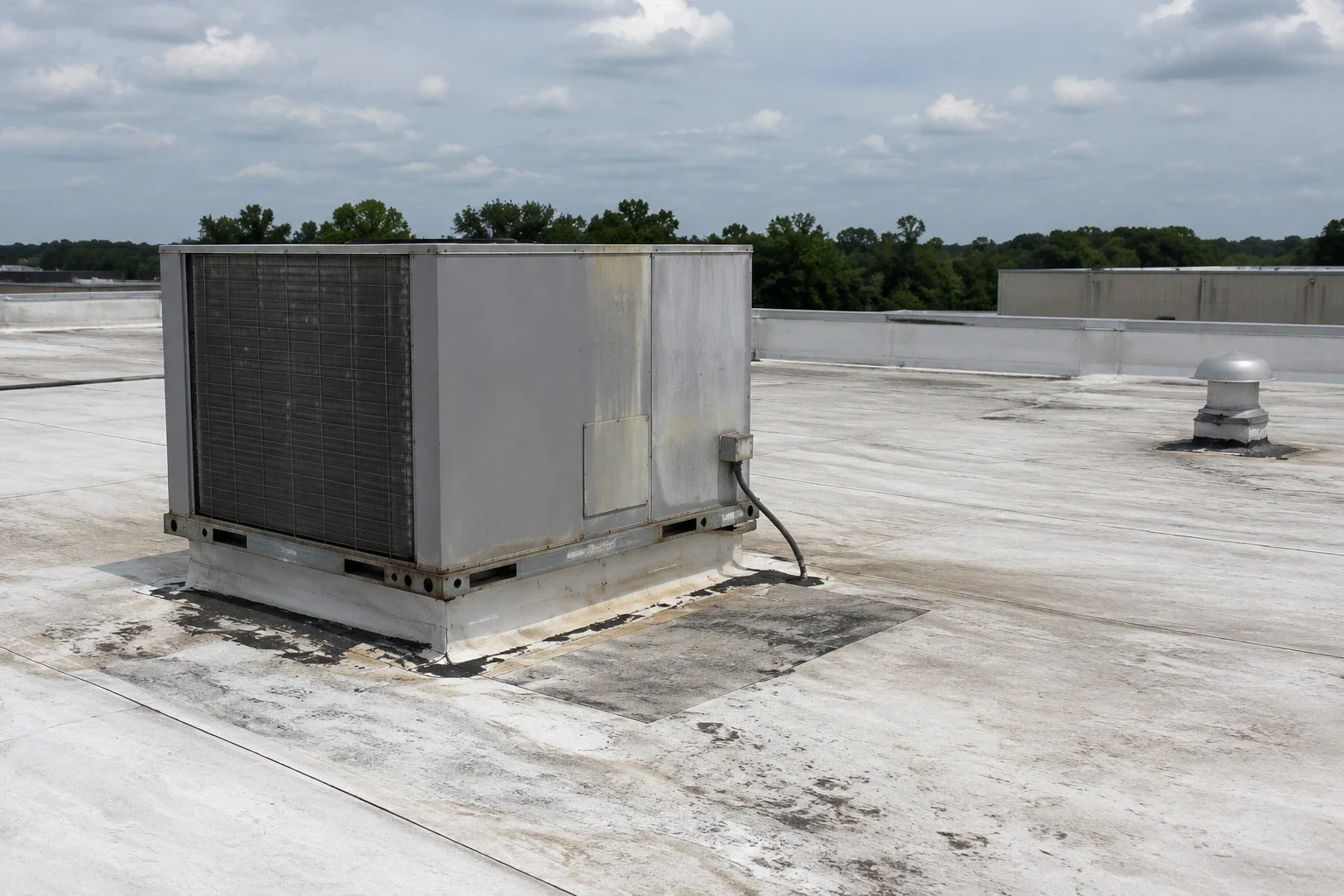
Water near a curb, conduit, exhaust fan, or process line can travel under a membrane before reaching the floor. We check flashing corners, pitch pockets, counterflashing, fasteners, and the membrane tie-in around equipment. Vibration or repeated service access may loosen a detail, but we verify that condition rather than assuming it from the equipment type. At a seam, we inspect the bond beyond the visible opening. At a drain, we follow the path into the bowl and note any obstruction or low area.
Planned IH-20 Business Park development includes distribution, cross-dock, cold-storage, and industrial uses. A production roof in that broader part of Mesquite may have different equipment and access constraints, so we use the actual roof plan and site walk. If the assembly is TPO, a TPO seam and flashing review checks weld integrity and compatibility before repair. We can also inspect a manufacturing-plant roof with the facility's process areas in the access plan. Those records define what can proceed during each shift.
How Can Work Fit Around Shifts and Deliveries?
We divide larger repairs into roof sections that can be closed within the approved window. The sequence identifies material delivery, lift placement, interior protection, noise-sensitive work, and end-of-shift dry-in. If the roof cannot stay open during a production run, the crew completes a smaller daily area and secures its edge before leaving. The facility team decides which aisle or line can be protected. We document that limit so schedule changes do not silently expand the work zone.
At Skyline Logistics Hub, the plant operations lead sets the receiving slot and identifies any live production window. We confirm both before we choose the daily roof limit. We coordinate through a named site contact, then record completed areas and any remaining work. A controlled occupied-building sequence can support a reroof when operations continue below, while a logistics roof plan addresses active dispatch as a distinct use case.
When Does a Repair Stop Being the Right Production Plan?
A bounded puncture or failed flashing can remain a local repair when surrounding membrane, attachment, and insulation are sound. Multiple open seams, recurring water entry, or wet insulation across the section may make repeated patches disruptive and expensive to manage. We test where needed, mark confirmed wet areas, and compare repair, recovery, and replacement scopes. A larger scope should state tear-off depth, substrate work, equipment protection, and daily closure. Production loss risk belongs in the sequence, not as a substitute for roof evidence.
Mesquite has adopted the 2024 International Building Code with local amendments. Project review should confirm the applicable requirements for the actual scope and permit path. We do not treat the code adoption as a finding about an existing roof. Our roof inspection documents the assembly and condition; a roof insulation review can test the substrate question when evidence points below the membrane. If the facility needs a budget alternative, we describe its limits and the conditions that would change the recommendation.
What Should the Production Team Keep?
Keep the roof plan, leak log, work permits, equipment locations, and final photos together. The closeout identifies the section repaired, material installed, exposed areas restored, and any testing that remains. If an item could not be inspected because access was restricted, we say so and identify the next safe window. That record gives maintenance and operations a common handoff when a symptom returns or a line schedule changes.
Mesquite's road network links business districts, but it does not determine access at an individual property. We confirm the gate, delivery route, staging location, and roof entry with the facility. We confirm the gate, delivery route, staging location, and roof entry with the facility. A condition report can document repeat inspections by section. For a group of facilities, owner-level roof records can organize capital decisions without treating every plant as one assembly. The next shift receives a clear view of completed protection and remaining exposure.
Commercial Roofing Questions
Can roof work proceed while production continues?
Often, if the roof condition and access permit a controlled sequence. We agree on the work zone, protection below, delivery route, and shift window with the facility contact. Each opened area is closed with temporary dry-in before crews leave. If the line or equipment cannot be protected safely, the scope needs an approved pause or a different work window.
How do you handle a leak over equipment?
We identify the affected equipment and room, then arrange containment and safe access before tracing the roof entry. The field check looks at nearby curbs, penetrations, seams, and drainage. Temporary water control is recorded separately from the permanent repair so the plant can make the immediate decision without losing the repair history.
What information helps set the first inspection route?
A roof plan, leak timeline, equipment layout, prior repair photos, and the production schedule narrow the access plan. Tell us which areas cannot be interrupted and who can approve roof entry. We verify those details on site and note anything that remains inaccessible.
When should a manufacturer consider replacement instead of patching?
Repeated failures across sections, confirmed wet insulation, or unstable attachment can justify pricing a larger scope. We inspect the assembly and compare the boundary of repairable material with the work required to restore it. If a local defect remains isolated, repair may preserve sound areas and avoid unnecessary production disruption.
What does the closeout include after a roof repair?
The record identifies the roof section, repaired detail, materials, before-and-after photos, and any unresolved test or access item. We also state what temporary protection was used and whether it remains in place. Operations can use that handoff to release the work zone and schedule the next check.
Set a Production-Aware Roof Inspection
Send the facility address, roof plan, leak location, equipment or line at risk, and the next approved access window. We will inspect the reported section, coordinate the work zone, and define the repair boundary before proposing a permanent scope.