Commercial Roof Condition Reports in Mesquite, TX
A useful roof report identifies where the crew looked, what it found, and which decision the evidence can support. We organize observations by roof section, photograph the condition, and separate confirmed damage from a suspected path. An open seam, loose edge, stained ceiling, and wet insulation do not mean the same thing. The report keeps those findings distinct, marks inaccessible areas, and names the next test or repair step instead of turning every observation into a replacement recommendation.
Mesquite facilities range from industrial and distribution uses in the Skyline Logistics Hub to planned distribution and cold-storage uses in the IH-20 Business Park area. Access, loading, and inventory protection can change how the field team records each work zone. A roof condition review in the Skyline district starts with the building plan and operator window. We tie photos to an asset record by roof section so the next work order can use the same location labels.
What Does Each Photo Need to Show?
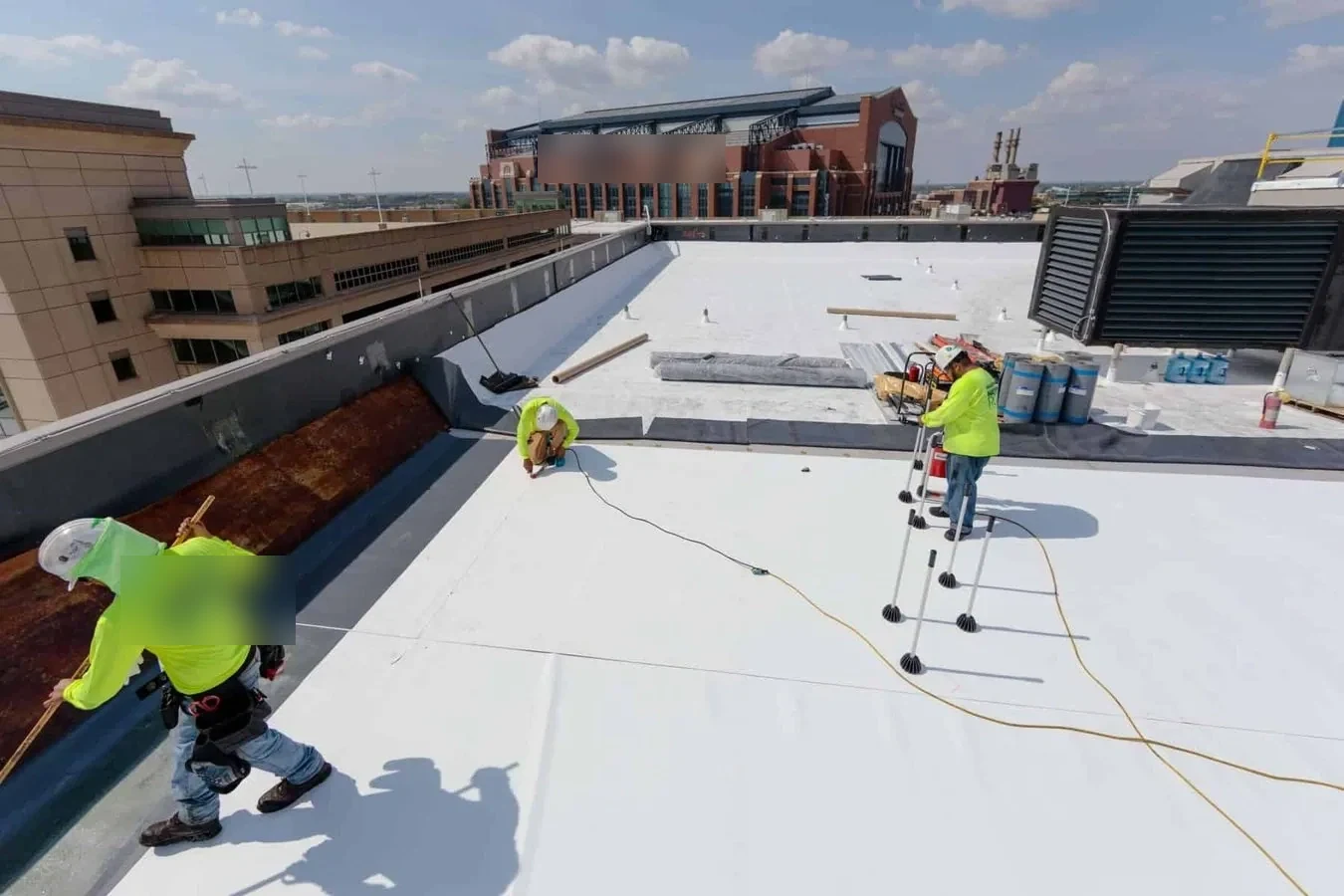
Each image needs a location and a reason. We photograph the roof section, the defect, a nearby fixed detail, and enough context to find it again. A close view of a split lap can show the opening, while a wider frame can show its distance from a drain or curb. Interior images are labeled separately from roof images. That prevents a ceiling mark from being treated as proof of the exact point where water crossed the assembly.
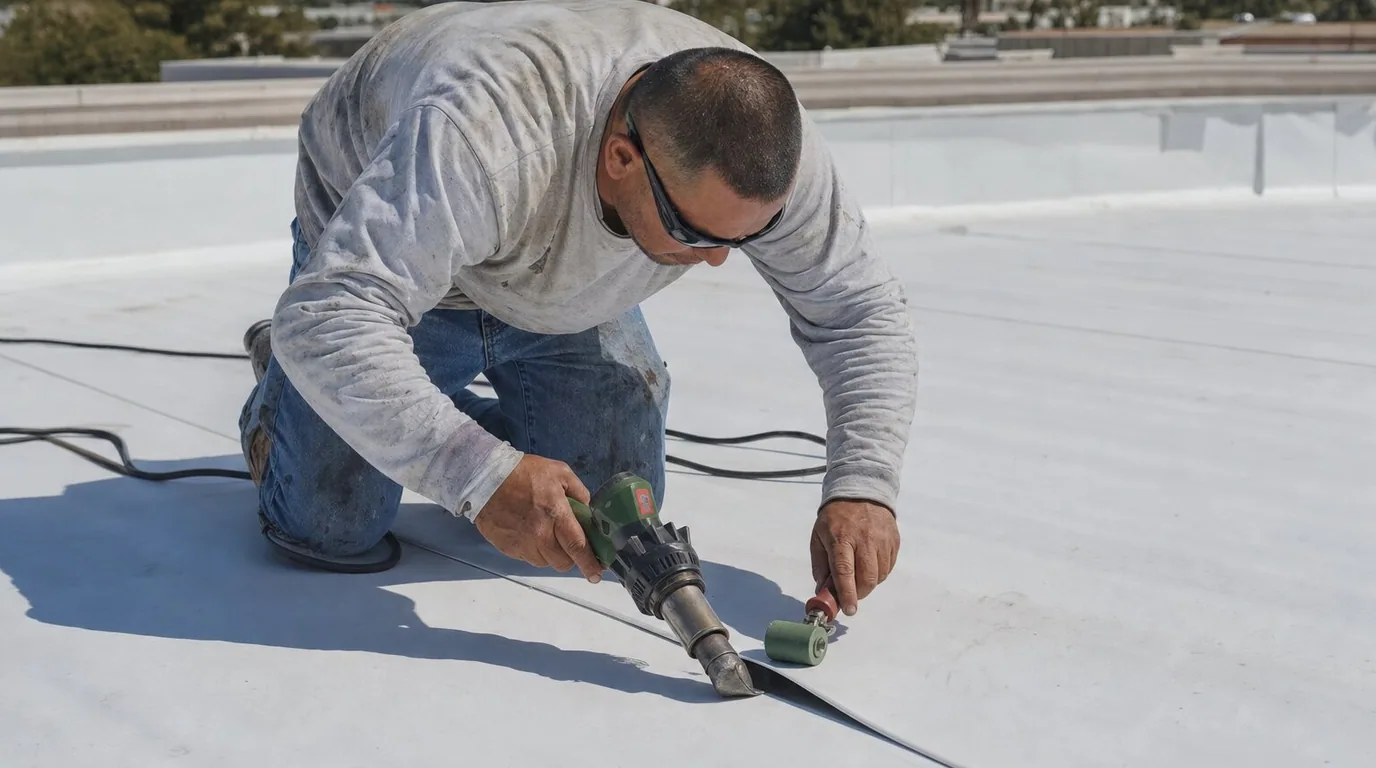
The written record identifies what is visible: open weld, lifted patch, puncture, loose coping, blocked drain, or displaced flashing. It avoids assigning a cause until the evidence supports one. Where membrane layers hide moisture, we identify a survey pattern or test cut as a next step, not a confirmed wet area. A field inspection can establish the baseline, and infrared screening can help target openings. Test results then update the report with a confirmed repair boundary.
How Is the Repair Limit Marked?
We use the roof plan, section labels, and field landmarks to map each condition. The report distinguishes a local detail from a larger assembly problem. A failed curb flashing may need a contained repair; wet insulation that extends under multiple seams can require broader removal. We mark the limits actually inspected and list assumptions where a concealed area could not be tested. This gives the owner a repair quantity tied to evidence rather than a broad label such as “roof leak.”
Manufacturing and distribution properties in the Skyline industrial belt near Big Town and Town East have operating patterns that can make access windows important. Long-haul carrier activity affects coordination, but it does not tell us the condition of any particular building. The report captures the facility's own dock and safety limits alongside the roof boundary. A roof survey serving the IH-20 area similarly records the site's actual loading and staging plan, rather than assuming that every industrial property operates alike.
Which Findings Need Immediate Action?
Priority reflects active water, life-safety exposure, material movement, and the chance that a condition will spread. A current leak over equipment may need temporary protection before a full repair is priced. A drain obstruction, open edge, or loose metal can need prompt correction even if no interior stain is visible. Surface aging without a breach may be suitable for monitoring. The report states the reason for the priority so maintenance and ownership can decide what moves during this shift.
North Texas heat persists through summer, and spring carries the region's busiest period for thunderstorms and severe weather. Regional climate does not prove that a specific roof has hail or wind damage. If a recent event prompted the visit, we record what the crew observed and what remains uncertain. A hail inspection or wind-related assessment can separate observed impact from a weather timeline. The report then gives an owner a clear next step: protect, repair, test, or monitor.
How Does the Report Support Pricing?
A repair price needs scope boundaries. We list the roof section, approximate work limits, material compatibility, substrate checks, edge or drain details, and protection below. If removal may expose deck damage, the report identifies the approval point and documents the condition that could change quantities. We do not fold an unverified assumption into a fixed repair boundary. That helps the owner compare proposals on the same work rather than on different interpretations of one photograph.
When failures recur across a section, a repair can be compared with recover or replacement. The report states moisture findings, attachment, existing layers, drainage, and access limits relevant to that choice. A targeted repair scope differs from a replacement scope in removal, substrate, insulation, and daily dry-in. For longer-range decisions, capital planning can carry confirmed conditions into a funding sequence while preserving open tests as open items.
What Should the Team Do With the Record?
Closeout pairs each completed item with its before-and-after photo, material installed, location, and remaining limitation. If a test was deferred or an area could not be reached safely, the report says so plainly. A maintenance manager can reopen only the unresolved question instead of repeating the full survey. The record also helps a future crew distinguish a prior patch from a new opening and check whether water returned at the same boundary.
Garland's Forest-Jupiter district combines residential and commercial areas with neighborhood retail, civic uses, and medical-office planning. That is a different operating mix from Mesquite's industrial corridors, so a report should not transfer one property's access assumptions to another. The local building plan and field photos govern the recommendation. For a transaction or renewal decision, a roof survey for a property review can use the same evidence discipline while answering a different owner's question. The final report leaves operations with an action, a priority, and a next-check date.
Commercial Roofing Questions
Can a photo report confirm hidden wet insulation?
A photo documents a visible condition, not what sits beneath an intact membrane. We mark suspected areas and recommend an infrared review or test opening where it changes the repair limit. A test cut confirms the assembly at that point. The report distinguishes a scan pattern from confirmed wet material so the removal scope stays tied to evidence.
How do you show an area the crew could not reach?
We mark the access limit on the plan and state why the area was excluded. That may be a safety condition, equipment obstruction, or operating restriction. The report does not grade an unseen section as sound. It lists what access or coordination would allow a later check and keeps the limitation visible to anyone pricing the work.
Will the report tell us to replace the entire roof?
Only if the inspected condition supports that scope. We compare the affected area, moisture, attachment, deck, drainage, and repeat repairs before recommending broader work. A localized defect may remain a repair. When testing is incomplete, the report identifies the decision that could change after confirmation rather than treating a worst-case assumption as a finding.
Can the report separate urgent work from budget items?
Yes. We rank active water and safety conditions separately from planned repairs, maintenance, and monitoring. Each item has a location, photo, action, and priority reason. Temporary protection is shown as its own step, not as permanent correction. That gives a facility director a shift-level list and ownership a separate capital view.
What records help the inspection move faster?
Send the roof plan, prior repair notes, leak locations, access rules, and operating schedule. Identify inventory, equipment, or occupied areas below a planned opening. We can begin with incomplete records, then confirm roof-section labels in the field. Any assumption that still needs testing remains visible in the final report.
Get a Report That Directs the Next Shift
Send the roof plan, leak timeline, access limits, and prior repair records. We will photograph findings by section, define confirmed repair boundaries, and list the tests or approvals still needed.