Commercial Roof Repair in Mesquite, TX
A repair holds when the crew reaches the failure path, not just the visible symptom. We inspect the roof section above a leak, trace water across seams and transitions, and mark what needs correction. The scope may be a split flashing corner, loose edge metal, a failed lap, or damaged insulation. It can also reveal that water entered far uphill from the interior mark. In Mesquite, a production building in the Gus Thomasson corridor and a distribution roof near Urban District 30 can have different access, drainage, and operating limits. We plan the repair around the actual assembly and the facility's work window.
We check membrane condition, attachment, drains, curbs, penetrations, and previous patches before recommending a method. Hot, humid DFW summers can stress exposed materials; spring brings the region's peak severe-weather season. Hail and wind are risks to inspect for, not automatic proof of damage at one property. A roof inspection with condition findings can map a larger problem before repairs are ordered. We also plan work through the Gus Thomasson corridor. For a leak that needs attention before the next shift, focused leak tracing helps separate temporary water control from permanent repair.
Which Detail Actually Failed?
Water can travel along insulation, deck flutes, a seam, or a conduit before it appears indoors. We start at the interior location and work outward across the roof, checking changes in slope and material. A wet ceiling tile is useful evidence, but it does not define the repair area. We look for an opening, failed termination, puncture, loose fastener, deteriorated sealant, or drainage condition that explains the path. When the entry point is uncertain, we test the likely details instead of sealing every nearby joint.
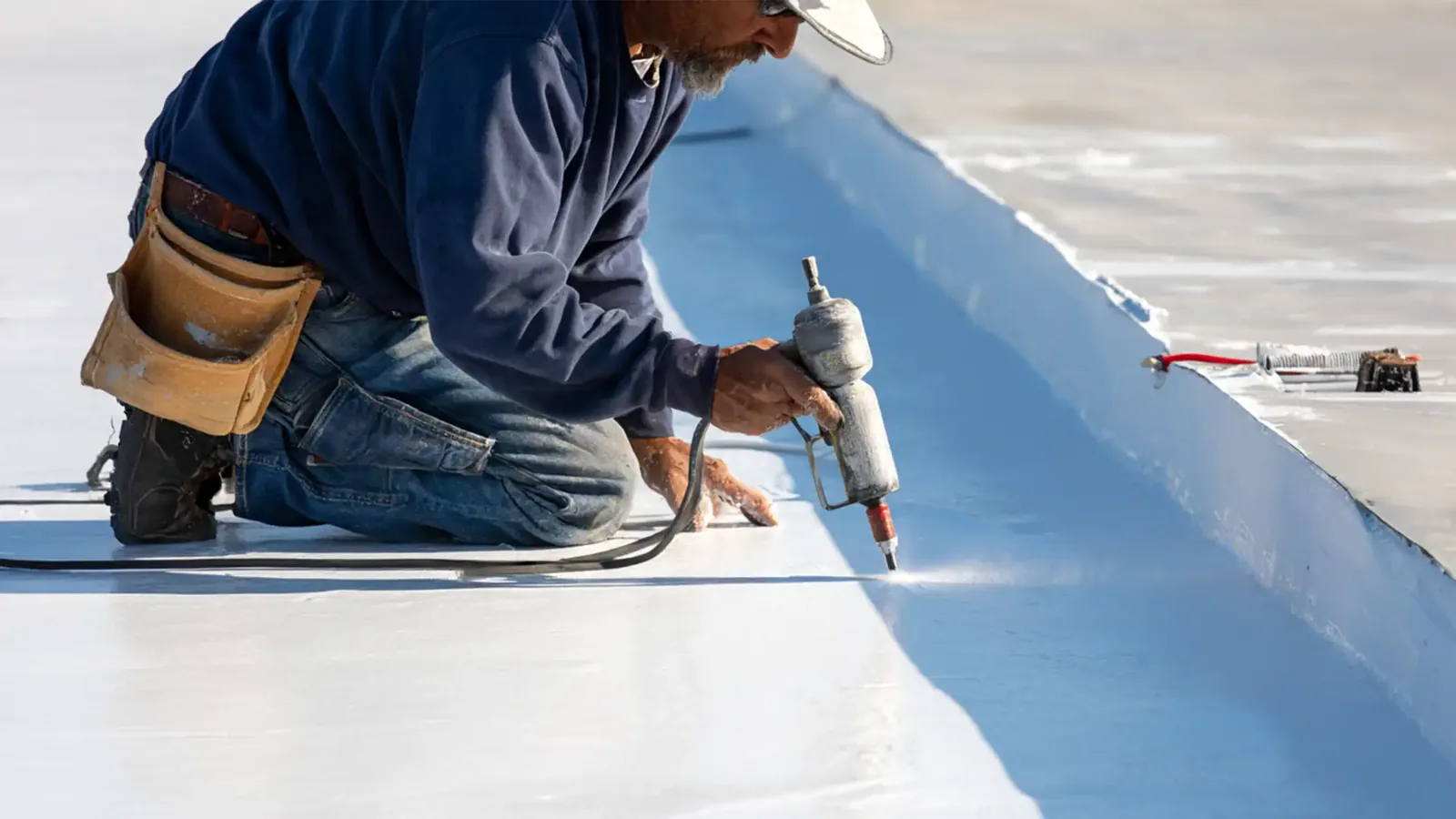
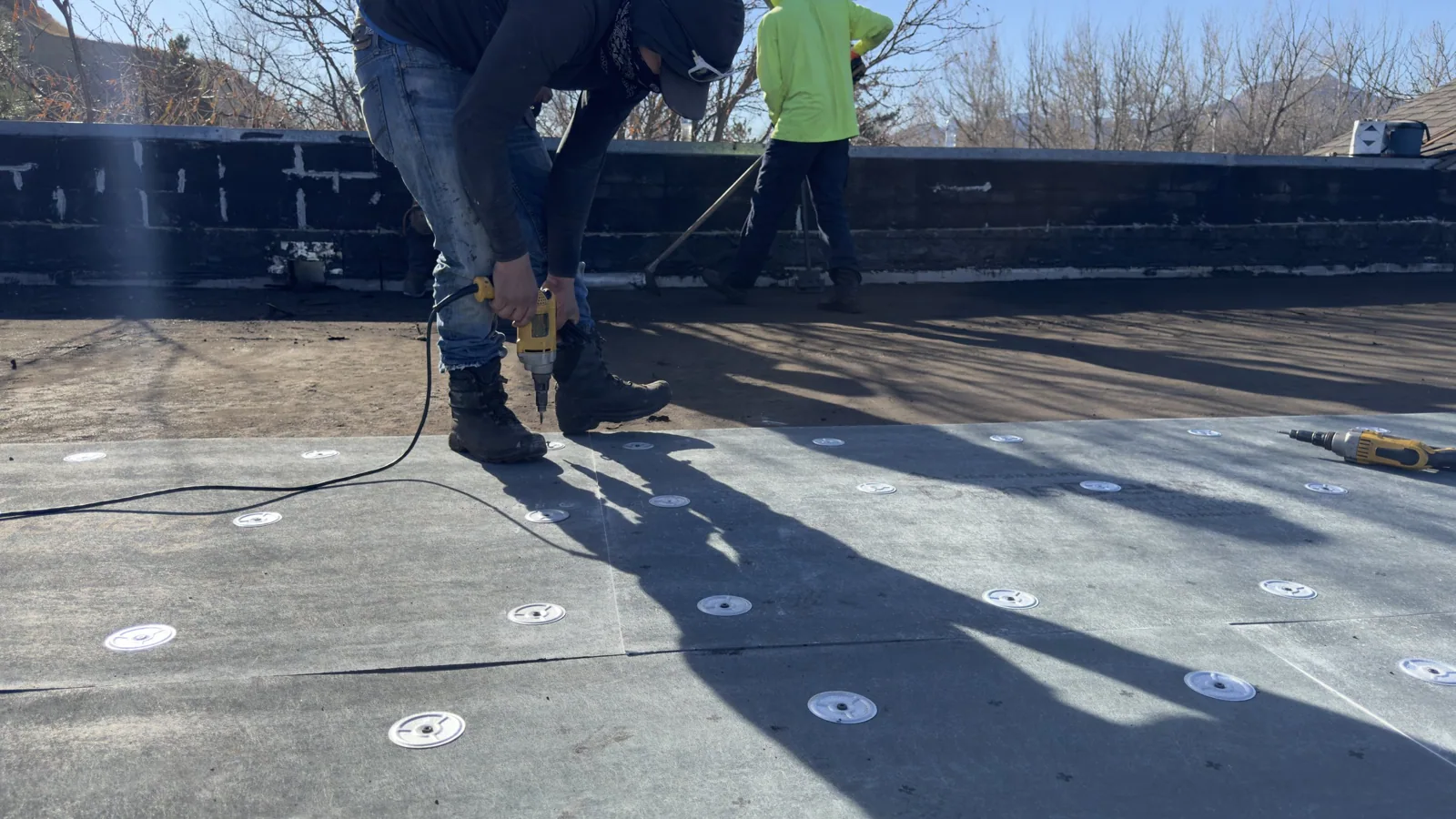
The repair method depends on the roof system and substrate. A membrane patch needs compatible material and clean, prepared surfaces. A metal edge may need fastening or replacement rather than more sealant. A drain repair requires a sound connection around the bowl, not a bead over debris. We inspect nearby transitions after identifying the failure because water can expose a second weakness. Photos and measurements show the owner the exact repair limit and what remains outside it.
How Wide Should the Repair Go?
We extend the repair only far enough to reach sound material and restore the detail. For a split seam, that may mean removing failed patch material, preparing both sides, and installing a compatible repair strip. If the membrane is brittle or wet insulation surrounds the opening, a surface patch may not hold. We use test cuts or additional checks when the assembly needs confirmation. The report separates confirmed damage from areas that still need monitoring.
A repeated leak near the same curb calls for a different review than a one-time puncture. We compare repair history, roof movement, equipment service traffic, and drain performance. In the Town East-Skyline area, industrial and distribution uses add delivery and rooftop access considerations; repair staging should not conflict with loading. If the condition crosses several roof sections, we can document it through a repair report with photos and compare the scope against planned roof-section funding. That record helps the facility director decide whether to patch, restore, or replace.
What Repair Fits the Roof System?
Material choice follows the existing roof. TPO, PVC, EPDM, modified bitumen, built-up roofing, and metal each require compatible preparation and detail work. We identify the system before selecting a patch or flashing method. A coating may be useful for a sound, prepared surface, but it will not repair a loose termination or saturated insulation. The EPDM repair approach differs from work on a welded thermoplastic seam. At transitions, the crew verifies adhesion, lap direction, and the way water drains away from the patch.
Sealant is a component, not a repair plan. We use it where the detail calls for it, with the right surface preparation and compatible materials. At curbs, skylights, and pipe penetrations, the flashing must accommodate movement and remain connected to the roof system. A penetration flashing repair can address those transitions; a larger membrane failure may require a separate section repair. We explain why one method fits and what condition would make a broader correction necessary.
Can We Repair While the Facility Runs?
Most repair plans can be organized into a controlled work zone, but access still needs coordination. We identify roof ladders, fall-protection requirements, equipment routes, interior protection, and any loading or production window that affects crew movement. At facilities near I-30 or the IH-20 Business Park, delivery timing and active docks can shape staging. We separate material movement from employee traffic and establish a daily boundary before work starts. If weather changes the plan, the crew secures the repair area before leaving the roof.
Emergency service is available around the clock, every day of the week, including holidays. Temporary protection can reduce water entry while a permanent repair scope is prepared. It is documented separately from the completed repair so the owner can see what was stabilized and what remains open. For a broader program, the maintenance visit plan can catch loose flashings, debris at drains, and equipment-related punctures before they disrupt operations. The next step depends on the roof's condition, not on a fixed calendar alone.
What Changes the Repair Cost?
Cost depends on access, material compatibility, repair area, wet insulation, roof height, and how many details need removal and rebuilding. A patch over a clean, dry membrane is different from replacing a section around a curb with saturated insulation. Crane or lift needs, HVAC coordination, and restrictions on staging can add time. We inspect before pricing, then identify the work included and any concealed condition that may change the scope. That makes the estimate useful for comparing a repair with a coating or replacement option.
How Do We Confirm the Repair?
After the work, we check the repair edge, laps, terminations, drainage, and any detail that was opened. We remove loose debris and verify that water can reach the intended drain or scupper. The crew photographs the finished area and records the location by roof section. If a test is appropriate for the system, we note how it was performed and what it confirmed. A dry interior immediately after work is not a substitute for a sound roof detail.
Commercial Roofing Questions
How do you locate a leak before repairing it?
We start where water appears inside, then inspect the roof uphill and around nearby seams, curbs, drains, and penetrations. Water may travel before it reaches a ceiling, so the repair follows the entry point and damaged assembly, not the stain alone. When visual checks are inconclusive, we use additional testing or a controlled opening to verify the path before setting the repair limit.
Can you repair a roof during operating hours?
The facility schedule and access route set the work window. We plan staging, fall protection, interior controls, and any dock or production restriction before crews begin. Smaller repairs can often be isolated, while work near HVAC intakes or active loading may need a specific time. The plan includes how the area will be protected if weather interrupts the repair.
When is a patch not enough?
A patch is not enough when the substrate is wet, the membrane has lost strength, attachment has failed, or similar leaks keep returning across the section. We inspect the surrounding assembly and explain the boundary that needs removal or replacement. A broader repair can still be smaller than a full reroof if the remaining system is sound and the transition can be restored.
What information helps price the repair?
A roof plan, photos from inside and outside, prior repair notes, and the affected room or equipment area help us prepare. Include access rules, dock or production windows, roof-system records, and any known wet insulation. We verify the scope on site, then separate confirmed work from a concealed condition allowance if the assembly cannot be seen until opened.
How quickly can emergency repair begin?
Emergency response runs all day and night, including weekends and holidays. We first confirm a safe access route and the immediate interior risk, then stabilize the opening with temporary protection when conditions permit. The permanent repair follows after the roof assembly and repair boundary are confirmed. We keep those two scopes distinct in the record.
Set a Clear Repair Limit
Send the leak timeline, roof plan, repair history, affected interior area, and access window. We will trace the failure, mark the repair boundary, and explain what needs immediate protection versus permanent correction.