Commercial Skylight and Penetration Flashing in Mesquite, TX
A leak beside a skylight can stop work beneath it before the opening itself is confirmed as the cause. We check the glazing, curb, flashing, nearby seams, and uphill roof area, then mark the repair limit. A stain gives us a starting point, not a diagnosis. The next step is to separate a failed seal from a loose curb detail, membrane split, or water path that begins farther upslope. In Mesquite, TX, we can stage that inspection around an active shift rather than treating the roof as an empty work surface.
Town East retail and service properties can have public entrances directly below roof openings, while the Skyline Logistics Hub district has distribution activity that can constrain lift placement and roof access. The roof plan, interior location, and access window help us select a safe inspection path. A commercial roof inspection near Skyline Logistics Hub can include the curb and the adjacent drainage route. If water is already active indoors, leak tracing can control the immediate problem while we identify the permanent flashing repair.
Which Part of the Opening Has Failed?
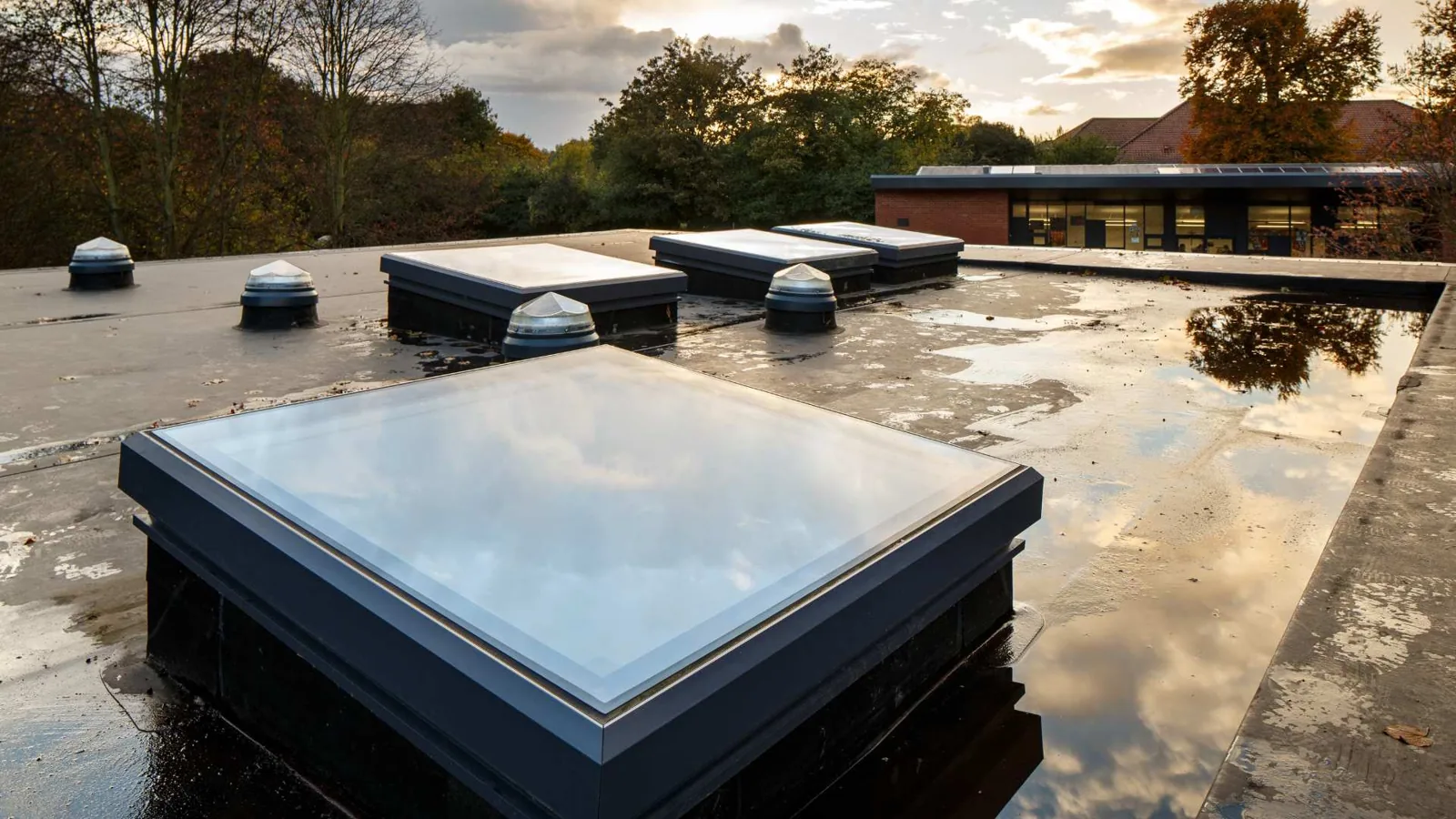
Water can enter at a cracked seal, separated flashing leg, open corner, loose fastener, or damaged membrane where the curb meets the roof. A skylight frame can also collect condensation that looks like a roof leak. We compare the interior pattern with the exterior detail before removing material. That keeps the repair tied to the entry path.
The curb height and condition matter. A low or deteriorated curb can leave little room for a durable transition. We check the curb walls, corners, counterflashing, and glazing edge for movement, corrosion, or previous patch layers. If the frame is sound but the membrane flashing is not, the scope can stay at that transition. A condition inspection can widen the review when similar details recur across a roof section.
How Do You Inspect Without Losing the Leak Boundary?
We start below the opening and record where water appears, when it appears, and what operations occupy that area. On the roof, the crew checks the uphill membrane, curb corners, laps, pitch pans, and nearby penetrations. Each observation narrows the boundary. A controlled water test may help, but only when the roof construction, weather, and interior access make the result useful. We do not flood an area while employees, inventory, or electrical equipment remain exposed below.
Mesquite approved Urban District 30 for industrial business-park development close to Interstate 30 and Republic Parkway. In a working facility there, the inspection plan still depends on the individual building, roof assembly, and access rules. The adjacent Urban District 30 service area can be scheduled with a facility contact who can identify interior sensitivities and lift restrictions. If the roof has multiple openings, we label each one on the plan so a repair at one curb is not mistaken for a fix to the whole roof.
What Has to Match the Roof System?
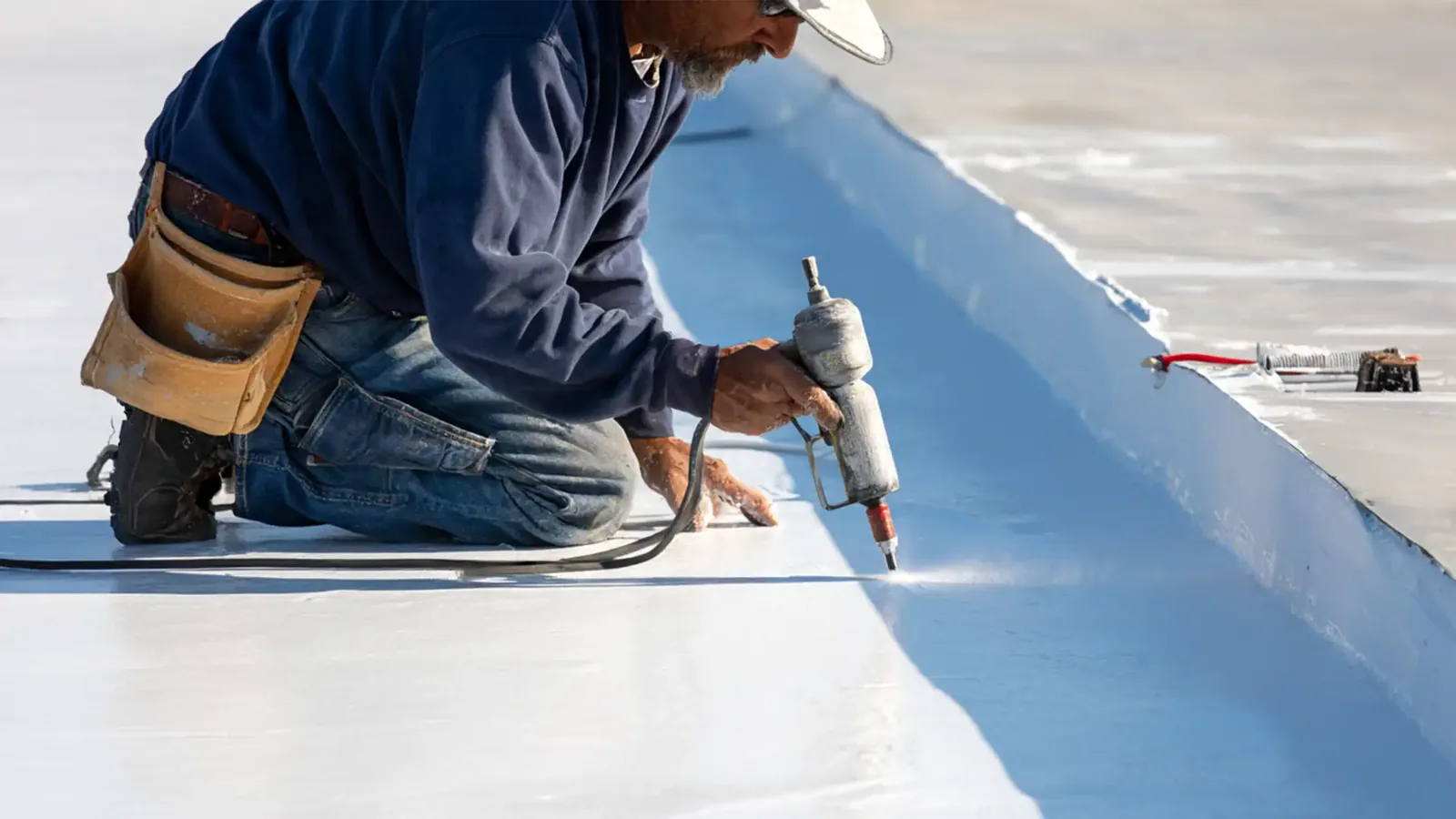
Flashing materials must be compatible with the field membrane and the curb detail. TPO, PVC, EPDM, modified bitumen, and built-up roofs use different attachment and tie-in methods. We identify the existing system before selecting a patch or replacement flashing. A sealant over a wet or moving surface can fail. The repair needs clean bonding surfaces, sound substrate, proper laps, and a termination that allows movement.
Glazing replacement and roof flashing are separate scopes unless the inspection shows they meet at the same failure. We check cracked glazing, frame joints, fasteners, gaskets, and the curb cap, then show where the roof work begins. If insulation around the opening is wet, it may need removal before the new flashing closes the assembly. A roof insulation review can determine whether the repair should include the surrounding board or tapered area.
North Texas spring storms bring regional hail, damaging wind, and heavy rain, but a storm report does not establish damage at a particular skylight. We inspect impact marks, loose components, and water entry on the actual roof. When storm conditions may have affected other details, storm damage assessment can compare the curb with seams, edges, and drains without assuming every opening needs replacement.
Can the Repair Fit the Workday?
Before cutting or lifting a frame, we confirm the interior exclusion zone, overhead protection, equipment shutdown needs, and roof access route. A skylight may sit above a sales floor, production cell, or loading aisle. The facility contact sets the clearance window. We protect the opening and keep a temporary cover ready if rain threatens before the permanent detail is complete.
In the IH-20 Business Park area, planned distribution and cold-storage uses make interior temperature control and dispatch timing practical considerations. We do not assume a building has those uses based on the district plan; we ask what the specific facility needs protected. The distribution center roof plan can coordinate dock access, while occupied-building work can sequence protection and notices for an active interior. A clear work window helps avoid opening the curb when the crew cannot finish the weather-tight transition.
If wind makes a large glazing unit unsafe to handle, we secure the area and reset the schedule. Loose materials are removed from the roof, not left beside the opening. The facility contact receives the revised boundary and next-shift access needs.
What Should the Closeout Show?
The closeout record identifies the opening, curb condition, flashing method, adjacent membrane, and any glazing work completed. We photograph curb edges and flashing laps before closure. We mark adjacent work outside scope so the facility can compare the same point after rain.
Where several openings share a roof section, we can organize them by condition rather than assume they all need the same work. A written condition summary can group observed defects, priorities, and follow-up checks. For recurring maintenance, a scheduled maintenance visit can revisit sealant, curb attachment, and drainage around each opening. If an opening is part of a larger roof replacement, curb height and flashing details can be coordinated before membrane work starts. Each recommendation stays with the inspected assembly and the operating window.
Commercial Roofing Questions
How can we tell whether the skylight or the curb is leaking?
We compare the interior wet area with the curb, glazing, flashing, and uphill roof plane. Water can travel before it reaches a ceiling tile, so the visible mark does not settle the question. Photos and a controlled inspection help distinguish frame leakage from a membrane transition or nearby seam. The repair scope follows the confirmed entry path and includes the adjacent detail needed to restore it.
Does every skylight leak need a new frame?
A frame replacement is not automatic. We check glazing, gaskets, curb condition, fasteners, flashing, and the surrounding membrane. A sound frame with a failed roof transition may need only curb and membrane work. A cracked or unstable frame can change the scope. We separate the findings so the facility can decide which component must be replaced and which can remain.
What happens if insulation is wet around the curb?
Wet insulation can keep holding moisture after the visible leak stops. We probe the affected area and determine whether removal is needed before closing the flashing. The repair limit should reach dry, sound material, not end at the edge of a stain. If the wet area extends beyond the curb, we map that boundary and explain the additional work before opening a larger section.
Can crews work over an occupied sales or loading area?
The work can be scheduled only after the area below is protected and the facility sets a safe access window. We confirm whether the floor can be cleared, whether overhead protection is needed, and how the opening will be covered if weather interrupts the shift. A loading lane may need a brief closure or a different lift position.
What information should we have ready for the inspection?
Share the roof plan, the interior location of water, the time pattern, prior repairs, and any access limits. Tell us which equipment, inventory, or work area sits below the opening. If several skylights look similar, mark each one separately. That gives the crew a focused route and keeps observations tied to the right curb and roof section.
Trace the Opening Before Replacing It
Send the roof plan, leak timeline, interior protection needs, and access window. We will inspect the frame, curb, flashing, and uphill roof section, then set the repair limit and work sequence.