Commercial Roof Leak Repair in Mesquite, TX
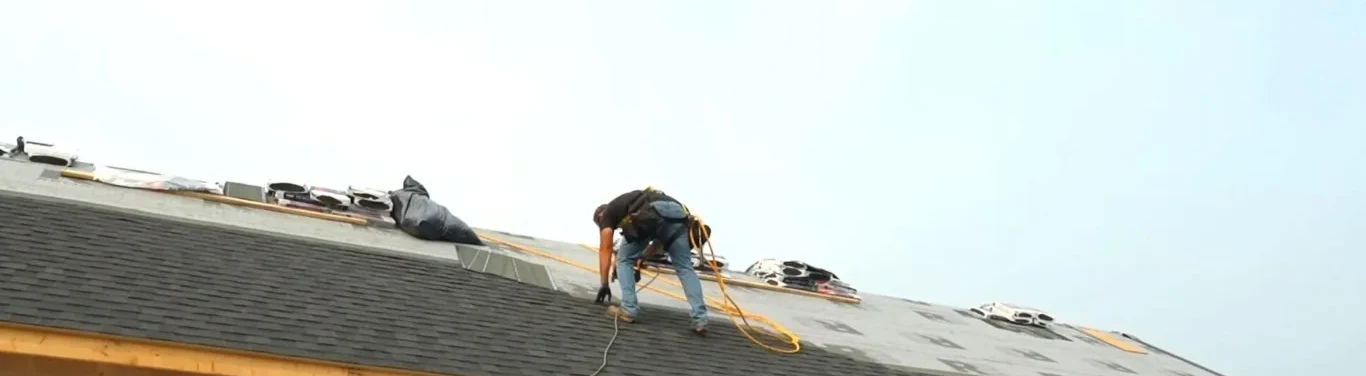
A ceiling mark is a starting coordinate, not the roof opening. Water can travel along a deck flute, insulation joint, conduit, or membrane lap before it reaches the room. We document where the leak appears, when it shows up, and what sits above it. Then we move to the roof and inspect uphill, around nearby curbs, drains, and seams. At a facility near the Skyline Logistics Hub, dock schedules may set the access window; a retail property near Town East can require customer areas to remain clear. We find the likely entry point before sealing the visible symptom.
Mesquite sits in a region with hot, humid summers and a spring severe-weather season. Those conditions can stress seams, flashings, and drainage, but weather history does not diagnose one building. Our inspection distinguishes an open detail from condensation, a plumbing issue, or water traveling from another roof section. For active exposure, emergency protection can begin day or night, weekends or holidays. The Town East-Skyline service area includes mixed industrial, distribution, and retail settings where water control must fit the operation.
What Needs Attention First?
We first protect people, equipment, and inventory below the leak. If water is near electrical equipment or a ceiling is sagging, the facility should isolate the affected area and address immediate safety. We then identify whether water is entering through a roof detail or another building system. Temporary protection can reduce the flow while the roof is inspected. That first step is recorded separately from the permanent repair, so the owner knows what remains to be corrected.
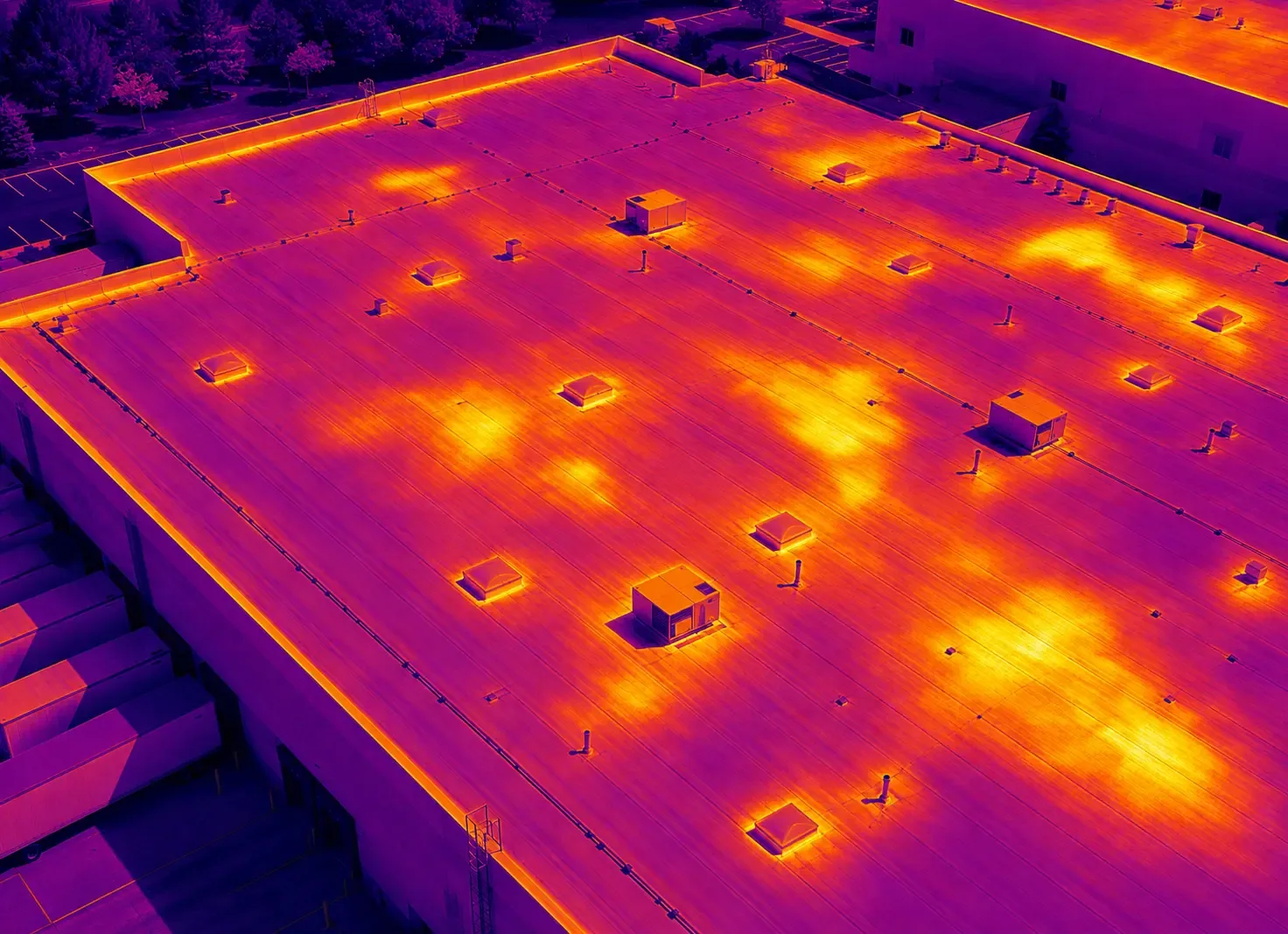
On the roof, we trace the water path through the membrane, flashings, drains, and penetrations. Wind-driven rain can enter at a loose edge or wall transition. Ponded water may reveal a low point, but a wet ceiling does not prove the drain is at fault. We inspect the surrounding field and compare the route with the interior location. If an infrared scan or test cut is warranted, we use it to narrow the area and confirm the assembly rather than treating an image as a repair order.
How Do We Find the Entry Point?
Start with the timeline. A leak that begins during rain, continues after the storm, or appears only when rooftop equipment runs can point to different conditions. We ask which rooms are affected, whether the water is clear or stained, and whether the symptom changes with wind direction. The roof plan helps us map drains, curbs, and transitions above those spaces. A record from prior repairs can show whether a patch failed at its edge or water returned from another location.
We check seams, penetrations, curb corners, wall terminations, skylight frames, and drain bowls. The likely path may cross more than one roof section. At a distribution site along I-20, interior warehouse bays can make a small entry difficult to pinpoint without a roof map. We document the surface condition and take focused photos. If the opening is not visible, controlled water testing or a small inspection cut may provide the needed confirmation. The infrared moisture survey can help identify wet insulation, followed by field verification where the roof assembly requires it.
What Can Stop Water Today?
Temporary measures depend on roof condition and safe access. A compatible patch, temporary flashing, or protected dry-in can reduce entry until a permanent repair is ready. We do not cover a wet or unstable area and call it fixed. If the opening is at a curb, drain, or edge, the temporary measure must control water without blocking drainage or creating a trip hazard. The facility director receives a clear boundary: what has been protected, what remains exposed, and when the crew needs to return.
In heavy rain, access and surface wetness can limit permanent work. We stage materials for a safe window and secure the area before leaving. For a building with active loading or production, we coordinate a work zone that keeps people away from roof access and the interior impact area. The emergency roof response addresses immediate dry-in; the permanent roof repair corrects the source after inspection.
What Makes the Permanent Repair Hold?
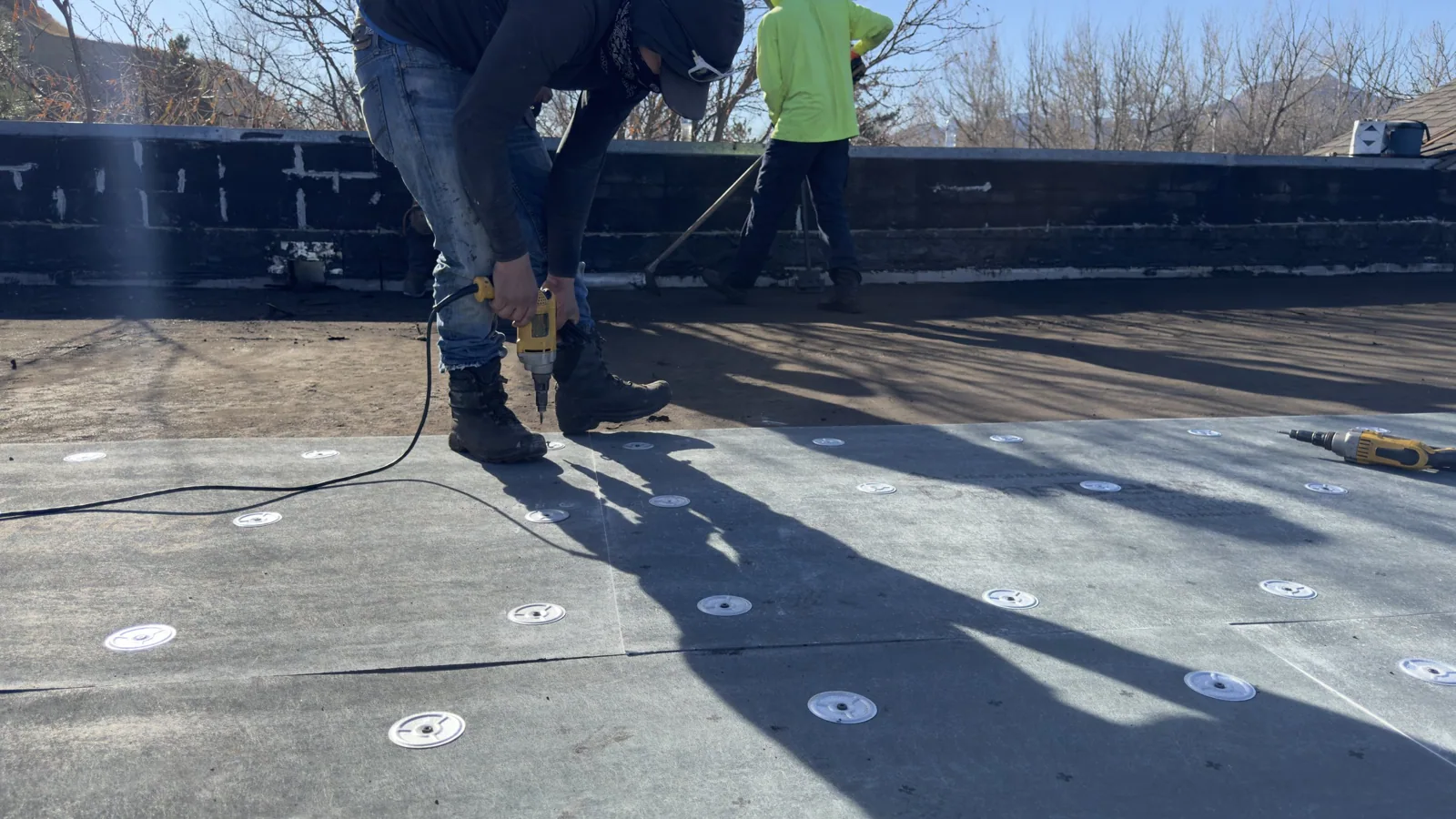
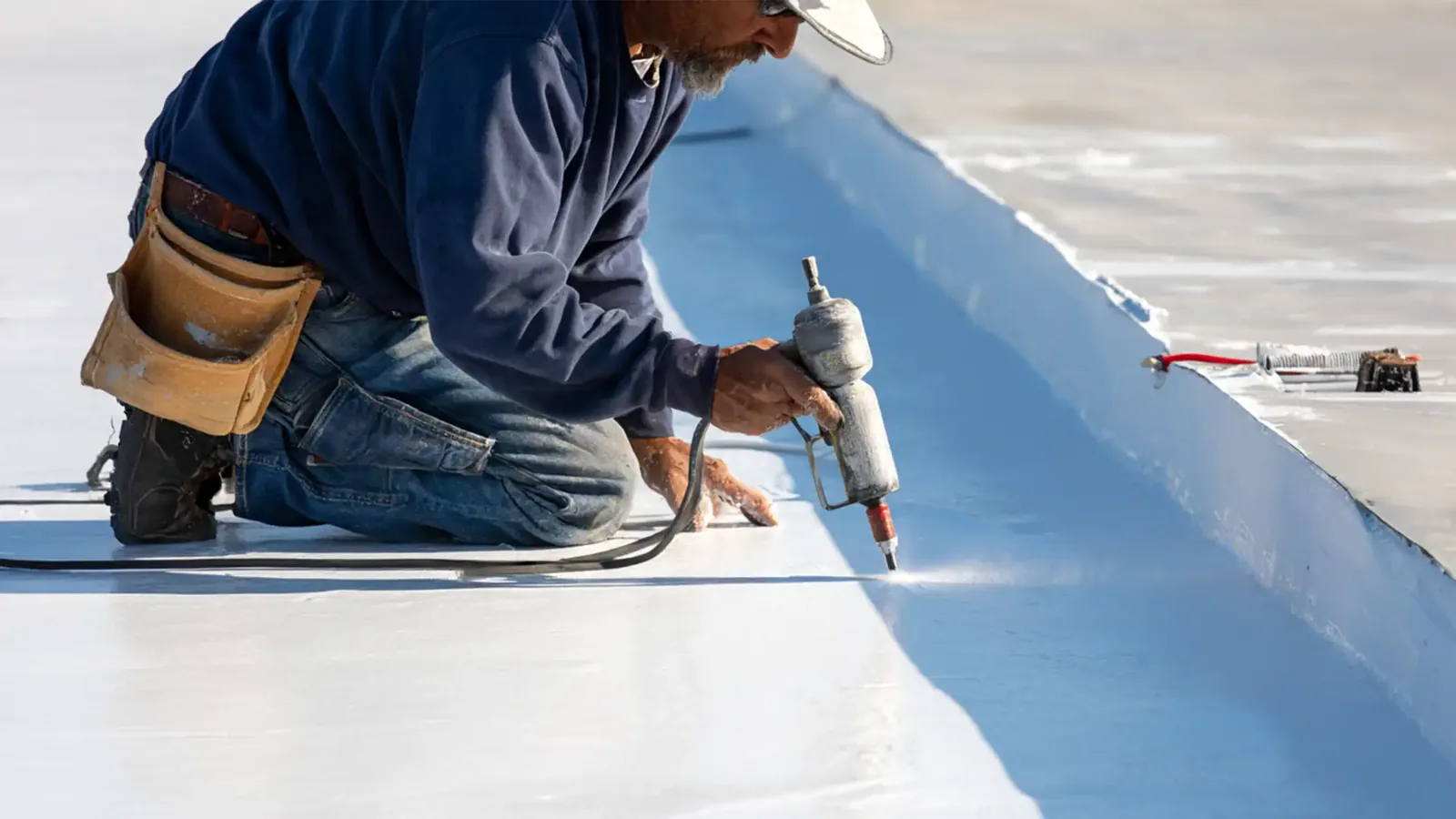
The repair must match the roof system and reach sound material. We clean and prepare the surface, remove failed patches when needed, and rebuild the detail using compatible flashing or membrane. A seam repair needs the right lap and weld or adhesive method for the system. A drain correction must connect the roof field to the bowl and outlet. At a wall transition, the termination should keep water from tracking behind the flashing. We inspect neighboring details because one leak can expose more than one weak point.
Wet insulation changes the scope. If it is trapped beneath the membrane, a surface repair can stop the opening but leave damaged material in place. Test cuts help define whether removal should stay local or extend farther. We photograph the condition and explain the options before work grows beyond the approved boundary. If multiple roof sections show recurring symptoms, a roof condition report can organize the findings for planned work rather than a chain of unrelated patches.
How Is the Leak Record Closed?
We record the interior symptom, likely entry point, temporary protection, completed repair, and any condition left for monitoring. The facility can use those notes to compare the next rain event and avoid treating the same location as a new mystery. For sites near Urban District 30 or the IH-20 corridor, loading windows and truck access affect how crews stage and return. We confirm access with the site contact and keep the affected area protected until the roof work is complete.
A repair closeout includes photos of the repaired detail and the surrounding roof section. The owner should know whether the work corrected the source, stabilized a temporary opening, or identified a larger replacement need. We can add the area to a preventive roof maintenance visit to check seams, drains, and equipment supports before the next storm season. A recurring leak deserves a wider roof walk and a new boundary, not an identical patch without a fresh inspection.
Commercial Roofing Questions
Why is the leak showing up far from the roof opening?
Water can follow insulation, deck flutes, framing, or a conduit before appearing indoors. We trace uphill from the interior mark and inspect nearby penetrations, seams, and drainage transitions. The room where water appears helps narrow the search but rarely sets the repair boundary by itself. Photos and a roof plan make it easier to connect the entry point to the affected interior area.
Can you stop an active leak before permanent repair?
Temporary protection can reduce water entry when the roof is safe to access and the surface allows a controlled measure. We identify what was stabilized and what remains open, then return when conditions permit a permanent correction. A temporary patch is not presented as the finished repair. The owner receives the next step and the area that should remain protected.
Do you need to open the roof to find a leak?
Not always. A visual roof walk and interior timeline may reveal the failed detail. When the assembly hides moisture or the path stays uncertain, a scan, test cut, or controlled water test can narrow the source. We explain the reason for an opening before making one and document the result so the repair scope reflects verified conditions.
What should our team do while waiting for service?
Keep people clear of unsafe ceiling areas, protect equipment and inventory where practical, and place a container only when it can be done safely. Record the time, weather, affected room, and any equipment operating nearby. Do not climb onto a wet roof or move into an electrical hazard. Send the roof plan and access instructions so we can prepare for a focused response.
How do you know the leak is fixed?
We inspect the repaired detail, confirm that water can drain away, and document the surrounding field. The next suitable rain or controlled test can provide additional evidence, depending on the system and conditions. The closeout states what was repaired and any adjacent issue left for follow-up. If water returns, we compare the new location and timing with the original record before selecting another repair.
Trace the Leak, Then Set the Repair
Send the affected room, leak timeline, roof plan, prior repair notes, and access restrictions. We will identify immediate protection needs, inspect the likely water path, and separate temporary control from permanent work.
Scope, access and schedule reviewed before work begins.