
Infrared Moisture Survey for Commercial Roofs in Mesquite, TX
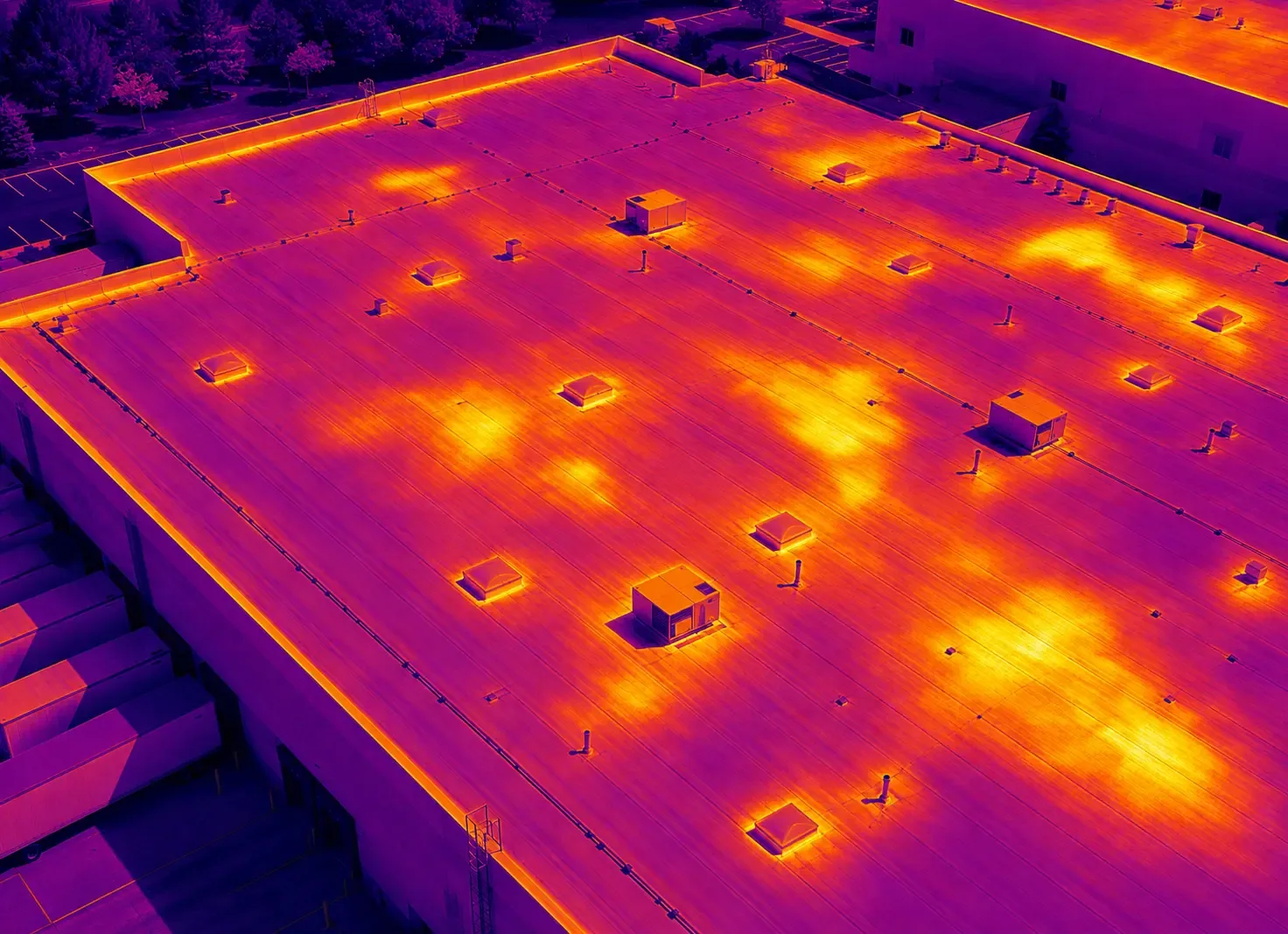
A thermal image shows a temperature pattern, not a wet roof by itself. We use infrared screening to narrow a broad inspection area, then verify suspected moisture with roof-level checks and test cuts where needed. That sequence matters on large distribution roofs near the IH-20 Business Park, where opening every section would add cost and disruption. It also helps an owner compare findings across the Town East-Skyline industrial district. The deliverable is a marked roof plan showing where the next inspection should focus and which conditions were confirmed.
Heat stored in a roof can change how a surface cools after sunset. Moisture may influence that pattern, but insulation type, deck, ballast, shadows, recent rain, and rooftop equipment can also affect readings. The crew plans the survey around those variables and inspects the roof assembly before interpreting the image. Mesquite's hot summer conditions make timing important, while spring storms can leave wet areas that need careful confirmation. A roof review in the IH-20 Business Park area begins with safe access, a roof map, and the question the owner needs the scan to answer.
How Is the Survey Set Up?
We review roof plans, system details, prior leaks, repair history, and recent weather before scanning. The schedule accounts for surface heating and cooling, cloud cover, wind, and site access. The roof should be in conditions that make the data useful; if weather or surface contamination makes readings unreliable, we reschedule or change the approach. We identify equipment, drains, parapets, and shaded areas on the plan so they are not mistaken for moisture patterns.
The survey is planned by roof section. The technician records image location and surface conditions, then compares patterns across similar areas. A warm area does not become a repair quantity until the assembly is checked. If a roof has multiple membrane types or insulation layers, interpretation may differ between sections. We note those differences and select verification points that answer the owner’s question. For an active leak, the leak investigation should connect the thermal pattern with the interior symptom and a possible entry detail.
What Confirms a Suspected Wet Area?
Verification begins with a close visual review of the surface and adjacent details. We look for open seams, punctures, damaged flashing, drain issues, and recent repairs. The image may point to a test location, but a test cut confirms the layers and moisture condition at that spot. We document the cut and restore the roof detail after inspection. A sample is useful only if its location and the assembly are clear in the record.
Multiple test points may be appropriate when patterns vary or when a boundary needs to be mapped. We avoid treating one wet result as proof that an entire roof section is saturated. The report identifies confirmed locations, areas that appear dry, and places where readings need more evidence. The condition report can show the pattern with a roof diagram and recommend repair, selective removal, or broader evaluation. If the roof has widespread wet insulation or repeated leaks, we compare those findings with capital priorities for replacement.
What Can Change an Infrared Reading?
Surface temperature is affected by more than moisture. Roof color, membrane thickness, insulation type, deck material, wind, sunlight, recent rain, and equipment shade all influence the reading. A drain bowl can retain heat differently from the surrounding field. A rooftop unit may cast a cool shadow. We compare similar roof areas and review the assembly before labeling an anomaly. That step reduces the chance that a normal material change is treated as damaged insulation.
Weather in the Dallas-Fort Worth region includes hot summers and recurring spring thunderstorms, hail, and wind. Those conditions inform the survey window and the questions we ask, but they do not show that a specific building has water damage. We use the image as a screening tool and record the limits affecting interpretation. If a roof is still wet from rain or has standing water, the scan may need a later pass. The site contact gets a plain explanation of what the survey can confirm and what requires a different method.
How Do Findings Guide the Work?
Confirmed wet insulation can be removed and replaced within a defined area, with the membrane and surrounding details restored to a sound condition. A dry area with a surface defect may need a focused repair instead. When moisture extends across several sections, we calculate a broader replacement option and compare the disruption with selective repairs. The scope names the boundaries and the material layers involved. We do not price a large removal from an unverified color pattern.
At a facility near Urban District 30, production or delivery windows may affect when test openings and repairs can occur. We coordinate the field sequence with the site contact and close each opening the same day. If the roof is suitable for recovery, we still check moisture, deck, attachment, height, and drainage first. A recover evaluation may follow confirmed dry areas; a replacement review may be appropriate when deterioration is broad. The survey helps narrow that decision, not make it by itself.
What Will the Report Show?
The owner receives a roof plan or section map, image references, verification points, and a summary of confirmed and unconfirmed conditions. The record states the survey date and notable weather or surface limitations. It also identifies any test openings and how they were restored. A usable report lets maintenance staff locate each finding without interpreting raw images alone. The facility director can connect the survey to work orders, budget decisions, and later inspections.
We can include the affected areas in a maintenance schedule or retain the map for a future comparison. A repeat scan is most useful when the same roof sections, timing, and conditions can be matched. If repair work changes the assembly, we note that before comparing later images. The result is a record of roof condition and action, not a promise that no hidden moisture exists outside the verified points.
Commercial Roofing Questions
Does infrared prove that insulation is wet?
No. It identifies temperature patterns that may be consistent with moisture, then points to areas for field verification. We review the roof assembly and use test cuts when the owner needs confirmation. The report separates a suspected pattern from a confirmed wet location so removal is not priced from an image alone.
When should an infrared roof survey be scheduled?
The surface needs suitable heating and cooling conditions, with weather and roof materials considered. Recent rain, wind, cloud cover, and surface moisture can affect the reading. We review those factors before setting a time. If conditions are poor, a later scan or a different inspection method will provide a more useful result.
How many test cuts will you make?
The number depends on how uniform the thermal pattern is and how precisely the repair boundary must be known. A single sample may answer a narrow question; a variable roof can require points in several sections. We explain each proposed location and restore the roof after sampling. The report ties every result to a marked area.
Can the survey help us avoid a full tear-off?
It can identify where follow-up checks should occur and help define a selective removal boundary. Whether that avoids full tear-off depends on the confirmed moisture, deck condition, attachment, and remaining roof layers. We compare the verified repair area with recovery and replacement options. The survey narrows the evidence; a smaller project still depends on verified roof conditions.
What should we provide before the survey?
Send the roof plan, system type, known leaks, previous repairs, recent rain history, and access limits. Identify sensitive operations, rooftop equipment, drains, and any section that cannot be opened. We use that information to plan the scan and verification points. The site contact should also be available to review the marked map and agree on next actions.
Map the Next Inspection Point
Share the roof plan, leak history, system information, and recent weather or repair notes. We will plan the scan conditions, mark areas for verification, and report what was confirmed before pricing removal or recovery.
Work planned around the building and its daily operations.