Commercial TPO Roofing in Mesquite, TX
A TPO seam that opens near a drain or curb can send water beneath a membrane before anyone sees a ceiling mark. We inspect welds, patches, flashing, attachment, and the roof section around the symptom. The repair boundary follows the confirmed failure, not the stain below. If the membrane is brittle, poorly attached, or wet beneath the surface, a patch alone may not be the right scope. We check the assembly and access window before recommending repair, recover, or replacement.
Mesquite's properties range from Town East retail and service buildings to industrial districts with active loading. The Alcott Logistics Station reinvestment district lies southwest of Scyene Road and west of Mesquite Metro Airport; its planned program includes industrial buildings and shared space. A commercial TPO inspection in the Alcott Logistics Station district begins with roof records and site conditions. If active water entry needs attention, TPO repair can secure the affected area while the permanent scope is developed.
What Is Happening at the TPO Seam?
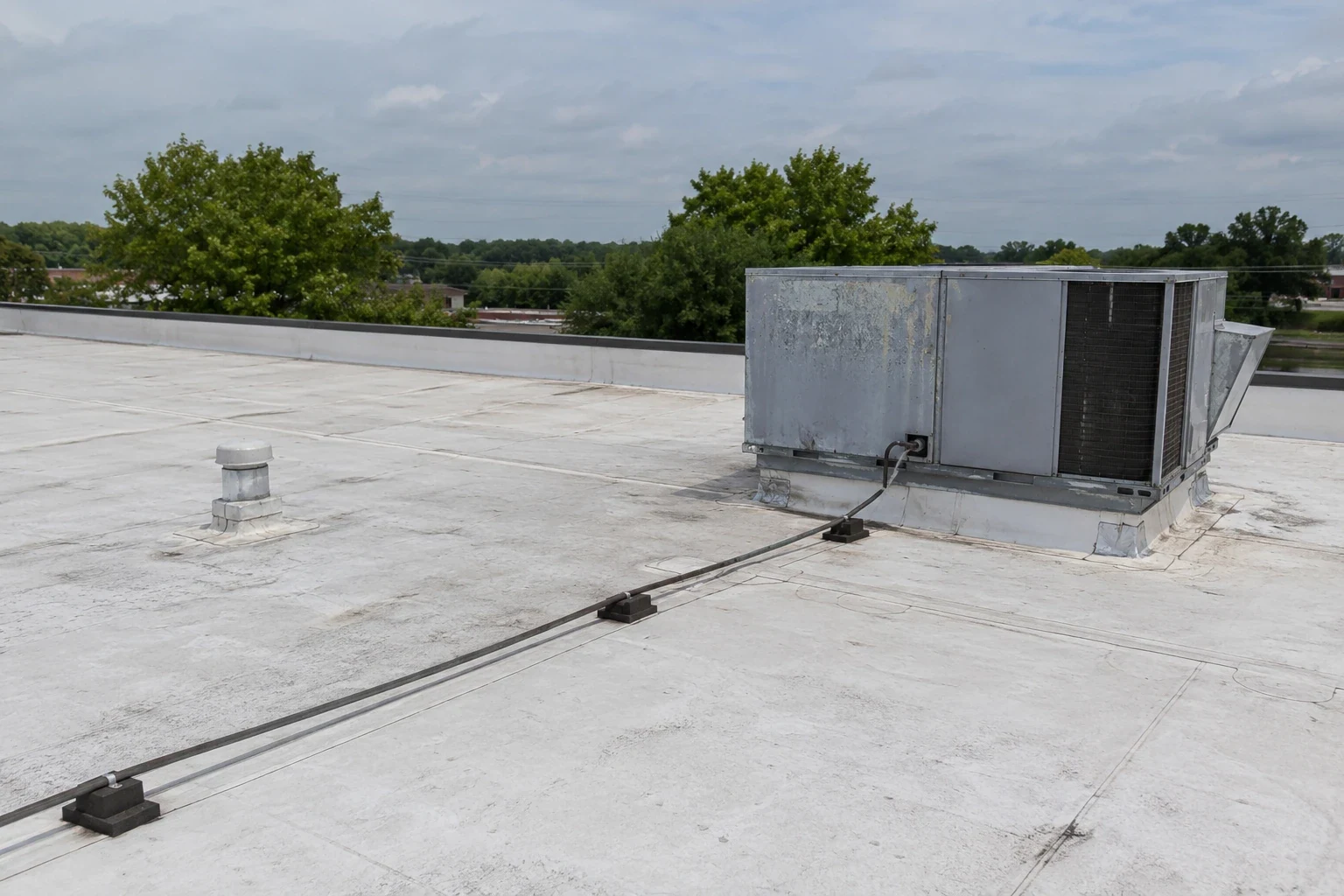
We look for an incomplete weld, a seam that has lifted, a puncture, a failed patch, or a detail that has separated from a curb or wall. The crew checks whether the surface is clean and whether the membrane remains attached beneath the visible defect. A weld probe can help locate an open edge, but the surrounding field and transition also need inspection. Water can travel below the sheet, so the interior symptom may not sit directly under the seam.
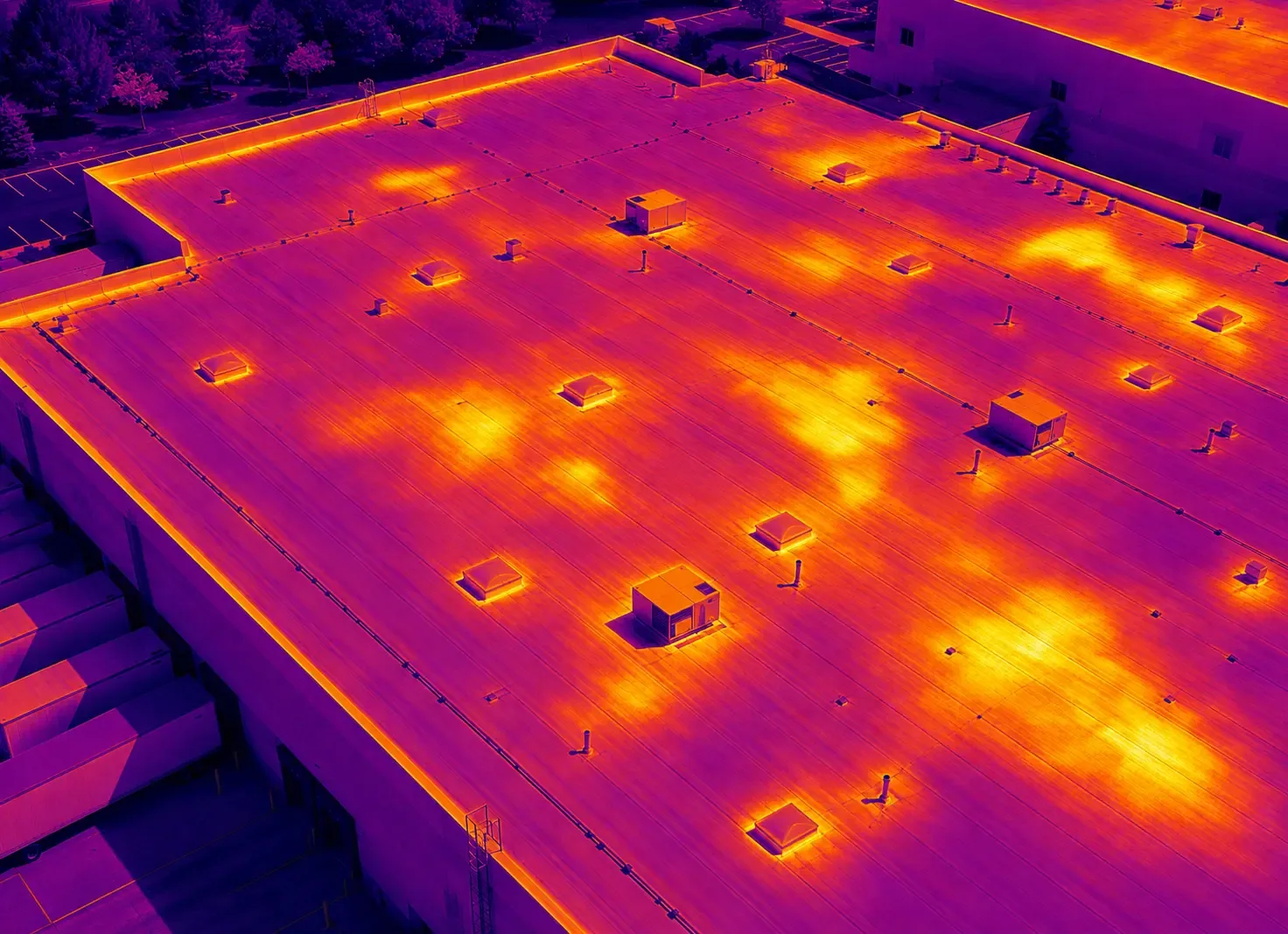
Heat can soften a weld if installation conditions were poor, while dirt, moisture, or inconsistent temperature can weaken the bond. Repairs need compatible material and controlled hot-air welding. We prepare the existing surface, make a test weld where appropriate, and verify the completed seam. A coating over an open weld does not replace a sound membrane connection. If moisture may extend beyond the visible area, moisture mapping can guide test cuts and keep removal focused.
The Town East Retail and Restaurant Area has retail and entertainment uses where customer entrances, canopies, and service routes can sit near the roof edge. If water reaches a storefront or occupied space, we set protection below before moving to the roof. The Town East Retail and Restaurant Area roofing service can be planned around public access and delivery timing.
How Does Attachment Affect the Repair?
TPO roofs may be mechanically attached, fully adhered, or ballasted. We identify the attachment method because it affects how wind loads transfer and how a repair ties into the surrounding field. Loose membrane, displaced plates, or a fluttering edge can signal that the problem reaches beyond one seam. Roof plans and field observations help define the limit; sheet color does not show attachment.
Flashings must connect the field membrane to parapets, curbs, drains, and penetrations without trapping water. At a drain, we inspect the clamping ring, membrane cut, and slope leading to the bowl. A drain and scupper review can address low points beyond the seam. Around equipment, curb flashing repair can restore the transition where supports or vibration affect the roof. If insulation is wet or crushed, insulation replacement may be required before the sheet is closed.
Alcott Logistics Station District's first planned industrial building covers 310,000 square feet. That is building area, not a roof measurement or a membrane specification.
Can the Existing Roof Be Repaired or Recovered?
A repair is suitable when the defect is bounded and the surrounding membrane, seams, and attachment remain serviceable. A recover may be considered if the existing layers are dry, stable, and allowed by the project's structural and code constraints. Widespread moisture, repeated seam failures, or loose attachment can point toward removal or replacement. We document the condition so the owner can compare options by roof section.
DFW summers are hot and humid, with July and August daytime temperatures often in the 90s and sometimes above 100 degrees. For a TPO system, installation timing and surface condition need attention, especially during exposed field work. Heat does not establish that a particular membrane has failed. We inspect the actual sheet, welds, and insulation. A roof condition inspection can document what remains sound. If repair is not enough, replacement planning can sequence removal, dry-in, and new membrane installation.
Another single-ply roof may call for a different repair method. A PVC membrane comparison and an EPDM assembly review can help the owner compare systems without treating them as interchangeable. The decision follows the building, roof details, and project documents.
How Can the Work Fit the Facility Schedule?
Before a seam is opened, we confirm the interior protection area, roof access, staging location, and expected shift length. If removal exposes insulation, the crew needs enough time to replace it and close the membrane. We divide the roof into sections that can close weather-tight within the window. The contact identifies routes and systems that must stay available.
In the Alcott district, planned freight and industrial activity may affect delivery timing, while Town East properties may require a clear public path. We coordinate the actual property's schedule with the person responsible for operations. A reroof sequence for occupied buildings can establish notices and daily work boundaries. Loose membrane and packaging are secured at shift end. If wind or rain interrupts welding, the crew protects the open seam and resets the work area before leaving.
Emergency response is separate from permanent repair. We can control active water entry first, then inspect the full seam and surrounding roof when conditions allow. That keeps urgent protection moving without confusing a temporary cover with a completed membrane repair.
What Should the TPO Repair Record Include?
The closeout shows the repaired area, seam length or detail, compatible materials, attachment observations, photos, and any work deferred. The roof plan marks the repair boundary and nearby drains or curbs. If an adjacent section was not included, the record says so. The plan guides follow-up after rain and distinguishes new movement from completed work.
Scheduled maintenance can revisit TPO welds, patches, flashings, and drainage before a small defect spreads. A maintenance program can log conditions by roof section. If the roof is being considered for restoration, a coating evaluation should start only after the membrane and substrate are reviewed. Every recommendation stays tied to observed conditions and the assembly we inspected.
Commercial Roofing Questions
Can an open TPO seam be repaired without replacing the roof?
Yes, when the defect is limited and the surrounding membrane and attachment remain sound. We inspect the seam, nearby patches, curb or drain transitions, and the membrane below the surface. A compatible repair is welded to a properly prepared area. If the same failure repeats across the roof or moisture is widespread, we compare a broader repair or replacement scope.
How do you find moisture beneath a TPO membrane?
We review the leak pattern, roof construction, and field condition, then use appropriate survey methods to select test locations. Infrared or other moisture mapping can narrow the search, but test cuts confirm the assembly. We record where wet insulation begins and ends so removal reaches sound material. That keeps the repair boundary tied to evidence beneath the sheet.
Does a white TPO roof prevent summer heat problems?
A reflective surface can reduce solar absorption, but the building's cooling load also depends on insulation, air leakage, equipment, controls, and use. We inspect the roof assembly and explain what a membrane change can and cannot address. Wet insulation or failed seams still require repair. A surface color alone does not correct those conditions.
When should we recover instead of repair a TPO roof?
We consider recover only after checking moisture, attachment, existing layers, drainage, and structural limits. A dry, stable assembly may support a recover when the project allows it. Wet or loose material needs correction first. The recommendation identifies the roof areas that qualify and the details, such as drains and curbs, that need adjustment.
What records should we keep after a TPO repair?
Keep the marked roof plan, photos, repair materials, seam and flashing locations, and any excluded areas. Record the date and any weather or access limits that affected the work. Those details help the next maintenance visit find the same points and determine whether a later leak is related to the repair or a separate roof condition.
Trace the Seam Before Widening the Repair
Send the roof plan, leak timeline, prior repair notes, and access window. We will inspect TPO welds, attachment, drainage, and the affected assembly, then define a repair or replacement path by section.
Roof conditions recorded with photos and written findings.