
Commercial Roof Drains and Scuppers in Mesquite, TX
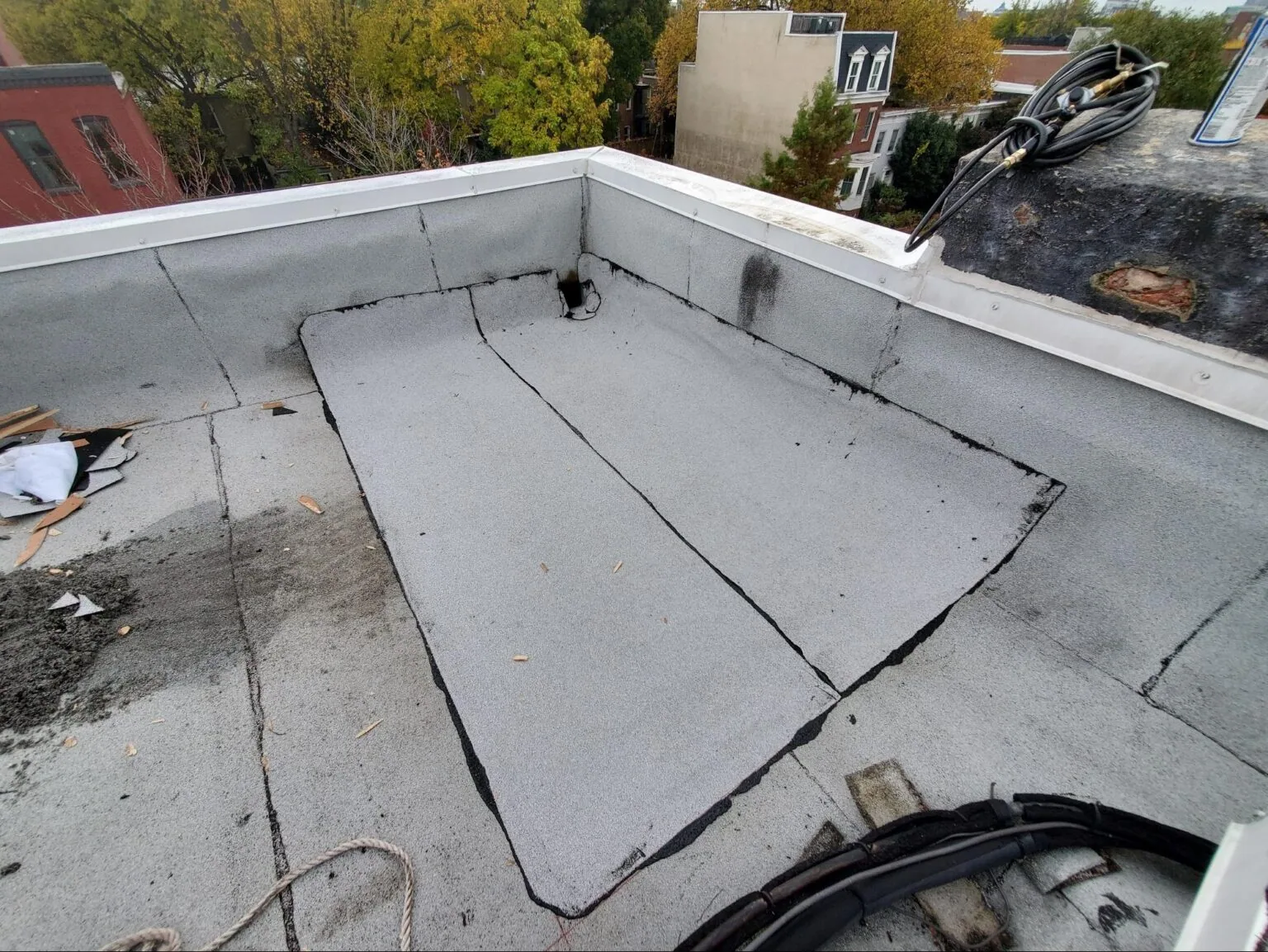
Water standing at a drain tells us where to look, not yet why it stopped. We trace the roof's flow path from high points to drain bowls, scuppers, overflows, and downspouts, then inspect the connection and surrounding membrane. A distribution roof near the IH-20 Business Park may have wide drainage runs and active rooftop equipment. At a retail property in Town East, the path may cross parapets, canopies, or several roof levels. We identify whether the problem is debris, a blocked outlet, a low area, or a failed detail before setting a repair scope.
Heavy spring rain across the Dallas-Fort Worth region tests drainage, while hot summers can stress seams and flashing around outlets. Regional weather helps prioritize the walk but does not establish a defect at an individual roof. The facility director can provide leak locations, roof plans, and prior drain work. We can inspect the IH-20 Business Park area with access coordinated around loading. If water is entering inside, leak tracing may be needed alongside the drainage check.
Where Should the Water Travel?
We start by locating drains and scuppers on the roof plan, then compare the drawing with field conditions. Rooftop additions, equipment pads, walkway materials, and previous repairs can alter the route. We check whether slopes guide water toward the outlet or leave isolated low areas. Overflow drains should be visible and clear enough to perform their role. A roof with multiple levels may carry water from one section to another, so the inspection follows the full path to the discharge point.
Debris can narrow a drain opening, but clearing it may not resolve a recurring pond. We remove accessible material when safe and inspect the bowl, clamping ring, membrane connection, and leader where accessible. A blocked downspout, damaged outlet, or loose flashing can allow water to back up. We photograph the condition before and after cleaning. If the outlet is clear but water remains, the next step is to evaluate slope or a trapped low area instead of repeating the same cleaning visit.
What Can Fail at the Drain?
The membrane must connect cleanly to the drain assembly. A loose ring, cracked flange, failed seal, or improper patch can let water beneath the field. We check the clamping area and surrounding flashing for movement, corrosion, or separation. At a scupper, we inspect the opening, liner, and edge metal so water exits without tracking behind the wall. The outlet should remain open, and surrounding materials should direct flow into it rather than past it.
Water can also collect because the roof surface has settled or because an earlier repair created a raised edge. We note pond depth and area, then compare it with seams, curbs, and interior symptoms. If a test cut is needed to confirm wet insulation, we explain the location and restore the opening after inspection. A moisture survey can help select verification points on a broad roof. A section inspection records adjacent details that may be contributing.
What Is the Right Correction?
Cleaning works when debris blocks an otherwise sound outlet. A failed bowl or scupper requires a connection repair, and a low area may need a designed slope correction. We do not apply sealant around a drain without finding the failure. The scope names the component, membrane transition, and water path that need correction. If the roof's drainage layout is wrong, adding a second outlet or changing the slope needs coordination with the building plan and applicable requirements.
A cricket can direct flow around a curb or toward a drain, but it must tie into the roof system without creating a new dam. At a multi-level property, we check whether overflow discharge reaches a safe and intended point. Downspouts must carry water away from walls and occupied entrances. If the correction requires removing wet insulation, the removal boundary is recorded before the roof is closed. A repair scope can address a single detail; widespread slope or membrane concerns may move to replacement review.
How Do We Keep Outlets Working During the Job?
We plan material staging so temporary debris cannot enter drains. Before work starts, we note which outlets serve each section and establish how the crew will protect them at shift end. At the Skyline Logistics Hub, manufacturing and distribution uses can require coordination with active loading and yard routes. The site contact helps identify occupied zones and any discharge point near pedestrian access. We keep water paths open during the work and verify them before leaving the roof.
During a storm, safe access may limit drain work. We protect the interior where practical and return when the roof surface can be inspected without risk. Temporary screens or covers must not block an overflow path. The owner receives a clear note about any outlet that remains restricted and the action needed before rain. For ongoing upkeep, preventive maintenance can remove safe debris and document drain condition before the next wet season.
What Should the Report Show?
The record identifies each drain, scupper, overflow, and low point by roof section. Photos show the outlet before and after work, the membrane connection, and any repair boundary. We note whether the issue was debris, a damaged fitting, slope, or a condition still needing design or testing. That gives maintenance staff a practical map and makes it easier to tell whether water returns at the same point or moves to a different area.
For a property with several buildings near Town East or the IH-20 corridor, we keep each roof's drain map separate. That matters when one service route or storm affects multiple roofs but not the same details. A condition report can include photos and corrective priorities; a capital plan can schedule a larger drainage correction with other roof work. The next inspection should confirm the outlet stays clear and the repaired membrane remains attached.
Commercial Roofing Questions
Why does water remain after we clean the drain?
The outlet may not be the only cause. A low area, raised repair edge, damaged leader, or blocked downstream route can leave water in place. We check flow from the surrounding field through the bowl or scupper and confirm where water discharges. If the outlet works but a depression holds water, the roof may need a slope correction rather than another cleaning.
Should we add more sealant around a leaking drain?
Only after the connection and membrane detail are inspected. Sealant over a loose ring, cracked flange, or wet substrate may cover the symptom without repairing the assembly. We identify the failed part, prepare the surface, and rebuild the transition with compatible materials. The scope also confirms that the drain remains open after the repair.
What does a roof cricket correct?
A cricket redirects water around an obstruction or toward a drain when roof geometry creates a trapped path. Its height, direction, and connection have to match the roof slopes and outlet. We verify the drainage layout before recommending one. A cricket will not fix a blocked leader, failing membrane, or structural deck problem by itself.
Can the roof stay in service during drain repairs?
We can often isolate work by roof section, but the outlet must remain protected and usable. The facility schedule sets the access window, especially near loading lanes or occupied entrances. We agree how water will move if rain occurs before the detail is complete. If conditions become unsafe, the crew secures the area and returns when work can proceed.
How do we know the correction worked?
We inspect the drain or scupper connection, check the surrounding membrane, and confirm the intended path is open. Photos show the completed detail. During suitable rain or a controlled water test, the owner can observe whether water reaches the outlet. The closeout notes any area that still needs monitoring or a separate slope evaluation.
Trace the Full Drainage Path
Send the roof plan, leak location, drain or scupper history, and access limits. We will map the flow path, identify the failed component or slope condition, and document the correction by roof section.


Work planned around the building and its daily operations.