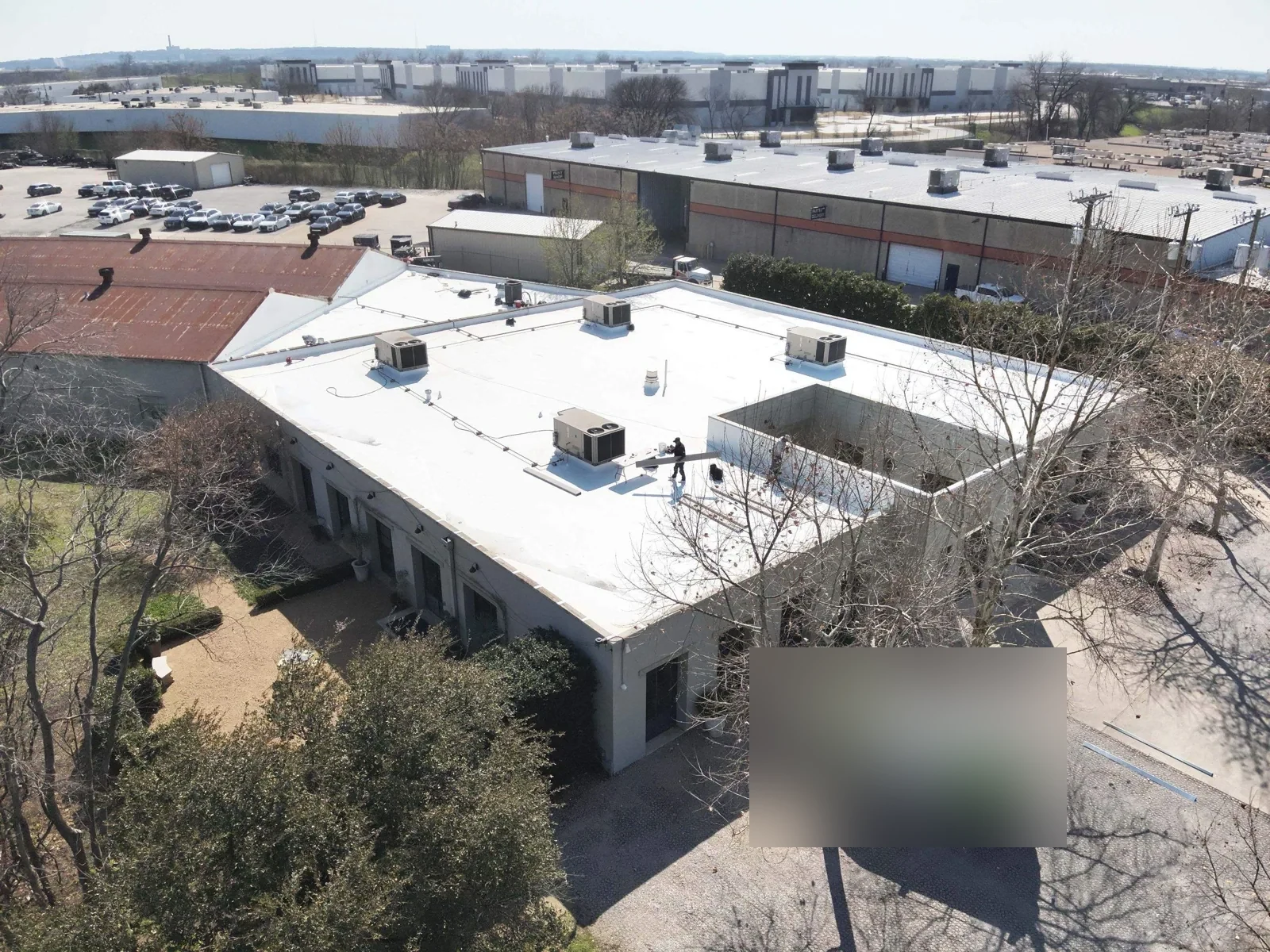
Commercial Roof Recover and Overlay in Mesquite, TX
A second roof layer is only useful when the first one can stay in place. We start by checking the assembly, the insulation below it, the deck, and the details that added height will affect. On a distribution property near the IH-20 Business Park, a recessed drain can interrupt water flow after a recover. In the Town East-Skyline district, rooftop equipment and loading operations can also constrain access. The owner needs a go or no-go recommendation before the new system is priced. We inspect first, then compare a recover with full removal using the actual roof conditions.
Mesquite adopted the 2024 International Existing Building Code with local amendments in 2026. That is a code reference for project review, not permission to cover any existing roof. We check applicable requirements, existing layers, and the proposed assembly with the project team. Dallas-Fort Worth heat, hail, wind, and heavy spring rain also influence the inspection, especially around perimeters and drainage. Regional weather does not establish what happened to one roof. Our inspection also covers the Town East-Skyline district. A focused commercial roof inspection records the condition and flags the questions that control the recover decision.
Can the Existing Roof Stay?
The first test is moisture. We review stains and leak history, scan the surface, and use test cuts where needed to verify insulation and substrate. Wet material should not be trapped under a new layer. A dry surface does not prove a dry assembly, and an infrared image needs field confirmation before it drives removal quantities. If moisture is limited to a defined area, we map it and consider selective removal. If it extends through multiple roof sections, a recover can hide deterioration that will continue beneath the new membrane.
Attachment comes next. We look for loose seams, membrane movement, failed fasteners, damaged deck, and prior repairs that may not support another assembly. The proposed system must connect to a sound substrate, not merely adhere to the top surface. We check drain bowls, scuppers, overflow paths, curbs, and perimeter edges. A recover changes elevations. That can affect drain depth, door thresholds, parapet terminations, and equipment clearances. A roof with many penetrations or unstable edge metal may need more preparation than the broad field suggests.
What Changes When the Roof Gets Taller?
Added thickness changes how the roof meets every vertical surface. At an edge, the new assembly needs a secure termination and enough metal height to shed water. At a curb, the flashing must remain tall enough above the finished roof. At a drain, the bowl should not become a low point surrounded by a higher membrane. We measure these transitions before recommending an overlay. If a rooftop unit has limited service clearance, added height may complicate maintenance access or condensate routing.
Drainage deserves its own check. We trace the path from high points to drains and scuppers, then look for trapped debris or evidence of recurring ponding. A recover does not correct a slope problem unless the scope includes a designed correction. The drain and scupper review can separate a clogged path from a low area, damaged outlet, or flawed transition. For a wider roof plan, we record findings in a condition report with roof-section photos, so the owner can compare the original and proposed elevations.
Which System Fits the Existing Surface?
Material compatibility narrows the options. The existing membrane type, surface condition, and attachment determine whether a new system can be fastened, adhered, or separated by a cover board. TPO, PVC, EPDM, modified bitumen, built-up roofing, and retrofit metal do not share one universal overlay detail. We confirm transitions at curbs, drains, expansion joints, and wall terminations. A EPDM recover assembly may suit a specific application, but only after the substrate and details are checked. A different roof system may better match the existing layers and owner's requirements.
Where coatings are considered, the surface must be clean, stable, and compatible with the coating chemistry. A coating is not a substitute for wet insulation removal or failed deck repair. We verify seam condition, adhesion, repairs, and drain details before including restoration in the comparison. For a roof that can be restored instead of covered, the coating restoration assessment examines those limits. If a full replacement is more reliable, we explain the removal depth, deck exposure, and dry-in sequence that make the difference.
How Can Work Avoid a Shutdown?
Recovery can reduce tear-off and disposal, but it still needs controlled work zones. We identify where materials will arrive, which doors stay open, how rooftop equipment is reached, and when the facility can accept noise or staging. The Skyline Logistics Hub area connects manufacturing and distribution around Big Town and Town East Boulevards. At a site with frequent truck movements, we coordinate deliveries and debris movement away from active loading. Each shift ends with the exposed area weather-tight and the work boundary documented.
When Does Tear-Off Make More Sense?
Removal is the safer path when moisture is widespread, the deck is weak, attachment cannot be confirmed, or added height creates detail conflicts. It also gives the crew a chance to replace damaged insulation and correct a known transition. That work can create more noise, debris, and temporary exposure, so the schedule needs a clear dry-in boundary. We compare tear-off depth, substrate work, material handling, and staging with the recover scope. The recommendation should explain the condition that changes the decision, not just list two systems.
For an owner planning multiple buildings, the roof capital plan can sequence sections by condition, access, and the consequence of delay. Near Town East and the IH-20 corridor, facility use may set the practical order even when two roofs have similar findings. We identify immediate water-control needs separately from planned construction. That distinction keeps a recover evaluation from delaying a necessary repair and gives the director a basis for budgeting work by roof section.
Commercial Roofing Questions
What condition rules out a roof recover?
Widespread wet insulation, a damaged deck, unstable attachment, or unresolved leaks can rule it out. We verify the assembly with inspection and test cuts where needed, then map the affected areas. A limited wet section may be removed selectively if the remaining roof is sound. If moisture or failure extends beyond a practical boundary, covering it can conceal a continuing problem and tear-off becomes the better comparison.
Does an overlay correct ponding water?
An overlay does not fix drainage by itself. We check slope, drain depth, scuppers, and overflow paths before setting the finished height. A planned taper or drain correction may be part of the project, but it needs to be designed and included in scope. Raising the field without adjusting the outlet can leave water trapped at the drain.
Can a recover be installed over any membrane?
Compatibility depends on the existing membrane, surface condition, attachment, and selected new assembly. We inspect seams and transitions, then confirm the fastening or separation detail. A system that works on one substrate may not suit another. We do not assume that a new membrane can bond to an unknown or deteriorated surface.
How much does a recover reduce disruption?
The savings depend on removal, waste handling, staging, and how many details still need repair. Recovery can reduce tear-off, but crews must still control access, protect operations, and close each work zone against weather. The roof layout and loading schedule at the property determine the sequence. We compare those constraints with the tear-off plan before estimating the difference.
What should the owner provide before the evaluation?
Send the roof plan, prior repair notes, leak locations, available core or scan reports, and known roof layers. Add the locations of drains, rooftop units, skylights, and areas with access limits. The facility director can also identify loading windows and sensitive interior operations. Those details help us focus the roof walk and show which findings still need field confirmation.
Check the Assembly Before Covering It
Share the roof plan, known layers, leak history, drain locations, and operating constraints. We will inspect moisture, attachment, deck condition, and height-sensitive details, then compare a recover with removal by roof section.
Scope, access and schedule reviewed before work begins.

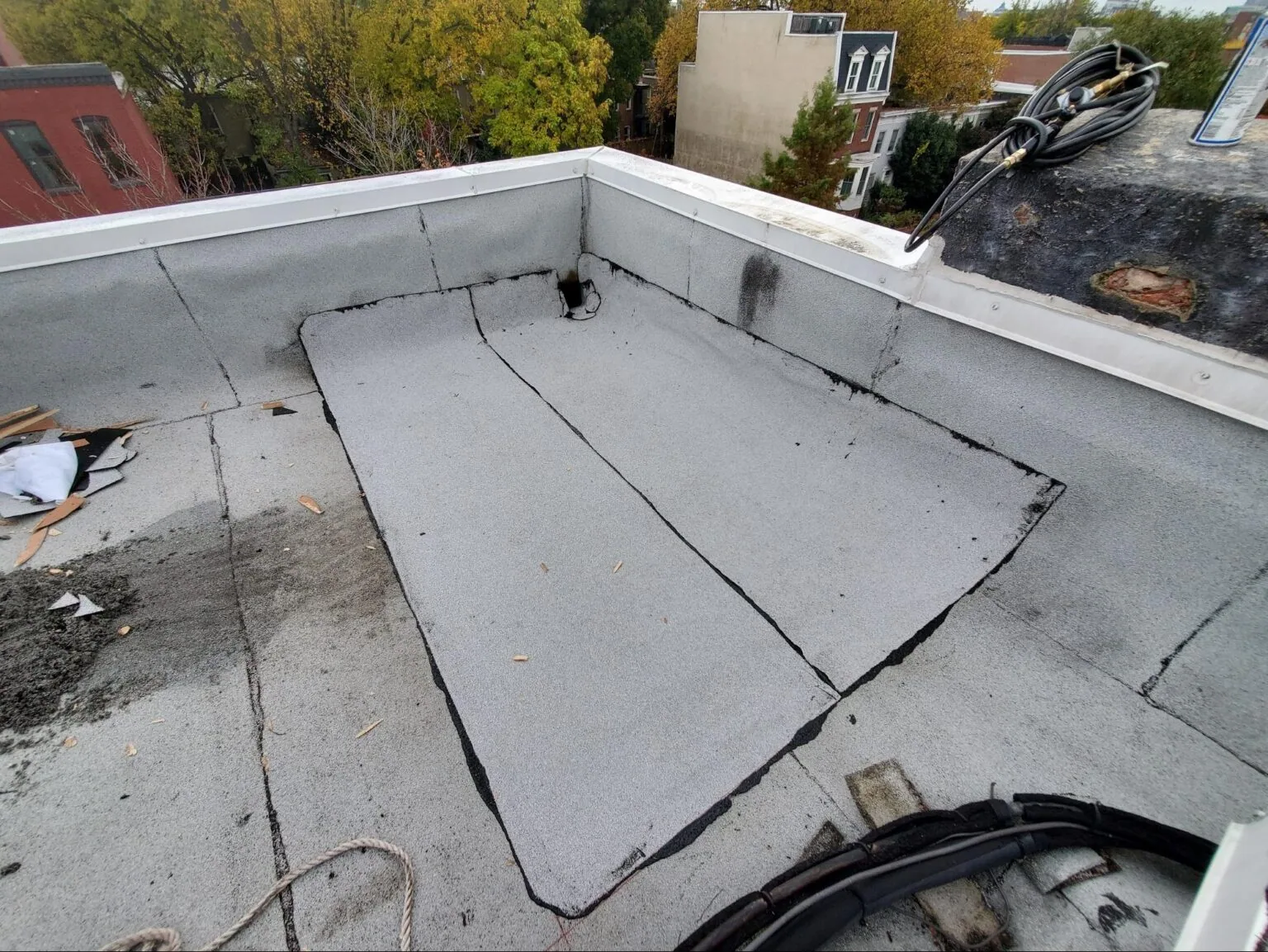
Work planned around the building and its daily operations.