
Commercial KEE Roofing in Mesquite, TX
A KEE roof can be misidentified as standard PVC, and a repair selected by color alone may not bond as intended. We verify the membrane from roof records and field observations, then check seams, patches, attachment, and transitions. KEE is a PVC alloy membrane; product formulation and accessory compatibility still matter. The work starts with a leak boundary and a sample test when needed. We identify whether the sheet remains serviceable before choosing a repair or replacement scope.
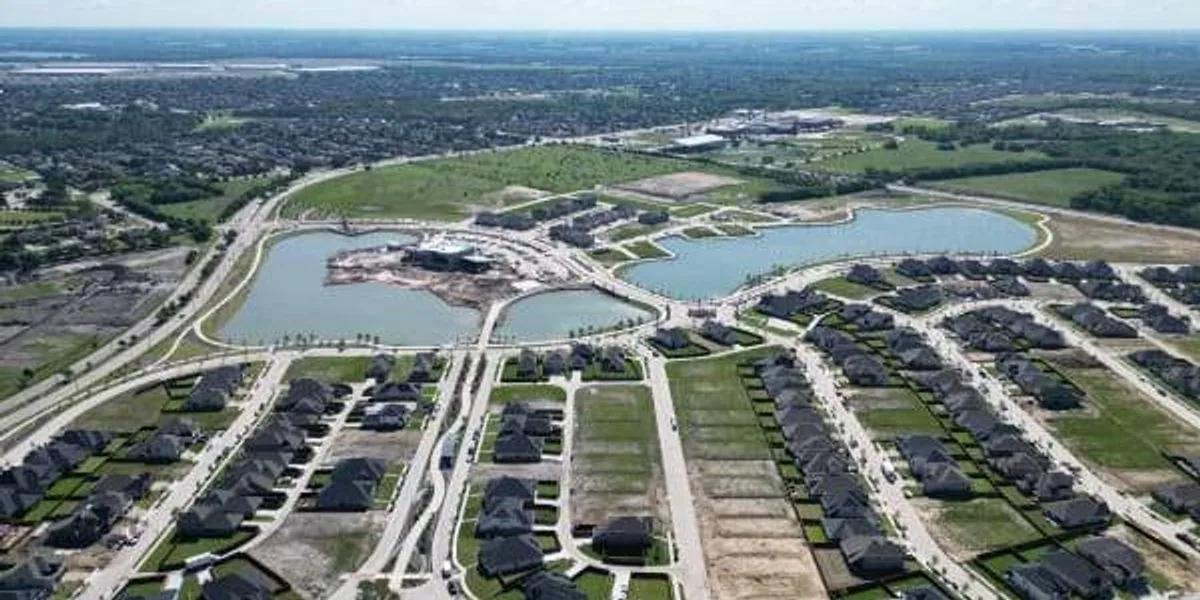
Mesquite's Downtown district uses a compact walkable pattern with subdistricts, and the Towne Centre and Market East reinvestment area spans retail, office, industrial, and service activity. Those properties can have different roof access and operating hours. A commercial roof inspection in Downtown Mesquite begins with the building's actual assembly and access rules. For a larger commercial area, roof work in Towne Centre and Market East can be timed around the facility's delivery and occupancy needs.
How Do We Confirm a KEE Membrane?
We review the original submittal, repair invoices, roof plan, and any labels or markings that remain accessible. If records are incomplete, the crew checks sheet appearance, thickness, reinforcement, seams, and exposed edges. A small test can help confirm material compatibility before a repair is applied. The system name is not a substitute for inspecting the actual sheet and its condition.
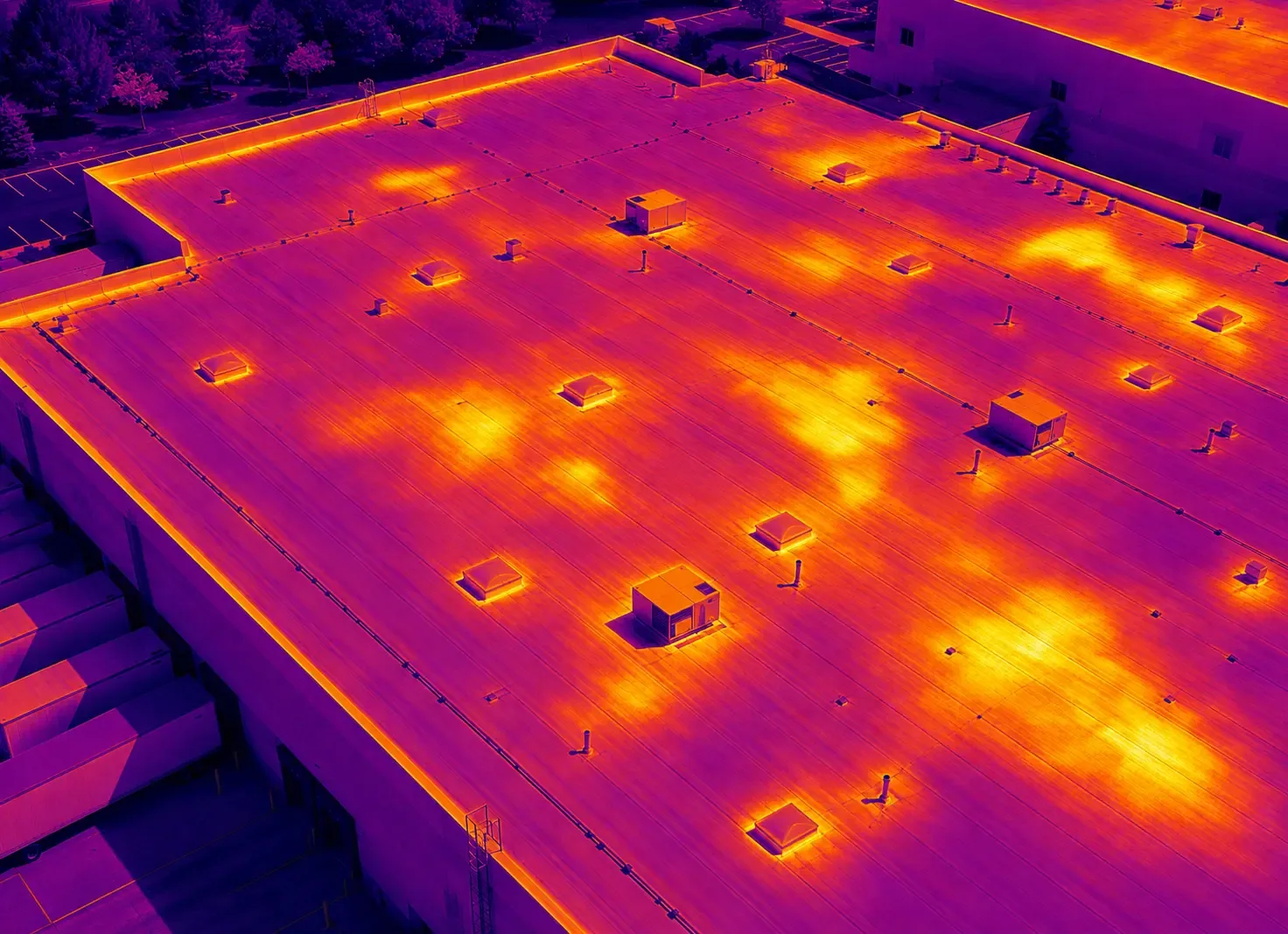
After identification, we inspect seam edges, corners, wall terminations, curb flashing, and drains. A patch may have been installed with a product intended for a different PVC formulation. We test adhesion and weld response before removing it. If water is visible inside, we trace uphill and check nearby details rather than assuming the nearest seam is the entry. A moisture survey can narrow test locations when the wet boundary is not visible from the surface.
What Does the KEE Repair Need to Match?
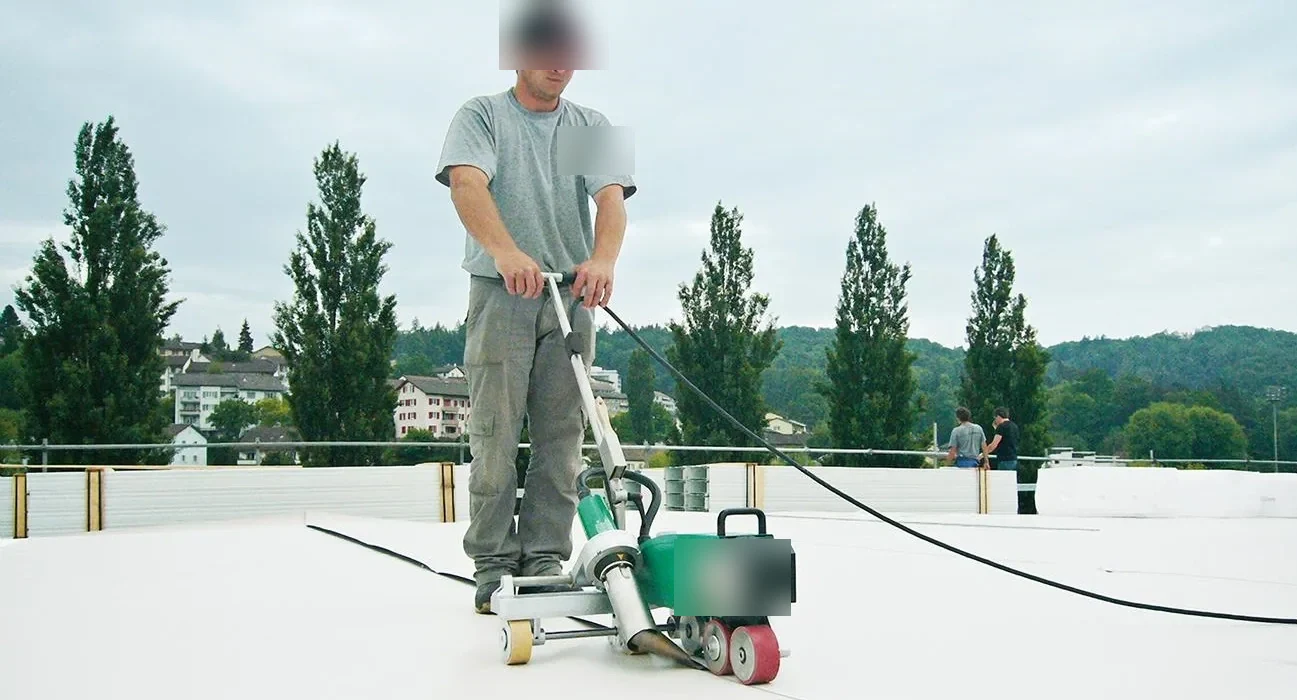
Repair materials should match the membrane formulation and the manufacturer's installation requirements. We prepare the surface, confirm dry conditions, and use compatible flashing or sheet goods for the detail. At a weld, the crew checks a test area and controls temperature and travel so the seam fuses without scorching the sheet. A patch that only bridges an opening can lift again if the substrate or adjacent membrane is unstable.
Where a curb or drain transition has failed, we repair the roof detail and its connection to the existing sheet. Drain rings, corners, and metal terminations need particular care because several materials meet at one point. A drain and scupper correction can address low areas that keep water against the seam. Curb and support repair can include movement or attachment issues around equipment. The closeout marks each repaired detail separately.
KEE and standard PVC share thermoplastic welding practices, but that does not make every sheet or accessory interchangeable. A PVC system comparison can help when the owner is reviewing repair products or planning a new membrane. We confirm the existing roof before stating what can be welded or adhered.
Is the Roof Still a Candidate for Repair?
Repair is a reasonable option when the damage is localized and the surrounding KEE membrane remains attached and flexible enough to accept compatible work. Multiple open seams, widespread brittleness, repeated water entry, or wet insulation may need a larger scope. We map the defects and identify which roof areas remain sound. The owner sees the difference between a targeted repair and a broad assembly problem.
Downtown Mesquite includes retail, employment, housing, business, and personal-service uses. The mix does not show the structure or roof of a particular property; it reminds us to ask what lies below the work zone and when access is available. A roof condition inspection can record membrane and substrate observations. If more than a small area has failed, replacement planning can compare removal, dry-in, and installation stages.
We also check insulation, cover board, edge metal, and drain height. A new membrane layer may alter curb flashing or overflow paths. The recommendation should address those transitions before materials are ordered, especially where the existing roof has prior overlays or repairs.
How Does Mesquite Weather Affect the Work Window?
Hot, humid summers and spring thunderstorms in the Dallas-Fort Worth region affect when a membrane can be prepared and welded. A wet surface or wind-blown debris can interfere with a secure bond. We check the actual roof conditions and follow the system's application requirements. Regional climate information helps schedule the work; it does not establish damage on a specific KEE roof.
Before opening a seam or removing a patch, we set a dry-in limit that can be completed during the shift. If a storm changes the forecast, the crew secures materials, closes the work area, and protects the building. A storm damage inspection can document confirmed hail or wind impact after safe access is available. The repair scope stays separate from any temporary protection.
At Towne Centre and Market East, retail and office activity may require a delivery path to stay clear. We confirm the actual building schedule before staging rolls or lifts. That keeps material handling and the work zone from interfering with the operation below.
What Should the KEE Roof File Preserve?
Keep the membrane identification, test locations, seam repairs, flashing details, photos, and materials used with the roof record. The plan should mark the repair boundary and any nearby condition not included. If a test cut exposed wet insulation, record where it began and ended. That helps a future maintenance visit return to the right detail without reopening the entire roof.
A scheduled maintenance visit can check welded seams, patches, drains, and exposed transitions. If the owner is comparing other single-ply systems, a TPO roof review can explain differences in assembly and repair approach. The final recommendation should tie back to the KEE sheet and the area the crew inspected.
Commercial Roofing Questions
Is KEE the same as standard PVC roofing?
KEE is a PVC alloy membrane, but the exact formulation and compatible repair materials depend on the product. We verify the installed sheet before selecting weld or flashing material. Color or appearance alone does not confirm the system. If records are missing, a field sample and test area can help establish what repair method will bond.
Can a KEE membrane be repaired with a PVC patch?
Only after compatibility is confirmed. We identify the membrane, inspect its surface, and test how the proposed repair material responds. A patch that is chemically or mechanically incompatible may release at the edge. The work plan notes the preparation, product, weld or adhesive method, and repair boundary before installation.
Why does water return after a KEE seam repair?
The original entry path may have extended beyond the repaired seam, or a curb, drain, or adjacent patch may also be open. Movement, contamination, or wet conditions can weaken a repair. We inspect the nearby assembly and compare the interior symptom with the roof path. The next scope reaches sound membrane and includes any transition needed to stop water.
When should we replace rather than patch a KEE roof?
Replacement becomes a stronger option when defects repeat across sections, the membrane has become brittle, attachment is failing, or moisture extends through the assembly. We map those conditions and identify areas that remain sound. The owner can compare repair boundaries with removal and replacement stages instead of treating one leak as proof that the whole roof has failed.
What should we tell the next maintenance crew?
Give them the roof plan with membrane identification, repair photos, test locations, and areas outside the completed scope. Note any access limits or equipment that prevented inspection. That record lets the next visit check the repaired seam, drains, and curbs at the right locations and catch movement before it reaches the interior.
Verify the Membrane Before Ordering Repair Material
Share roof records, prior patch information, leak timing, and access limits. We will confirm the KEE assembly, inspect seams and transitions, and set a compatible repair or replacement scope.

Work planned around the building and its daily operations.