
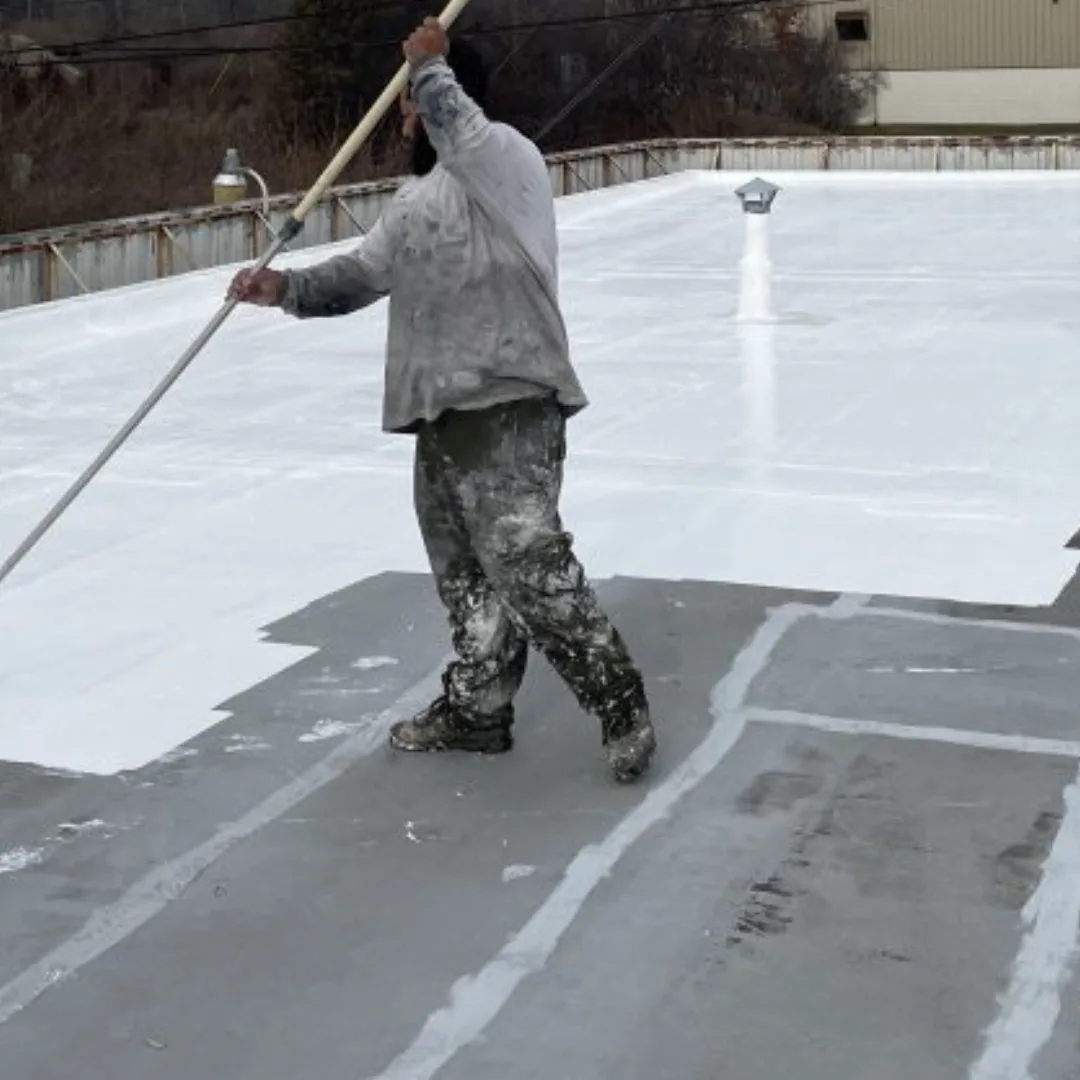
Commercial Roof Coating Restoration in Mesquite, TX
A coating belongs on a roof that can support it. We first inspect the membrane, seams, flashing, insulation, and drainage to determine whether restoration fits the assembly. A sound roof section near the Town East-Skyline district may be a candidate; wet insulation or a loose edge is not fixed by covering it. We test adhesion, confirm compatible materials, and price preparation and repairs before coating is considered. The result should leave the owner with a defined scope and the surface condition that would make the work unsuitable.
Mesquite roofs face long hot periods, humid summers, and spring storm exposure across the Dallas-Fort Worth region. Heat can increase demand on exposed surfaces, while rain tests drain paths and terminations. Those regional conditions guide inspection but do not prove a coating is needed. On a distribution roof in the IH-20 Business Park, staging and loading windows can affect the work sequence. We plan by roof section and coordinate access before washing, preparing, repairing, or applying material. The Town East-Skyline area also includes retail and industrial properties with different edge and equipment details.
Is the Existing Surface a Candidate?
We inspect for open seams, blistering, punctures, loose flashing, corrosion, ponding, and previous repairs. A coating can restore a stable surface, but it cannot bond over contamination or repair a failed substrate. We check whether insulation is dry and whether the deck remains sound. If moisture is suspected, testing may be needed before a recommendation. The scope identifies what must be repaired or removed before any coating material is applied.
Roof type matters. TPO, PVC, EPDM, modified bitumen, built-up roofing, and metal have different surface chemistry and preparation needs. We identify the membrane, test adhesion where appropriate, and verify compatibility with the selected product. A coating that adheres to one assembly may not work on an adjacent one. We also confirm that existing sealants and patches will not interfere. A roof inspection can map the full condition before the restoration scope is set.
What Preparation Does the Work Require?
Preparation can involve cleaning, removing loose material, repairing seams, replacing failed flashing, and reinforcing selected transitions. The surface must be dry and free of contaminants that limit adhesion. We protect equipment, drains, and occupied areas from wash water or overspray. If test patches are part of the evaluation, we let them cure as required and check whether the coating remains bonded. The proposal names these steps instead of treating preparation as an invisible allowance.
Drainage work is separate from coating thickness. We check drains, scuppers, overflows, and slope before restoration, then identify any condition that could leave water standing. A coating should not bridge a drain bowl or hide a weak outlet. The drain and scupper assessment can define the correction. Where the roof has rooftop units, curbs, or pipe supports, we inspect their flashing and protect service access. Equipment-curb work may be needed before the field is coated.
Which Coating System Fits?
Selection depends on the existing membrane, roof exposure, desired reflectivity, detail conditions, and compatibility test. Silicone and acrylic systems differ in water behavior and maintenance needs. We explain where each material suits the surface and what preparation supports adhesion. A roof with recurring ponding may require a drainage correction before coating. A metal roof needs attention to fasteners, panel laps, and rust before the coating is applied. We do not use one product as a shortcut across different roof sections.
For a sound membrane with many details, coating can provide a continuous surface only when seams and transitions are stable. We check laps, penetrations, edge metal, and prior patches, then set coverage around each detail. If the membrane is brittle, insulation wet, or attachment failed, a coating may not provide an appropriate restoration. A silicone roof system or acrylic coating assembly is considered only after the existing surface is identified and prepared.
How Do We Protect Operations?
Restoration requires a clean work area, controlled material delivery, and a dry weather window. We agree on staging, roof access, loading limits, HVAC protection, and any customer or tenant paths below. The Skyline Logistics Hub overlays manufacturing and distribution districts between I-30 and Skyline Boulevard. At those sites, we coordinate deliveries and equipment access so coating work does not conflict with the roof's operating demands. We can divide the roof into sections and keep the finished boundary weather-tight at each shift.
We also coordinate ventilation and interior protection. Odor, cure time, and overspray controls depend on the selected system and the building's use. If a section cannot be isolated safely, the sequence changes. The facility contact receives a daily work boundary and a clear route for questions. Coating application waits for appropriate surface and weather conditions; speed does not replace preparation. For projects with active interior use, the occupied-building work plan can coordinate notices, access, and closeout around operations.
When Is Replacement the Better Choice?
Replacement can make more sense when moisture is widespread, the membrane has lost strength, the deck is compromised, or details cannot be restored reliably. We compare coating preparation and repairs with recover and tear-off options using the condition found on the roof. The owner sees the work boundary, expected maintenance, and limitations of each path. A coating proposal should not hide repairs or imply that it will correct a structural or drainage problem.
We document the selected material, test results, repairs, application areas, and closeout photos. The record should identify excluded roof sections and any condition that needs later review. For budget planning, a capital plan can compare coating now with replacement timing by section. We can also schedule a maintenance visit to inspect adhesion, drains, and transitions after application. That follow-up lets the owner track the actual surface rather than rely on a broad product claim.
Commercial Roofing Questions
When can a commercial roof be restored with a coating?
The existing assembly must be stable, dry enough for the system, and compatible with the coating. We check seams, flashing, drainage, adhesion, insulation, and prior repairs first. Widespread wet material or a weak deck can rule out restoration. The proposal states what has to be corrected before application and which sections are not candidates.
Will coating stop leaks by itself?
No. A coating cannot correct a failed drain, unstable flashing, wet insulation, or a moving edge. We repair those conditions and confirm the substrate before applying material. The coating is part of a restoration scope, not a substitute for diagnosis. If the roof is unsuitable, we compare a recover or replacement instead.
How does weather affect the application schedule?
The surface and air conditions must meet the selected system's application limits. Rain, dew, wind, or a damp substrate can affect preparation, adhesion, and cure. We check the forecast and roof surface each day, then sequence work by section. The crew leaves each completed area protected and does not coat over a wet surface.
Can coating go over a metal roof?
It can be considered after checking corrosion, fasteners, panel movement, laps, sealant, and substrate. Loose or rusted areas need repair before coating. We verify compatibility and detail how panel seams and penetrations will be treated. A metal roof with structural or attachment issues needs correction first, not a film over the problem.
What maintenance follows a coating project?
Keep records of the coating material, test areas, repairs, and application zones. A maintenance visit should review drains, seams, flashings, and surface wear at intervals suited to the roof and its use. After rooftop equipment work or severe weather, check the affected details. We can document changes so the owner knows whether to repair, monitor, or plan the next project.
Test the Roof Before Restoring It
Share the membrane type, leak history, roof plan, and recent repair notes. We will inspect the assembly, verify coating compatibility, identify preparation needs, and compare restoration with a broader roof project.
Scope, access and schedule reviewed before work begins.

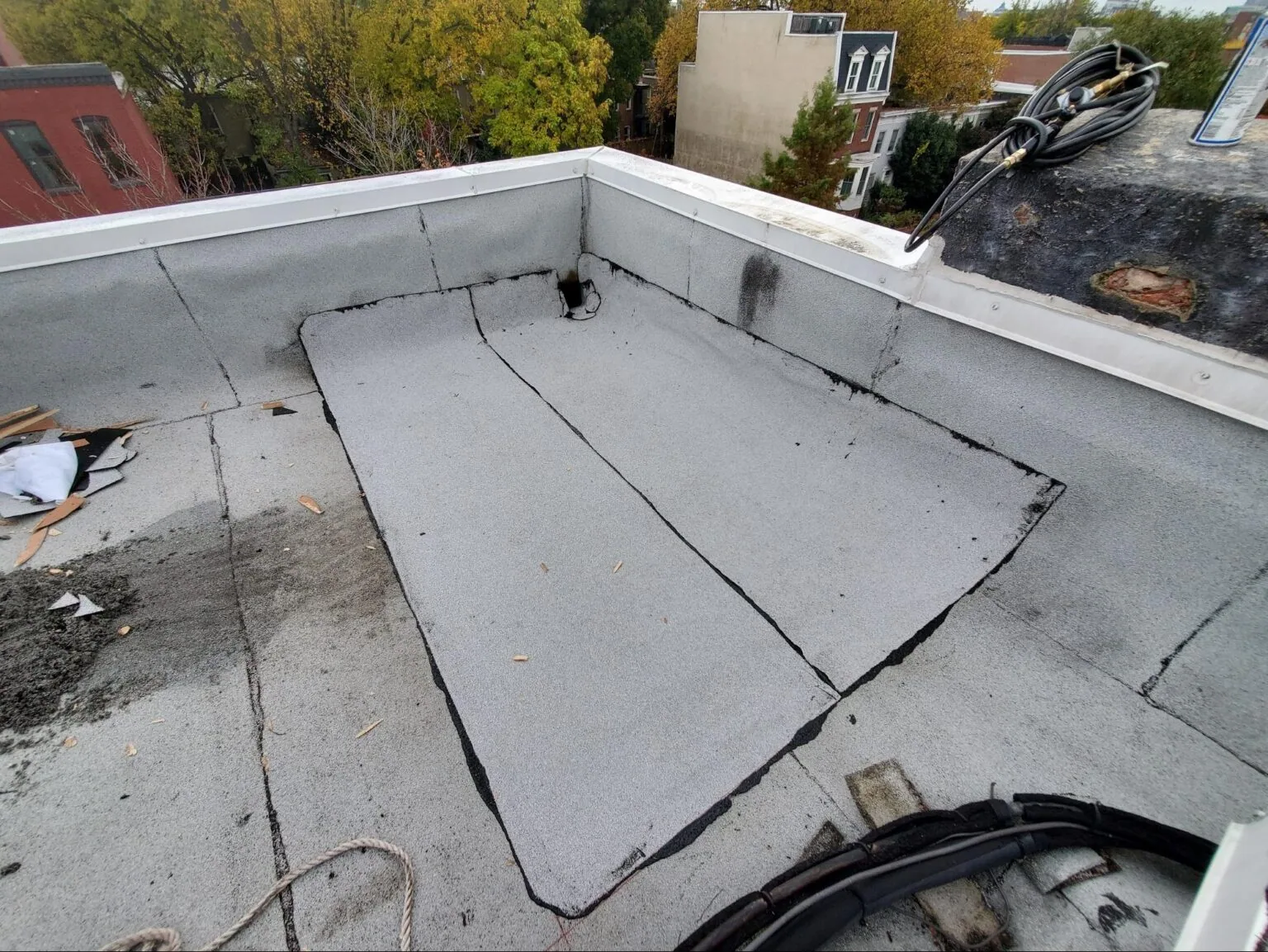
Work planned around the building and its daily operations.