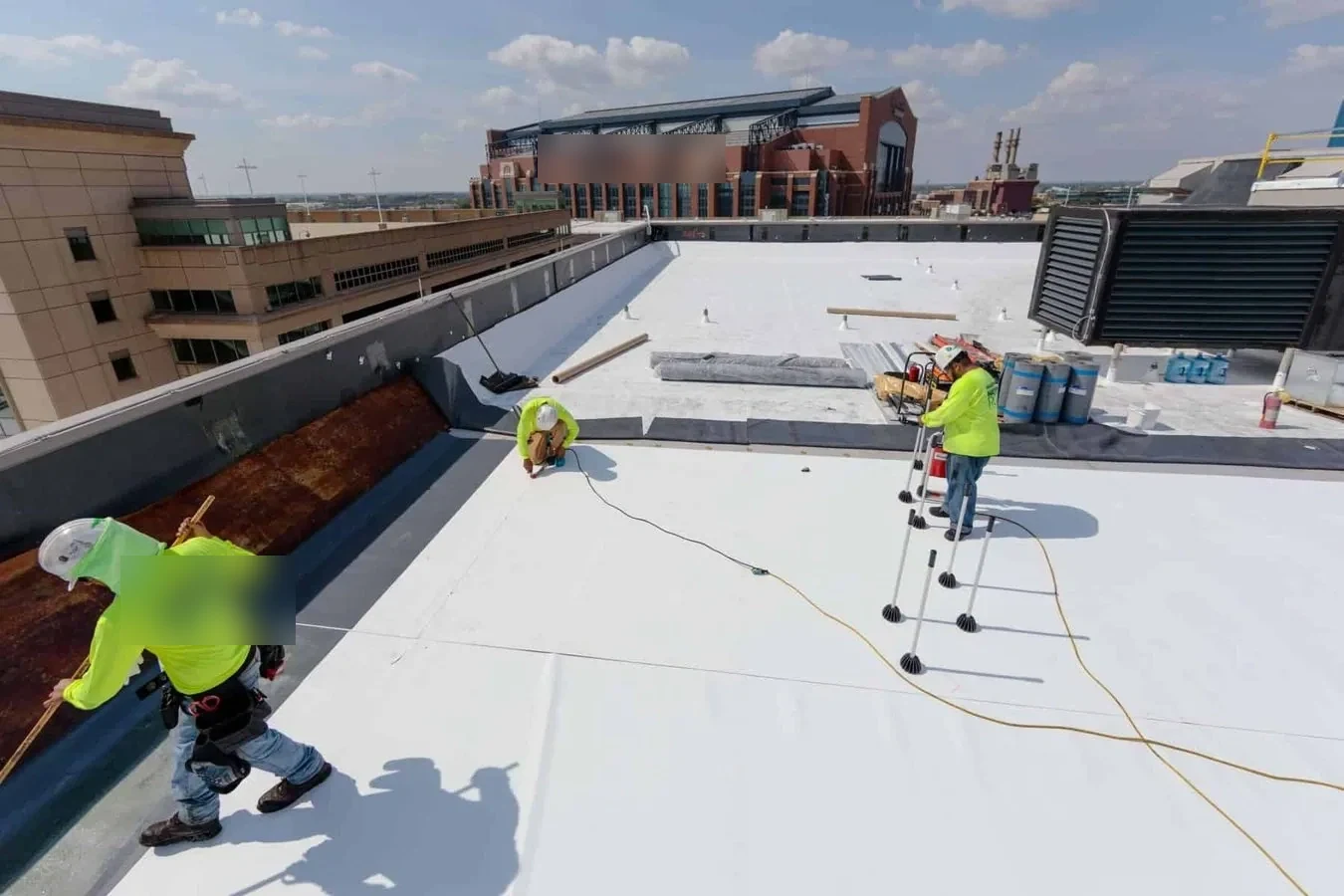
Commercial Roof Asset Management in Mesquite, TX
A roof portfolio gets hard to manage when each building has a different record, repair label, and leak boundary. We build an asset view from the roof plan, inspection findings, prior work, and current operating needs. The record identifies each property, roof section, system, access point, and open condition. A facility director can see what needs immediate water control, what can be scheduled, and what still needs testing before a budget decision. We do not turn a condition list into a replacement schedule without checking the roof.
Mesquite's Skyline Logistics Hub includes manufacturing and distribution activity around Big Town and Town East Boulevards, while the planned IH-20 Business Park includes distribution and cold-storage uses. Those operating contexts make dispatch windows and material staging part of an asset record. A roof review in the Skyline district still follows the inspected building's own plan. For each asset, we connect the field record to photographed condition findings and a practical next action.
What Belongs in the Roof Record?
Start with an inventory that can be checked in the field: building identifier, roof section, approximate limits, access route, membrane or panel type, drainage points, equipment curbs, and known interior symptoms. We label each item by record type: existing roof plan, prior work order, or current inspection. A roof plan may label a section differently from the maintenance team, so one consistent identifier keeps both records usable. That discipline prevents a repair detail from drifting to the wrong building.
Condition entries describe an observed defect, its location, and its effect on the assembly. An open lap, a loose edge, and a stain below a drain are separate findings. We do not use one condition grade to hide those differences. Photos tie each observation to a roof section, while the work history shows what was patched, replaced, or left for testing. A section-level inspection can establish a baseline when records are incomplete. For older assemblies, a moisture survey can help select test locations, with openings confirming the actual wet boundary.
Which Asset Needs Attention First?
Priority follows consequence and evidence. Active water above inventory or electrical equipment moves ahead of surface wear that has no opening. Loose perimeter metal, blocked drainage, failed flashing, and widespread wet insulation can each change the response, but they call for different work. We separate emergency protection from permanent correction so an urgent item does not consume a capital decision before the assembly is understood. Each priority has a reason, a responsible next step, and a point at which the condition should be checked again.
Mesquite's hot, humid summers and spring severe-weather season affect roof exposure across the Dallas-Fort Worth region. That context supports seasonal review of seams, edges, and drainage; it does not prove that any particular building has storm damage. When a condition follows hail or wind, we record the observed evidence and inspection date. A hail-damage assessment can be tied to the asset history without treating a regional event as a diagnosis.
How Does the Record Fit the Shift?
An asset entry should help a crew reach the roof and leave the building protected. We record ladder or hatch access, restricted areas, loading activity, lift staging, and who can release a work zone. The Skyline district's reliance on long-haul carriers makes dock traffic a useful planning consideration for properties in that area. The building operator still sets the actual window. A clear access entry gives dispatch one place to confirm the route, temporary protection, and the roof section that can be opened during the shift.
For retail buildings in Towne Centre and Market East, customer entrances and service activity may require a different ground plan from an industrial property. Towne Centre and Market East include retail, office, industrial, and service activity, but the individual site's layout controls staging. We keep the roof asset record specific to the property rather than applying a district label to every building. A roof inspection serving Towne Centre and Market East can update the site entry after the owner confirms access and operating limits. Repair crews then receive a marked work zone instead of a general property description.
When Does a Repair Become a Capital Item?
Repeated repair at one detail may remain a focused maintenance item. Wet insulation crossing several roof sections, recurring seam separation, or a deteriorated deck can change the choice to recover or replace. The asset record should preserve the evidence behind that change: test locations, removed material, photos, repair history, and any section excluded from access. We mark what is confirmed and what remains an estimate. That prevents a portfolio report from presenting a rough allowance as a measured scope.
Budget timing also depends on work sequencing, material availability, occupant exposure, and the amount of roof that can be closed safely each day. A capital plan by roof section can rank projects against condition and operational impact. Where the assembly may support an overlay, recover feasibility should follow moisture, attachment, drainage, and layer checks. The record links the chosen option to the inspected condition, not just the age of the membrane or a portfolio-wide target date.
What Changes at the Next Review?
Each follow-up compares the current roof with the last recorded condition. We revisit prior repairs, open tests, drain performance, edge details, and equipment changes. If a planned repair closed a leak boundary, the next record shows whether the interior symptom returned and whether the repaired area remains intact. If the roof was not safely accessible, that limit stays visible until a later visit resolves it. The owner gets a clear distinction between completed work and items that are still open.
The review interval can reflect the roof's condition, recent storm exposure, active construction, and maintenance history. We do not assign one schedule to every building. A multi-property owner can use the same fields across assets while keeping findings and intervals local to each roof. The resulting record is useful to operations, ownership, and contractors because it names the section, evidence, work status, and next decision. For urgent water entry, the asset history also supports around-the-clock emergency response without confusing temporary dry-in with a completed permanent repair.
Commercial Roofing Questions
Can we compare roofs with different systems in one portfolio?
Yes, provided each asset keeps its assembly and condition separate. We record the membrane or panel type, attachment, drainage, repair history, and open questions for each roof section. That allows ownership to compare urgency and capital needs without treating dissimilar systems as interchangeable. A portfolio summary can group similar work, but each repair scope remains tied to the building inspected.
What if the roof plans do not match field conditions?
We mark the discrepancy and update the working record after field verification. A plan may omit a curb, show an old drain location, or use a section name the maintenance staff no longer uses. Photos and measured roof limits help reconcile the two. We preserve the original reference while identifying what the current inspection confirmed, so later work orders do not repeat the same uncertainty.
How do you handle an active leak in the asset list?
The entry records the time reported, interior area, affected roof section, temporary protection, and the next inspection or repair. We distinguish water control from permanent correction. If the entry point is not confirmed, the record stays open for a test or follow-up rather than assigning a cause from the ceiling stain. That gives the facility director a live status for the next shift.
Does the record include a replacement year for every roof?
We do not assign a date from age alone. A replacement recommendation follows field condition, moisture extent, attachment, drainage, and repair history. Where evidence remains incomplete, the asset shows the open test or assumption and the decision it affects. A capital plan can then use a confirmed scope or a clearly labeled planning allowance without turning uncertainty into a promise.
What should a facility team send to start the inventory?
Send the building list, available roof plans, known leak locations, prior work orders, and access contacts. Include loading windows or areas that cannot be interrupted. We can start with the records available, then confirm section limits and roof details during inspection. Missing information stays marked as unresolved until a field check establishes it.
Put Each Roof on a Clear Work List
Send the building list, roof plans, open leak tickets, prior repairs, and operating windows. We will inspect the priority sections, record findings by asset, and separate urgent protection from budget decisions.

Roof conditions recorded with photos and written findings.