Commercial Wind Damage Roof Repair in Mesquite, TX
A wind report over an active Mesquite property calls for a safe roof boundary before the next rain reaches an opening. We check the affected section, secure loose material where conditions allow, and separate temporary water control from permanent repair. Spring is the Dallas-Fort Worth region's peak period for severe thunderstorms, with hail, damaging wind, flooding, and tornadoes occurring across the Metroplex nearly every year. The local record helps set inspection priorities. The field condition at the property sets the repair limit.
At the Skyline Logistics Hub and Towne Centre and Market East, building operations can include delivery lanes, occupied suites, and equipment areas that need separate protection. We inspect the property itself rather than attributing damage to a district name. A commercial roof visit near the Skyline Logistics Hub begins with the operator's access plan. A roof review in Towne Centre and Market East also starts with the actual building, reported symptom, and area below it.
What Needs Protection Before the Roof Is Opened?
Loose metal, displaced coping, exposed insulation, or a lifted membrane edge can change with another gust. We first identify the safe route to the work zone and the area below it. If an interior leak is active, we place temporary protection where it can be installed safely and record the roof area that remains exposed. An emergency roof response can address urgent water entry any hour, including weekends and holidays. The crew does not treat a temporary cover as the permanent repair.
The facility contact identifies occupied rooms, loading doors, electrical equipment, and any route that must stay clear. We mark a boundary that can be closed at shift end, then decide whether a lift, ladder, or controlled access point is suitable. Photos show the condition before material is moved. If the roof is unsafe to enter, we state that limit and use ground-level observations until conditions permit a closer inspection.
Where Did Wind Move the Roof Assembly?
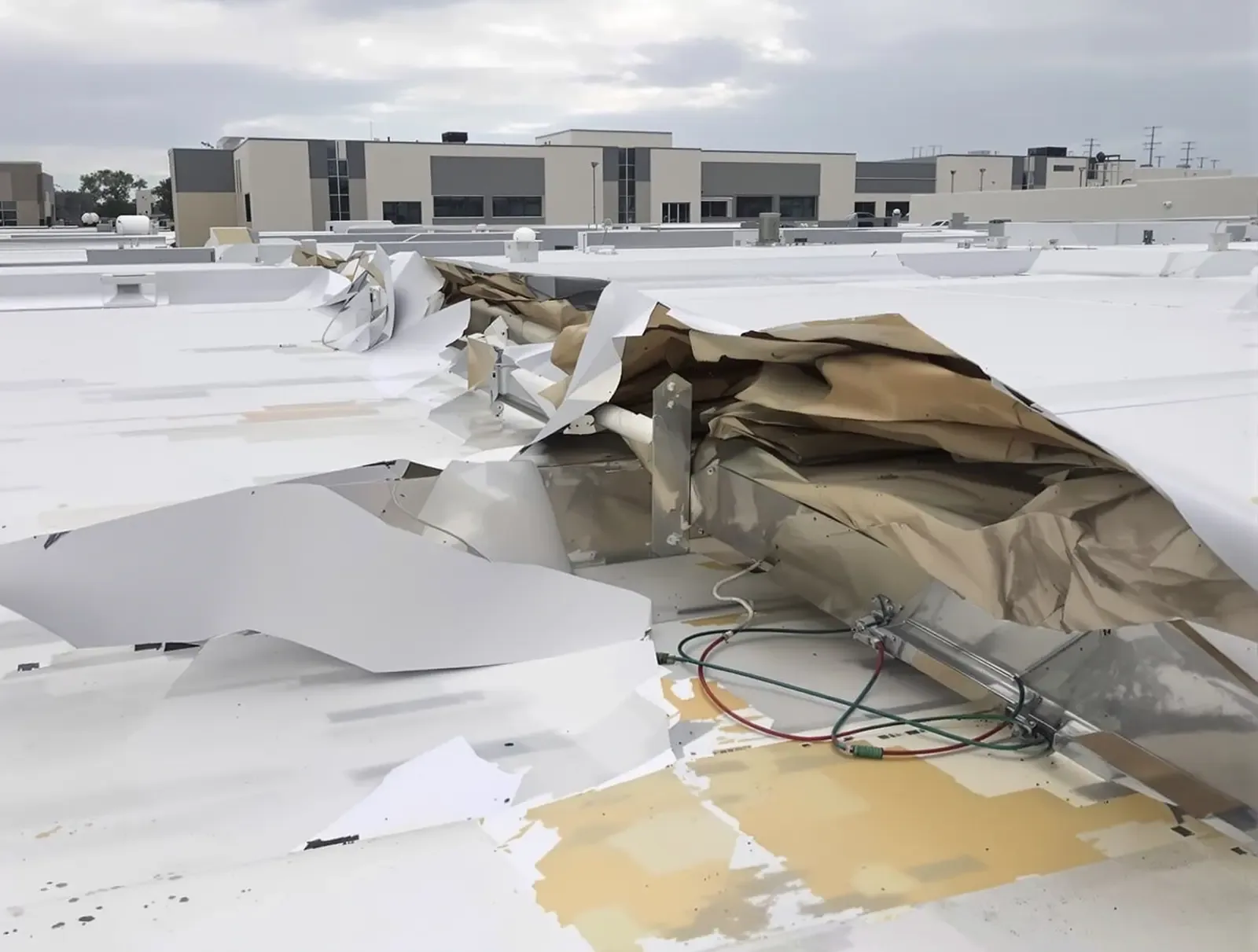
Wind damage can appear at a corner, perimeter, ridge, curb, or panel joint, but one visible defect may connect to a longer attachment problem. We inspect edge metal, fasteners, termination bars, seams, flashing, and transitions where pressure changes across the roof. A lifted edge is mapped back to sound material. We check whether the substrate holds a new fastener and whether water entered beneath the membrane. A tornado-related roof inspection can document a broader impact pattern when the property reports a concentrated event.
On a metal roof, we look for displaced panels, opened seams, loose clips, and damage where panels meet walls or equipment. On a membrane roof, we check the weld or adhesive bond, perimeter restraint, and any patch that may have peeled. We photograph each location with a nearby reference point. That record helps distinguish a single repair from a row of connected defects and gives the owner a clear limit for pricing.
How Far Has Water Traveled Inside?
Water may travel across the deck or insulation before it reaches a ceiling. We start with the room, equipment, or inventory that needs protection, then trace uphill across the corresponding roof section. Staining identifies where to investigate. A test opening or moisture survey can confirm whether insulation is wet and how far removal should extend. The report separates the visible symptom, the suspected entry point, and the area verified in the field.
Wind can loosen flashing around a curb or pipe while rain pushes water through the opening. We inspect the uphill transition, fasteners, sealant edge, and drainage path rather than sealing the first visible gap. A drone roof survey can help map inaccessible areas, while a close inspection establishes the condition of a seam or attachment. The owner sees which findings need a repair now and which areas remain untested.
Can the Existing Section Be Repaired?
A localized correction may fit when the surrounding membrane or panels remain attached and the substrate is sound. The repair must reach a stable edge and match the existing system. A thermoplastic seam needs compatible sheet and weld preparation; a metal panel needs a profile and attachment detail that preserve intended movement. We identify the affected material before selecting a method. A hail-damage inspection can document impact separately when hail occurred with the wind event.
Repeated edge release, wet insulation, damaged deck, or open transitions across several roof areas may call for a larger comparison. We map the tear-off depth, substrate work, edge replacement, and daily dry-in limit before pricing. A recover is considered only when the existing layers, attachment, drainage, and roof height support it. The proposal separates confirmed work from concealed conditions and identifies the approval point if removal exposes more damage.
What Belongs in the Wind-Repair Record?
The closeout file names each roof section, defect, material installed, and repair boundary. Photos record edge details, fasteners, flashing, and any area that was not safe or accessible during the visit. We note whether temporary protection remains and who can authorize its removal. A photo-based condition report keeps the storm finding separate from ordinary wear, prior repairs, and untested areas.
For a property list around I-30 or the U.S. 80 Mesquite corridor, keep each address and access contact in its own record. The corridor name helps locate the building; it does not establish the roof's condition. Schedule a return check after repair if moisture remains, if another section was not opened, or if the next storm could affect an exposed transition. The facility director receives a status the next shift can use: protected, repaired, monitored, or awaiting a test.
Commercial Roofing Questions
Can a lifted roof edge be fastened back down?
First we check the edge metal, substrate, attachment spacing, and membrane termination. A new fastener will not hold if the underlying deck is weak or the metal has deformed. We replace or reinforce the affected detail as the system allows, then connect it to secure material. The repair note shows the tested boundary and any nearby area that still needs review.
What should staff do while wind damage is being inspected?
Keep people away from loose material and mark any interior area receiving water. The facility contact can protect equipment or inventory and identify a safe access route for our crew. We confirm whether roof entry is suitable before moving material. Temporary water control is documented apart from the permanent repair so staff know what remains open.
Does a regional storm report prove our building was hit?
No. The regional storm record helps us understand when to inspect, but the roof must show evidence at the property. We photograph moved metal, open seams, punctures, and water entry, then compare the finding with the interior report. If conditions do not support a conclusion, we identify the next test rather than assigning damage by location alone.
Can roofing work continue while a Mesquite facility is loading?
A loading shift can continue when the site approves separated paths and a protected work zone. We record which dock, pedestrian lane, and interior area lie below the repair, then set the material route and handoff contact. If a section cannot be closed safely before dispatch changes, the work waits for another window. The schedule is based on the property's own operation.
When does wind damage call for replacement instead of repair?
Several connected failures, saturated insulation, damaged deck, or recurring edge release can make a local patch incomplete. We map the affected sections and compare repair, recover, and removal only after checking the assembly. The proposal shows removal limits, dry-in steps, and concealed-condition approvals. A single loose detail does not decide the scope for the rest of the roof.
Mark the Wind-Damage Boundary
Send the roof plan, event timeline, affected room or loading area, photos, and safe access window. We will inspect the edge, seams, flashing, and drainage path, then separate temporary protection from permanent repair.