Auto Dealership Roofing in Mesquite, TX
A roof leak can disrupt a showroom, service lane, parts room, or customer handoff before it creates a visible ceiling stain. We start by identifying the occupied area, what is exposed below it, and whether water is active. The inspection then maps the roof section to the dealership function it protects. A commercial roof inspection separates observed conditions from assumptions so a single service-bay leak does not become a full-building replacement claim.
Auto campuses often combine different roof heights and construction periods. Showroom glazing, overhead doors, mechanical curbs, and additions can create separate transitions. At each address, we confirm those details before selecting a repair boundary or work window.
How Can the Public Floor Stay Separate from the Roof Work Zone?
Mark the showroom, offices, customer lounge, service bays, parts storage, wash area, and delivery entrance on a simple site sketch. A leak report should identify which zone is affected, when it began, and whether the ceiling, lighting, equipment, or vehicles below need protection. If water is moving, protect the immediate area and record the temporary measure separately from the permanent correction.
At roof level, connect each interior report to a bay, seam, drain, curb, wall transition, or prior patch. Photograph a wide area first, then the suspect detail. Avoid calling a pattern a roof failure until the observed condition supports that conclusion. The office area roof review should also note whether occupied rooms sit beneath a separate addition or shared membrane.
Keep lifts clear of customer circulation, service write-up lanes, and emergency paths. Confirm any short closure, vehicle relocation, customer notice, and overhead-door clearance before crews arrive.
For an active leak above a vehicle, move it if safe, protect the interior, and record the parking position. Keep temporary covers clear of customer routes. State the protected area, expected hold time, and inspection needed before permanent work.
Which Details Cross Between Separate Roof Sections?
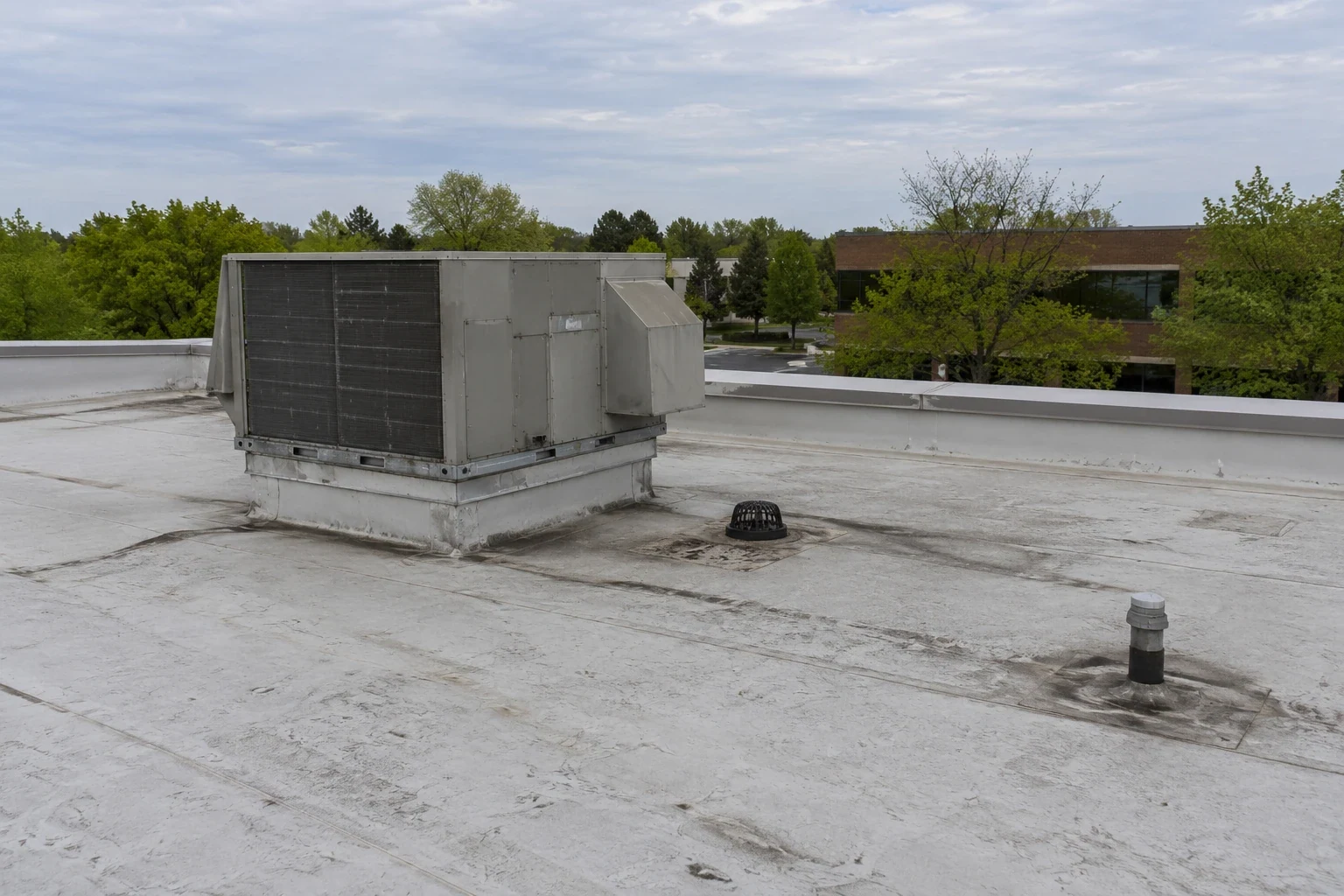
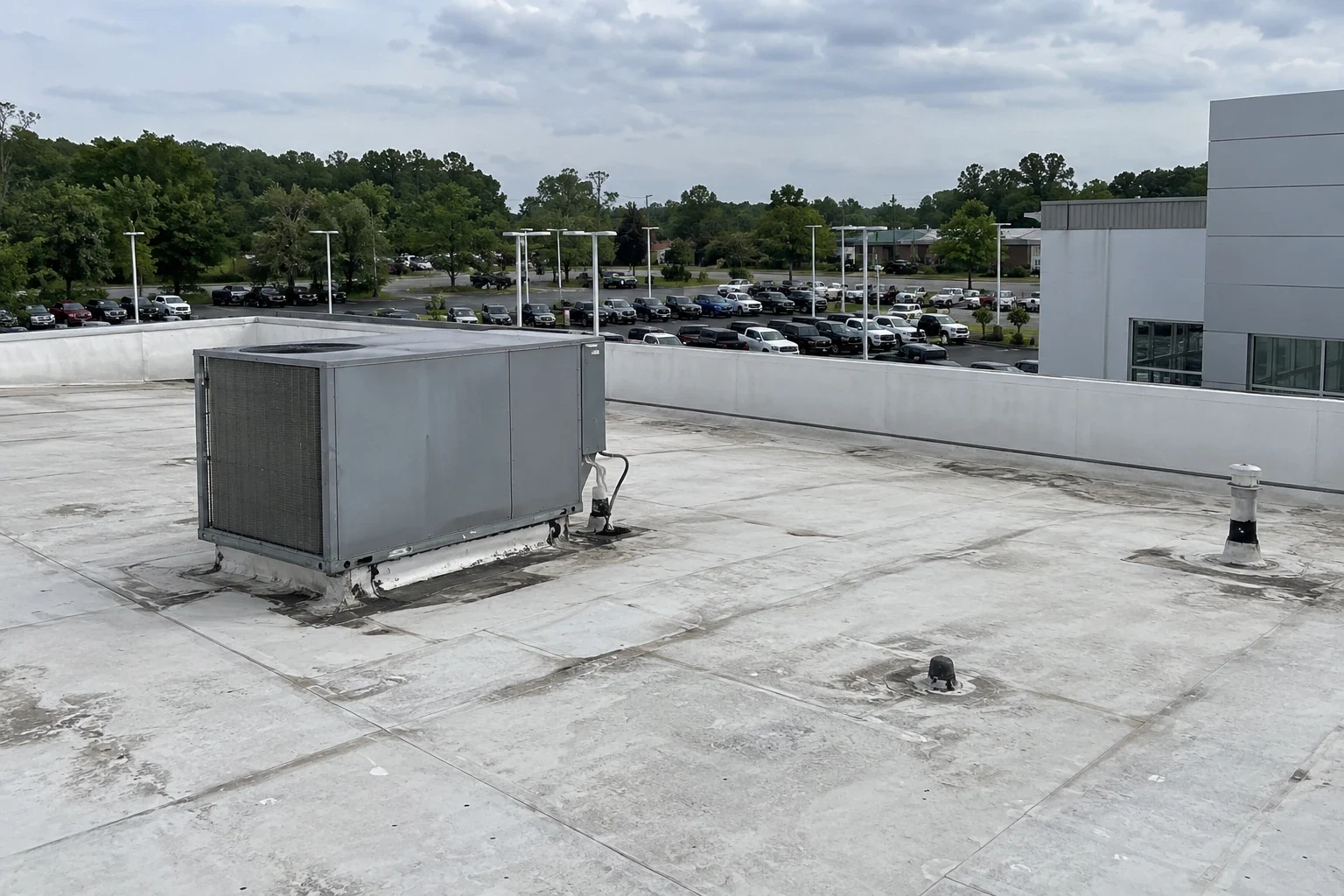
A dealership roof may include a broad showroom plane, lower service bays, office wings, and later additions. The intersection between those planes can be more important than the field membrane. Check expansion joints, parapet corners, roof-to-wall transitions, drains, scuppers, penetrations, edge metal, and overhead-door framing. Record which area drains to each outlet and whether water has reached the building interior.
The Town East Retail and Restaurant Area is a business district with customer-facing uses. A dealership near the Town East retail area still needs its own entrance, customer route, and staging plan; district context does not establish conditions at one address.
The drain and scupper review should capture debris, outlet condition, overflow paths, and the roof area served. A blocked drain and a failed seam require different corrections. If water is trapped in the assembly, determine whether a test opening or moisture survey would change the proposed repair. Keep confirmed wet material separate from an unverified infrared pattern.
Mesquite's local amendments to the 2024 building code were adopted in November 2025. For a dealership alteration, check which review steps the actual project scope triggers before selecting a design change. Confirm the applicable path for the site before pricing a design change. Do not treat a prior dealership project or older permit assumption as a current approval.
How Can Inventory, Equipment, and the Daily Handoff Stay Protected?
Before cutting or removing roof material, identify what sits below the work area. The parts department may hold packaged inventory; the service floor may have tools, lifts, diagnostic equipment, and vehicles; the showroom may contain displays and customer property. Agree on relocation, covers, barriers, housekeeping, and who checks those measures at shift end. A photo log should show the protected area before work and its condition after cleanup.
The Skyline Logistics Hub includes long-haul freight activity. A dealership nearby still needs its own parts receiving hours, customer route, and staging point. This district fact does not mean a dealership is part of the industrial hub. It does make it useful to ask how deliveries, parts replenishment, and carrier access interact with a proposed closure at the actual address. A visit in the Skyline district still follows site-specific instructions from the dealership contact.
Where feasible, schedule noisy work away from arrival peaks. Tell the service lead about any route change. Use a spotter or alternate delivery path only with site approval.
If an opening will remain between shifts, define the dry-in point and the person responsible for verifying it. Store removed components where they cannot obstruct parts movement or vehicle turning. If weather changes the sequence, pause before uncovering additional area. The daily handoff should list completed sections, temporary conditions, open approvals, and the next safe start point.
Which Scope Fits the Inspection Evidence?
A repair may fit a discrete opening, failed flashing detail, or limited membrane defect when adjacent materials accept a durable tie-in. State preparation, materials, limits, exclusions, and follow-up. The repair scope should map the work to the dealership zone below it.
Consider broader replacement review when defects recur across separated planes, insulation is wet over a wider area, drains remain unresolved, or previous patches do not address the movement at a transition. A proposal for roof replacement should spell out tear-off, deck review, insulation, drainage, edge details, temporary protection, vehicle access, customer notices, and daily dry-in. If a recover is considered, document layers, attachment, moisture, and height before making an eligibility statement.
Mesquite's Town East and Skyline area combines industrial, retail, and mixed-use districts, but that mix says nothing about a particular dealership roof. Verify each addition and service wing in the field, then tie each option to its own findings.
Cost and downtime depend on access, deliveries, protected inventory, wet insulation, deck condition, and safe exposure limits. Identify who can approve concealed-condition changes and what evidence supports new quantities. Compare both options on one roof map.
What Should the Next Manager See in the Closeout Record?
Closeout should identify the repaired roof section, materials, boundary, dated photographs, and any excluded condition. Note whether the showroom, service lane, parts room, or other area below was protected and reopened. If a test opening was made, document the layers and limits actually seen. Avoid applying one test result to unexamined roof areas.
Give the dealership a concise status for every work zone: complete, temporarily protected, awaiting approval, or scheduled for follow-up. Track drain cleaning, seam observations, and recurring leak locations in the same roof map. A maintenance visit can provide a repeatable record, while a manufacturing roof review must keep its own process access and equipment constraints.
DFW summers are hot and humid, with July and August highs usually in the 90s and sometimes above 100. Spring is the region's peak severe-weather season, when hail and damaging wind may occur. These patterns help plan inspections; they do not prove damage at one dealership.
The final packet should include the approved proposal, change approvals, photos, material notes, test results, open items, and the contact who can authorize the next step. Keep the next review date visible to facilities and service leadership. When a leak returns, the record should let a new manager compare the location and prior correction without restarting the investigation.
Commercial Roofing Questions
What should we send before a dealership roof inspection?
Provide the leak location, affected department, time water appeared, roof plan if available, access rules, and any delivery or customer schedule that constrains the visit. We confirm safe access before proposing work.
Can roof work continue while the showroom is open?
Often the work can be divided into controlled zones, but lift placement, noise, vehicle circulation, and overhead protection must be reviewed at the property. The dealership contact approves any customer-route change.
How do you handle a leak above a service bay?
We identify the bay and roof section, protect vehicles and equipment, trace the likely water path, and document the temporary response separately from permanent repair. The bay returns to service after the agreed check.
When does a repair become a replacement discussion?
Repeated failures across roof sections, widespread wet insulation, unresolved drainage, or incompatible prior repairs may justify a broader review. We map the evidence first and show what a repair would leave unresolved.
What belongs in dealership roof closeout?
Keep dated photos, the affected roof map, materials, limits, approvals, protection notes, test results, and open conditions together. Include who received the handoff and when the next observation is due.
Keep the Showroom and Service Floor Moving
Share the affected department, roof plan, customer or delivery constraints, and safe access window. We will map the roof section, protection boundary, and next inspection decision.