
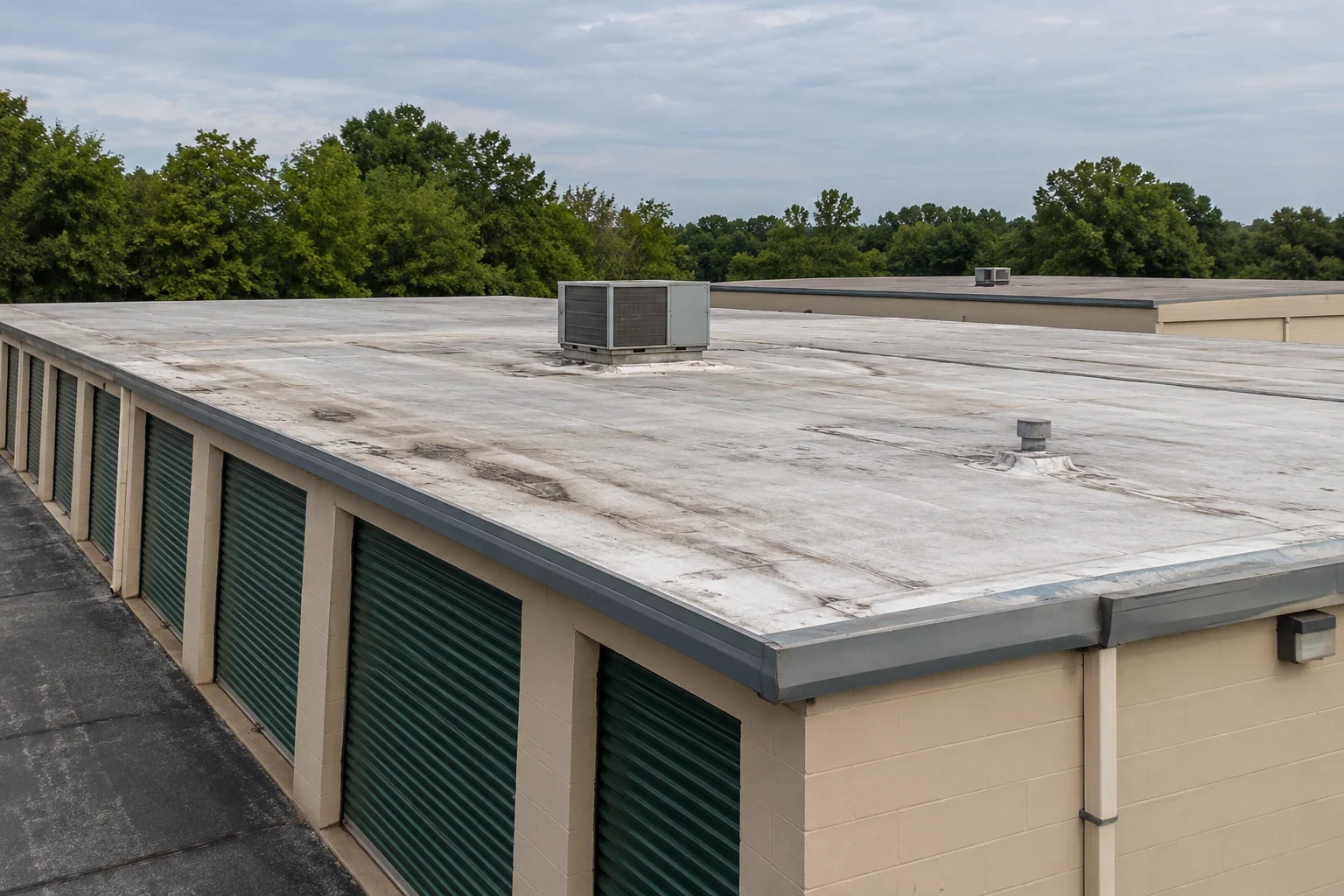
Self-Storage Roofing in Mesquite, TX
A leak over a storage row can threaten customer property before the roof failure is visible. In Mesquite, TX, we start with the affected unit range, the building section above it, and the time water appeared. Temporary protection is a separate step from permanent repair. The inspection traces the path across the roof and records which seams, penetrations, drains, or transitions support the repair boundary.
Storage sites can have repeated bays, different roof heights, and gates that limit access. Those conditions must be confirmed at the property. A section-mapped inspection ties each observation to a building and area so one leak ticket does not become a sitewide replacement assumption.
Which Units and Aisles Need Protection?
Record the unit numbers or aisle range reported by the manager, then mark the roof area above them. Affected inventory may need relocation or a cover before the repair is priced. Photograph the interior condition and keep it separate from the suspected roof opening. Water can move along a deck, insulation joint, or framing line before reaching a unit door.
At the roof, check seams, curb flashing, wall transitions, drains, scuppers, edge metal, and previous patches. Note what is visible and where access stops. Use a wide photo to show the roof section, then close images to show the detail. Keep roof-area labels consistent through the proposal and final photo record. A warehouse roof inspection may use similar section mapping, but each storage building has its own unit layout and protection plan.
Customer aisles and vehicle paths remain part of the work boundary. Confirm gate access, hours, lift positions, overhead exposure, and where material can be staged. If a lift or debris chute blocks a drive aisle, schedule that task for an approved window. The site manager should know which lanes remain open and how the work area will be returned at shift end.
If an opening is needed, name the roof section, unit range below it, barrier, cleanup plan, and approval contact. Do not expose stored goods or leave a roof cut without a temporary seal. The closeout should identify who checked the protection and whether the permanent correction is complete.
What Happens at Drains and Low Points?
Storage roofs can have more than one drainage path. Map each drain, scupper, overflow, and slope change to the building section it serves. Photograph debris, visible water lines, and any reported overflow. A blocked outlet differs from a membrane seam failure. A drainage review can isolate flow correction from membrane work and define which area needs another observation.
For reported ponding, record the location, observation time, and serving outlet; one post-rain image cannot establish duration. Before pricing coating or recover work, verify substrate, attachment, moisture, slope, and height. A recover assessment should identify existing layers and eligibility evidence.
Since May 2026, Mesquite's amended energy-conservation code has governed local review for applicable work. A storage roof assembly change may require an energy-code check based on its scope. Confirm the current review path for the address and proposed work rather than carrying an old assumption into a bid. The roof decision and code review belong in the schedule before insulation or membrane is concealed.
Wet insulation can extend beyond the visible leak. If an infrared scan or test opening is used, record its limits and verification method. Mark confirmed wet material separately from a pattern that still needs confirmation. The owner can then compare the cost and disruption of opening the assembly with the risk of pricing repair quantities from incomplete evidence.
How Do Gates and Loading Shape the Work?
Confirm gate control, crew entry, customer aisles, delivery lanes, and required fire access. Set roof access, lift placement, electrical limits, and material staging before scheduling. Base the loading plan on this address and its operating hours.
The Skyline Logistics Hub covers manufacturing and distribution uses between Interstate 30 and Skyline Boulevard. That district context is not a description of self-storage operations. It does make it useful to confirm traffic, delivery, and staging conditions at the actual address. A roof visit in the Skyline district still follows the property manager's gate and access instructions.
The IH-20 area includes planned and active distribution, cross-dock, cold-storage, and build-to-suit development. These are separate uses, not a claim about storage inventory. A facility in the IH-20 business area should confirm its own loading restrictions, tenant notices, and route for crew and materials before work is scheduled.
Roof replacement may require a longer lane closure than a repair. Divide removal into sections, protect stored units below, and define the dry-in point for each shift. If deliveries or customer access conflict with removal, change the sequence before tear-off. State who can release the next work zone and who receives the daily handoff.
When Does a Leak Need More Than a Patch?
A bounded repair lists preparation, compatible material, tie-in, exclusions, and the roof area covered. If an isolated puncture or flashing opening is visible and nearby material can accept a durable correction, a localized repair may fit. Record the next check so the manager can compare the result with the original leak location.
Consider a broader review when failures recur across bays, moisture extends beyond one opening, or multiple drains and seams show unresolved conditions. Replacement assumptions include tear-off, insulation, deck review, edges, drainage, disposal, customer notices, and protection. A recover option must identify layers, attachment, moisture, and height limits. Put both options on the same roof-area map.
Mesquite's Town East and Skyline reinvestment area includes industrial, retail, and mixed-use commercial districts. That mix does not establish the use or condition of a particular storage property. We confirm the actual building, access hours, and customer routes before choosing a repair sequence. Keep local district context separate from the site findings.
Timing and cost change with gate control, stored inventory, unit access, lift staging, material movement, weather, and wet insulation. Identify the approval contact for concealed conditions and the evidence needed before quantities change. If water is active, the first decision is temporary protection. The permanent scope follows a roof inspection and an approved work boundary.
What Should the Manager File?
Closeout should show the building section, unit range affected, repair materials, boundary, dated photos, and any open condition. Attach the approved scope version and changes. If a test opening was made, state what it showed and the section represented. Do not apply one opening result to distant bays that were not checked.
Give the manager a short status for each area: open for access, temporarily protected, repaired, or waiting on testing. If stored goods were relocated, identify any follow-up protection or cleanup check. A maintenance visit can track drains and recurring details, while a flex-industrial roof review should retain its own building use, access, and roof map.
Emergency response can start overnight or on a holiday. We identify the affected unit range, safe access, and immediate protection need first. Permanent repair follows field review and approval. A dated photo record gives the next manager a usable comparison point without turning one leak into a conclusion about every storage row.
Commercial Roofing Questions
What information helps locate a storage-unit leak?
Send the unit range or aisle, time water appeared, building label, and available roof plan. We map the interior report to a roof section and keep the suspected path separate from confirmed damage.
Can customers still reach units during roof work?
The gate schedule and work-zone map decide that. We identify lanes that must stay open, place lifts and materials outside them where possible, and schedule any temporary closure with the site contact.
When should wet insulation be opened?
Open the assembly when the extent or condition will change the scope and the owner approves the location. Record the layers and limits of what the test reveals before revising quantities.
Can a roof recover be installed over an existing system?
Only after reviewing layers, attachment, moisture, deck, height, and applicable code requirements. The proposal should state the evidence and assumptions behind recover eligibility.
What should be in the repair closeout?
Keep the unit range, roof section, materials, photos, repair limit, approvals, and any remaining test or protection item together. Assign an owner and review date to unresolved conditions.
Map the Leak Before the Aisle Closes
Send the leak timeline, unit range, roof plan, gate or delivery schedule, and safe access window. We will map the affected roof section and identify the protection and inspection steps.

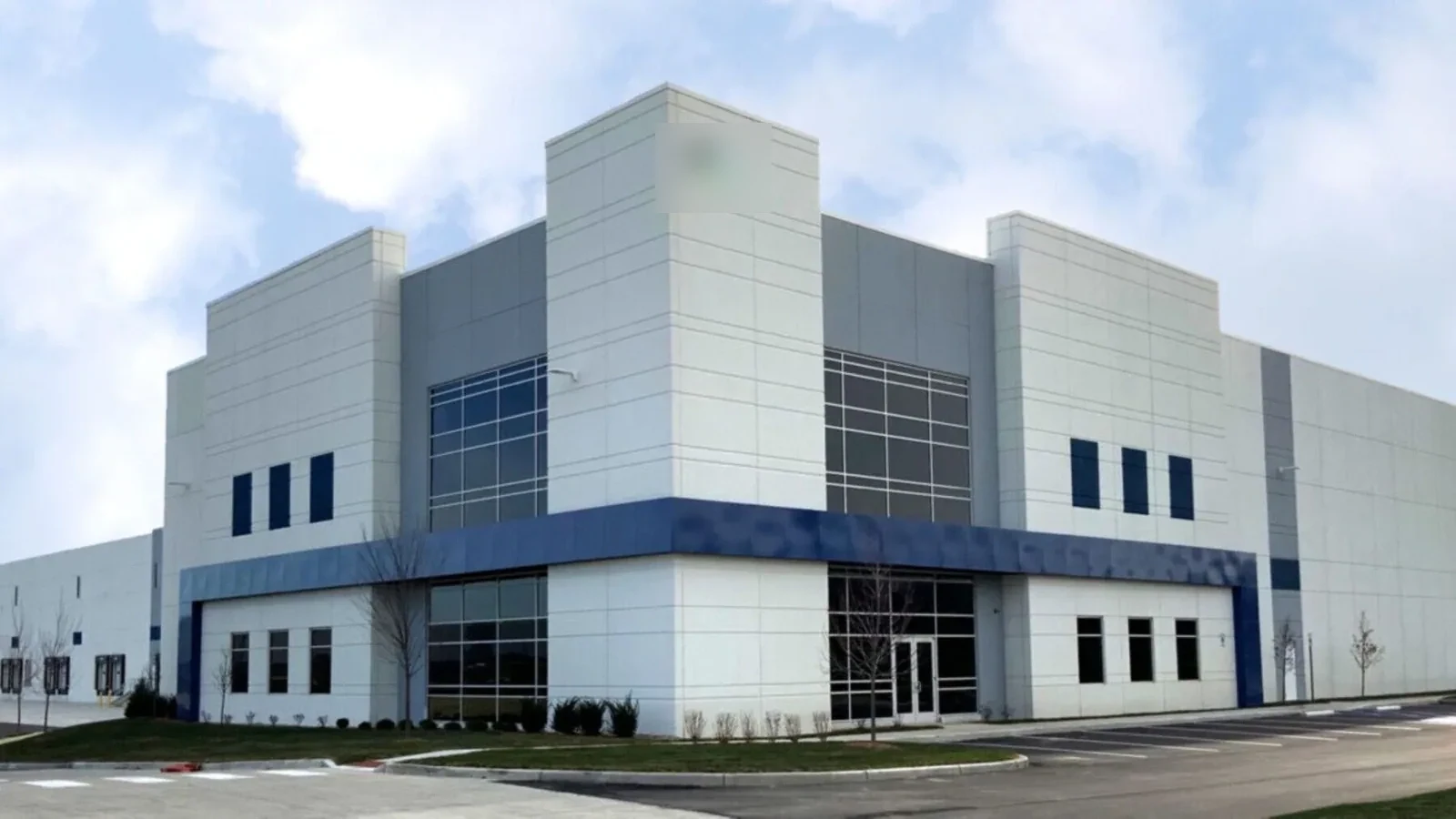
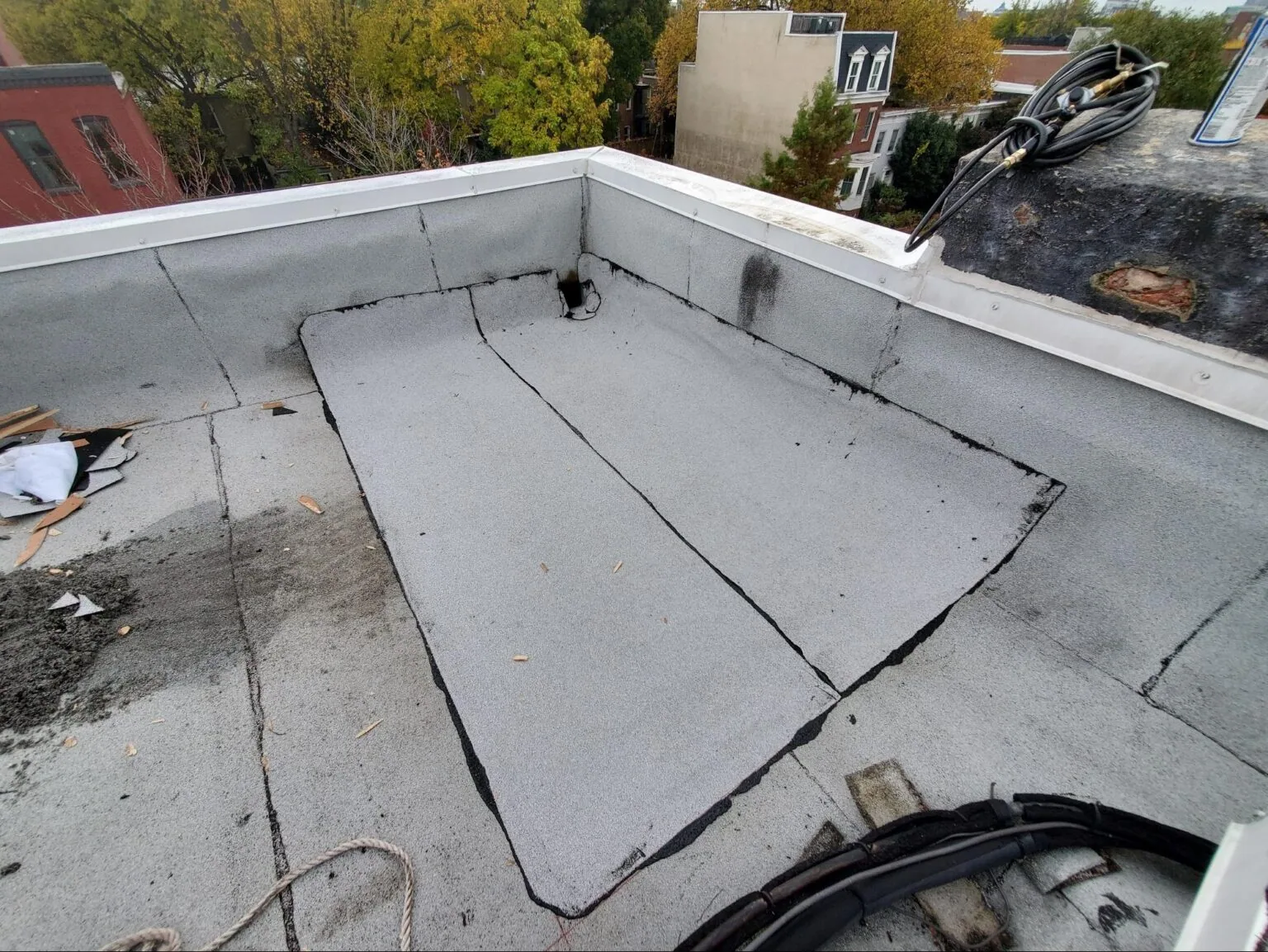
Work planned around the building and its daily operations.