
Sika Sarnafil Commercial Roofing in Mesquite, TX
A separated PVC weld at a curb can put water below the sheet before the leak appears inside. We inspect the seam, flashing, attachment, and roof section around the symptom. The repair limit follows what the assembly shows, not the ceiling mark. Sika Sarnafil roofs use PVC membrane construction, but the exact sheet and detail depend on project records and field conditions. We verify the assembly before choosing a repair method.
Manufacturing and distribution businesses around Big Town use the Skyline Logistics Hub corridor, where long-haul carriers move goods. That freight pattern makes dock access part of a repair window. We separate immediate water control from permanent membrane work. For a broader PVC roof system review, we compare the installed assembly rather than assume every sheet takes the same repair.
Where Has the Weld Let Go?
A probe catches an unbonded edge, but the visible opening is only the first check. We look for incomplete hot-air welds, shrinkage at a termination, a failed patch, punctures, and movement where the sheet meets a raised detail. The crew tests weld quality and checks the membrane around the defect. Water may travel under the sheet, so an interior drip can sit downhill from the entry point.
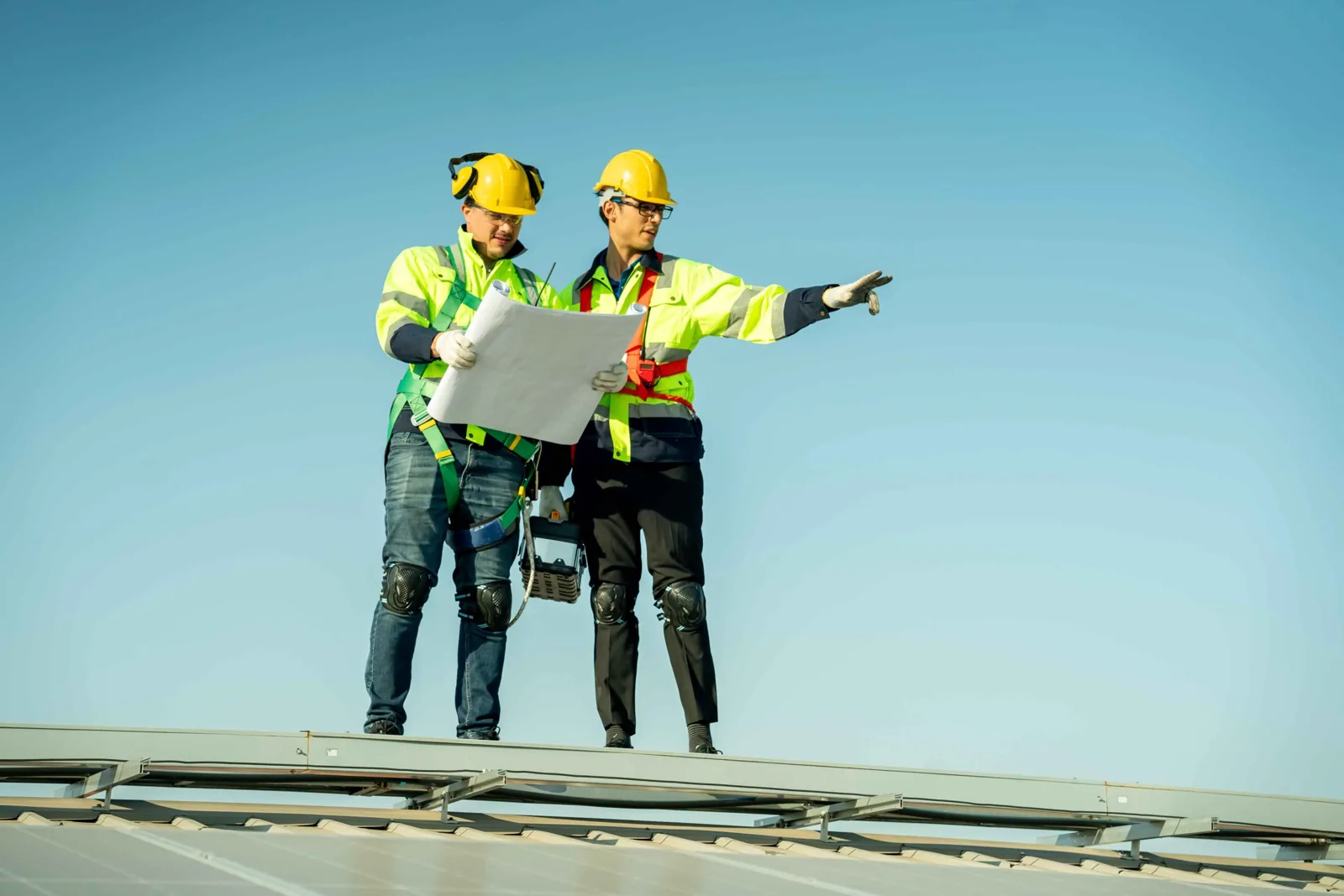
We compare the roof plan with the field. Records may identify PVC, insulation, cover board, and attachment, but past repairs can change the assembly. When documentation is missing, a test opening can show whether insulation is dry and whether the membrane is bonded or mechanically secured. A roof inspection with a marked condition record gives the owner a boundary for repair or replacement discussion. Mesquite's Skyline Logistics Hub includes manufacturing and distribution businesses; loading access belongs in that repair plan.
Storm exposure changes with the season in North Texas. Spring convective systems can bring hail or forceful gusts, while intense rain may burden drainage and tornadoes remain a regional hazard. None of those conditions proves that a particular sheet failed. After an event report, we inspect for impact marks, displaced edge metal, released terminations, and a traceable water path. A hail-related membrane assessment fits when the surface shows impact, while a weld opening may have another cause.
Can the Existing PVC Be Repaired?
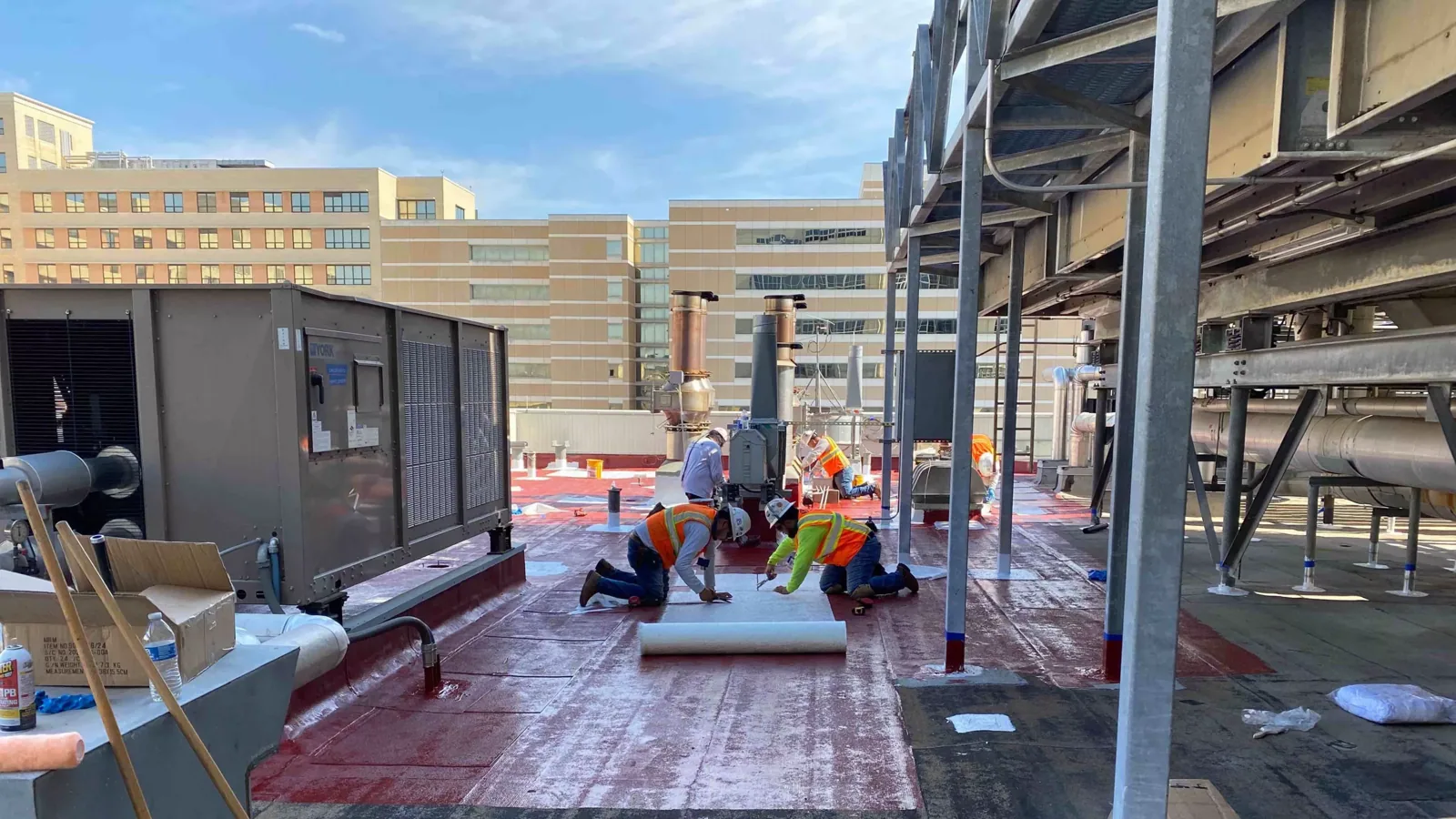
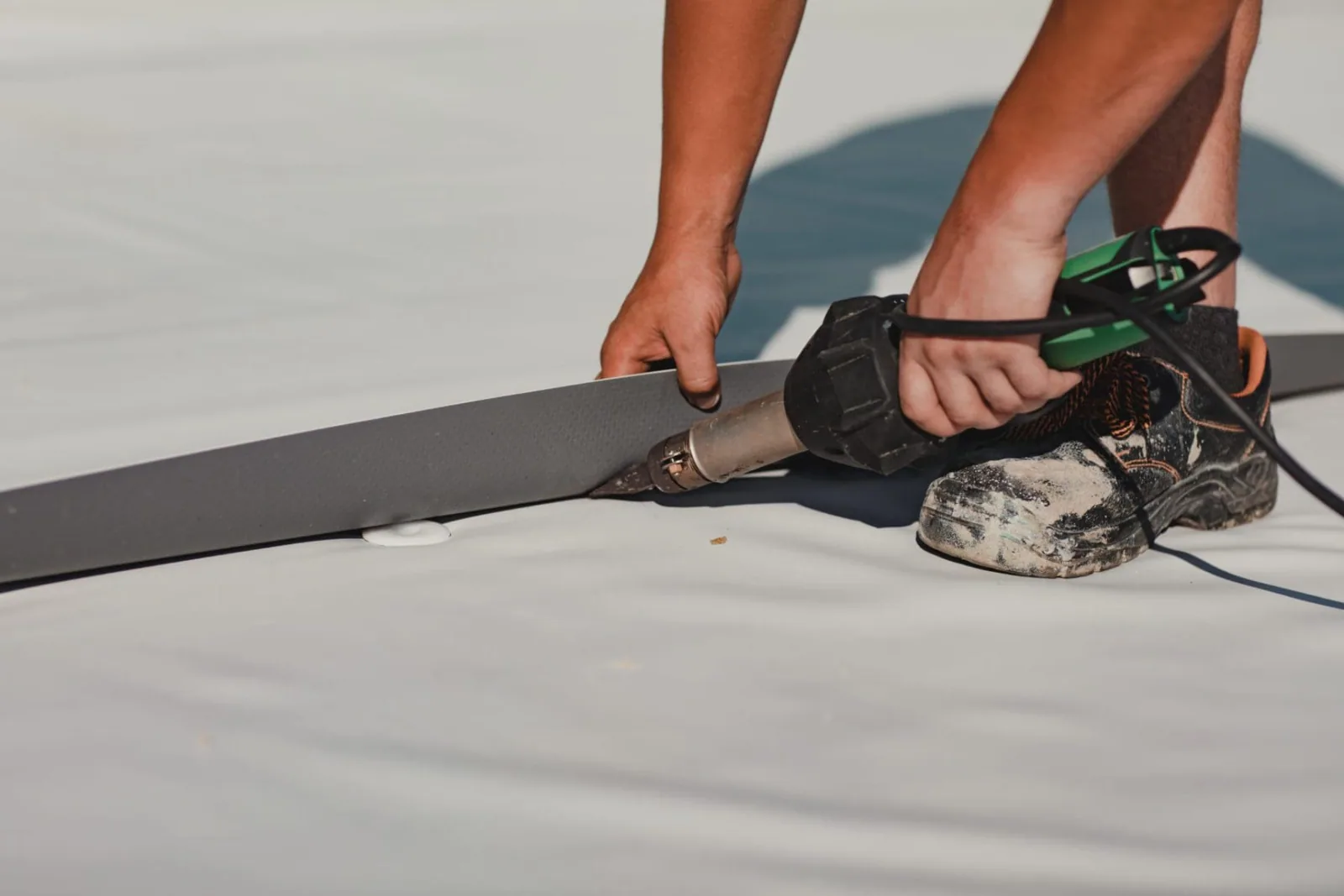
A repair fits when the failed area is bounded and the surrounding membrane remains sound. We remove contamination, prepare the sheet, and weld compatible PVC to a clean surface. Curb corners, penetrations, drains, and wall terminations each need a continuous transition. We probe the finished weld after it cools. Sealant over an open lap does not restore the welded connection.
If moisture extends beyond the seam, removal must reach dry, stable material. We mark the suspected area, open selected points, and record where wet insulation ends. The infrared survey for roof moisture can help narrow those checks; a field opening confirms what sits below. Active water entry calls for temporary protection while the permanent scope is prepared.
A recover is considered only after checking layers, moisture, attachment, drainage, and project requirements. It cannot replace wet insulation removal or correction of loose membrane. We compare a bounded repair, section replacement, and full reroof by the areas each includes. A separate roof with a documented Versico membrane system calls for its own material and detail review.
When Does Replacement Make More Sense?
Replacement becomes a stronger option when weld failures repeat, the membrane has lost flexibility, or moisture is widespread. We check insulation, edge securement, slope, drains, curbs, and existing layers. Then we identify what can remain, what must be removed, and which transitions need rebuilding. If project records call for a Sika Sarnafil assembly, we compare them with the roof in front of us.
The IH-20 Business Park area includes planned cold-storage and cross-dock uses. For a replacement there, delivery timing and interior safeguards belong in the roof sequence from the start. We divide removal into sections that can be dried in during the agreed window. A replacement sequence for an occupied facility sets removal limits, deliveries, and daily closeout around dock and storage activity.
Cost and duration move with tear-off depth, wet insulation, deck repairs, crane access, roof height, staging, and the number of details. A dry field with isolated defects differs from removal around multiple curbs and drains. We separate confirmed work from conditions hidden until the assembly opens. A Soprema roof assembly needs its own substrate and transition checks.
How Do We Keep the Work Zone Clear?
Before mobilization, we confirm access, material drop, fall protection, the interior area at risk, and any loading restriction. A PVC repair may need a small work zone. Replacement also needs space for removed material, insulation, membrane rolls, and equipment. We set the daily boundary with the facility contact and keep each opening small enough to close before the crew leaves.
Near Big Town and Town East Boulevards, truck arrival can overlap with dock traffic. We coordinate deliveries with the site's actual schedule and keep temporary protection ready if weather interrupts the work. Summer heat across Dallas-Fort Worth also affects timing for exposed membrane work. We follow the system's installation instructions and verify surface conditions instead of assuming the regional climate explains a specific weld failure.
What Belongs in the Repair Record?
The closeout marks the repaired seam on a roof plan, includes photos, identifies materials, and shows the work limit. We note nearby drains, curbs, edges, and any excluded section. If a test opening found wet insulation, the record shows where it began and ended. That gives the next maintenance visit a specific check point rather than a general note that the roof was patched.
After repair, we inspect the weld and adjacent transition, remove debris, and confirm drainage paths remain open. Follow-up can focus on repaired terminations, earlier patches, and areas that were inaccessible. A maintenance schedule for commercial roofs can track those items by section. For a visit, provide the roof drawing, a date-and-time log of the leak, photos of the interior and membrane, and any delivery limits. We can verify the PVC repair area and explain whether temporary protection or broader corrective work is indicated.
Commercial Roofing Questions
Can a Sika Sarnafil weld be repaired without replacing the full roof?
A localized repair can work when the surrounding PVC, attachment, and insulation remain serviceable. We test the weld area, prepare the sheet, and connect compatible membrane to a sound surface. If similar openings appear across several sections or wet insulation extends beyond the defect, we compare a larger repair with replacement. The field condition sets that boundary.
How do you check whether water spread under the PVC sheet?
We begin with the roof plan and trace the likely entry point from the interior evidence. A moisture survey can narrow the places to open, while a test cut reveals the insulation and layers directly. We map the wet-to-dry transition before setting the repair edge. That keeps the scope tied to the assembly condition instead of ending at the first visible split.
Will a PVC repair hold if the curb flashing is also separated?
The seam and curb need to be treated as one water path. We inspect the vertical flashing, corners, terminations, and field weld, then rebuild the transition where material has released. A patch that stops short of the curb can leave the entry point open. We document the detail that was corrected and any adjacent condition outside the work limit.
What information helps plan a Sika Sarnafil repair at a distribution building?
A repair window is easier to set when we understand how the building moves through a day. Share the roof layout, time-stamped leak observations, interior photographs, past work records, and the hours when docks or staging lanes are busiest. We can then place the inspection and any temporary protection around those operating constraints without treating a dispatch route as open work space.
When should we consider a recover or a full replacement?
We check moisture, attachment, existing layers, drainage, and structural limits before comparing a recover with replacement. A stable, dry roof may support an overlay when project requirements allow it. Widespread moisture or recurring weld failures call for a broader scope. The estimate identifies which sections qualify and which details need rebuilding.
Set the PVC Repair Boundary
For a focused inspection, send the roof drawing, date sequence for the leak, interior and roof photos, earlier repair record, and any shift or access restriction. We will inspect the Sika Sarnafil assembly and mark the failed weld and surrounding work area.
Work planned around the building and its daily operations.