Commercial Standing-Seam Metal Roofing in Mesquite, TX
A standing seam can remain closed while water enters at a curb, panel end, or fastener added for equipment. We inspect the panel seams, clips, closures, flashings, and roof transitions before deciding whether to repair one detail or a larger section. Metal panels expand and contract. A repair that locks movement or seals the wrong joint can create another problem. We identify the panel profile and attachment method before ordering material or disturbing a seam.
Garland's I-30 commercial corridor runs toward Lake Ray Hubbard, and Balch Springs sits where I-20, I-635, and US 175 converge. Those routes can influence delivery and lift access on a roof project, but they do not define the building's panel system. A metal roof review along Garland I-30 starts with the actual roof plan and safe access. A commercial roofing visit in Balch Springs can coordinate staging with the site's loading and operating schedule.
Are the Panels Moving as Designed?
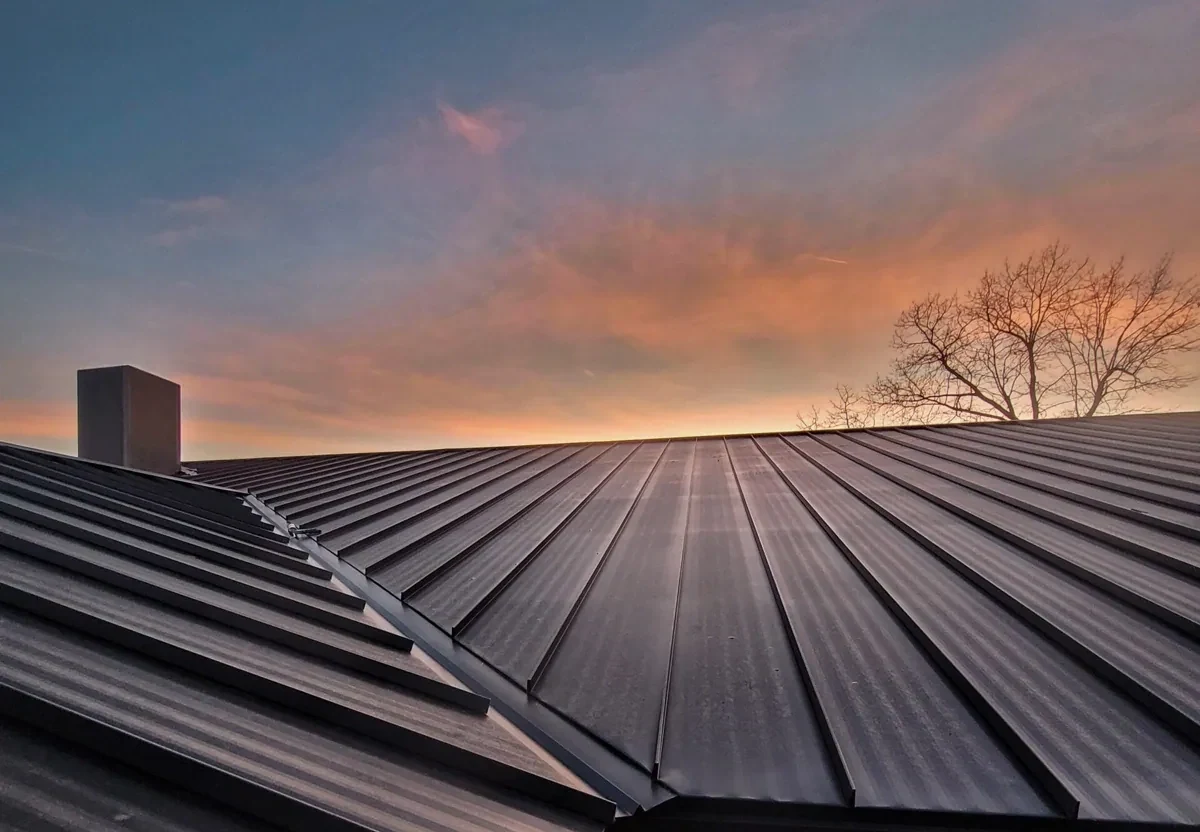
We check seam engagement, clips, fasteners, panel ends, and alignment at the eave and ridge. A standing seam typically relies on concealed attachment that allows the panels to move with temperature changes. Fixed points, damaged clips, or improvised fasteners can restrict that movement. The crew looks for oil canning, distorted ribs, open seams, and abrasion where a panel meets another material. Those clues help narrow the cause before metal is removed.
At a leak, we trace from the interior mark to the likely entry path. Water can travel along the deck or purlins and appear far from the opening. We inspect uphill panel joints, end laps, closures, and nearby penetrations. The inspection maps the reported area and adjacent details. If the seam itself is open, metal roof repair can restore the connection with compatible components and preserve movement.
Where Does the Metal Meet Another Assembly?
Most leak paths occur where a panel meets a wall, curb, drain, skylight, or equipment support. We inspect flashing, counterflashing, closures, sealant, and the panel rib at each transition. A roof penetration added after the original installation may have interrupted the drainage path or used an incompatible detail. The repair may require a custom flashing piece or panel replacement, not another bead of sealant across the rib.
Edge metal and gutters must also accommodate water leaving the panels. We check eaves, rake edges, gutters, and downspouts for overflow or loose attachment. The edge metal and gutter repair can address those terminations. For rooftop units, a curb and support assessment can separate mechanical movement from a panel or flashing defect. Each interface gets a repair limit and a detail that can be inspected later.
If the roof connects to a low-slope membrane section, the transition between systems needs a clear lap and drainage direction. We check where water moves from metal onto the membrane and whether debris is holding it at the joint. A metal retrofit review can compare options when an exposed-fastener roof is being evaluated, but a standing-seam panel requires its own attachment and seam assessment.
What Does Heat and Wind Change?
DFW summer heat puts the panel surface through daily temperature changes. A standing-seam system must move without pulling at fixed points or opening a transition. We inspect actual clips and panel geometry rather than infer a defect from a warm season. Spring storms across the region can bring hail, high wind, and intense rain. After an event, we check for dents, displaced panels, loose flashing, and water entry at the building.
Wind can lift an edge or stress a panel connection, while water can enter through a damaged closure or penetration. A emergency repair visit can protect an active interior leak, then the permanent panel detail can be inspected after conditions permit. Any temporary cover remains separate from the final metal repair. If a section is replaced, we confirm profile, gauge, finish, clip, and substrate with the existing assembly.
Delivery and lift work also depend on weather. Long panels need a safe route and a stable handling window. The facility identifies overhead restrictions, vehicle paths, and areas below the lift before material is raised.
Can a Standing-Seam Roof Be Repaired in Place?
A panel or flashing repair may be possible when the surrounding roof remains secure and compatible replacement material is available. We check corrosion, seam closure, clip condition, underlayment or substrate, and panel length. If damage is widespread or the profile cannot be matched, replacement of a larger area may be more practical. The scope identifies which panels are affected and how the repaired section will tie into the existing field.
For a roof near replacement condition, commercial roof replacement planning can compare panel replacement with a retrofit assembly. A membrane option such as TPO roofing may fit a different roof geometry or facility need, but it changes the assembly and details. The decision depends on the deck, drainage, interior use, and project documents, not on a single seam defect.
We also identify penetrations and equipment that may need repositioning before panel work. If the building remains active, the work can be divided into sections with a weather-tight close each shift. The owner receives the repair boundary and the maintenance points that need follow-up.
What Should the Metal Roof Record Include?
Record the panel profile, repair location, clips or fasteners replaced, flashing transitions, photos, and any sections not included. Mark penetrations and the path water should follow to the gutter. If the crew finds movement or corrosion outside the approved limit, document it separately. That gives the next inspection a precise starting point and helps the facility track changes across the roof.
A scheduled maintenance visit can check seams, fasteners, gutters, and sealant at planned intervals. Metal roofs need observation after equipment work because a new support or conduit can create a fresh penetration. The closeout should keep the roof plan, repair details, and future access route together.
Commercial Roofing Questions
Can standing-seam panels be fastened down to stop movement?
Not without confirming the panel system and attachment. Concealed clips often allow controlled expansion and contraction. Adding a fixed fastener in the wrong location can restrict movement or damage the seam. We inspect clips, fixed points, panel ends, and substrate before recommending a correction. The detail must remain secure and allow the movement intended by the assembly.
Why does a metal roof leak near a rooftop unit?
A curb, support, conduit, or service path may interrupt the panel ribs or drainage direction. Water can also travel from an uphill seam before entering at the unit. We inspect the penetration and adjacent panels, then trace the route from the interior symptom. The repair may involve flashing, a panel section, or the support detail, depending on what is loose or open.
Can a damaged standing-seam panel be replaced without reroofing?
Sometimes. We check whether the panel can be released from its clips, whether the profile and finish can be matched, and whether neighboring panels remain serviceable. A repair can be limited if the roof field and substrate are sound. Corrosion or widespread damage may require a larger section. The scope identifies tie-ins and weather protection during removal.
How should hail damage be evaluated on standing seam?
We inspect panel faces, ribs, closures, flashing, and fasteners for actual impact or displacement. A dent does not by itself show a leak or failed seam. The crew checks whether the panel remains attached and sheds water correctly. Photos and a roof plan distinguish cosmetic marks from functional damage and keep the repair limit clear.
What should be checked after a metal roof repair?
Review the repaired seam, clips, penetrations, edge, and gutter path. Keep photos of the panel profile and flashing detail with the roof file. After service work, inspect any new supports or conduits that cross the roof. That helps the facility catch a movement restriction or open transition before water reaches the interior.
Trace the Panel Joint Before Sealing It
Share panel records, leak location, equipment changes, and access hours. We will inspect seams, clips, penetrations, and edges, then define a repair that preserves the roof's intended movement.