Carlisle SynTec Commercial Roofing in Mesquite, TX
A Carlisle SynTec proposal starts with the roof that is already there. We identify the membrane, insulation, cover board, deck, and attachment before comparing a new system with a repair. A label on an old invoice may not describe later overlays or field changes. We verify the layers, check drains and edges, then mark any test locations. That record shows what the new design has to connect to and what can stay in place.
Mesquite commercial roofs include properties near Downtown Mesquite and the broader Spradley Farms Mixed-Use Area. Roof access and staging differ between a compact street grid and a developing mixed-use district. We plan the first walk around the actual entrance, loading window, and rooftop equipment. An inspection with roof-section photos gives the owner a starting record before Carlisle materials or attachment details are selected.
Which Carlisle System Belongs on This Assembly?
Carlisle SynTec offers commercial single-ply options that include EPDM, TPO, and PVC, along with fleece-backed configurations and system components. The project specification determines which membrane and assembly are under consideration. EPDM is a thermoset sheet, while TPO and PVC are thermoplastic membranes with heat-welded seams. Those differences affect seam work, flashing, and repair methods. The existing roof, intended attachment, building use, and exposure guide the choice.
A membrane type alone does not settle the design. We compare the insulation and cover board, deck, fastening or adhesive method, edge details, slope, and roof penetrations. The EPDM assembly uses a different seam approach from a TPO roof system. If the specification calls for PVC, we review its own flashing and accessories. The product schedule, details, and field conditions need to agree before installation begins.
What Does Fleece-Back Change in the Scope?
Fleece-backed membrane has a backing that can be used in an adhered assembly or certain recover designs. It does not make every aged roof a suitable substrate. We check surface stability, existing membrane, wet insulation, and required fire and wind conditions before including it. A loose, contaminated, or deteriorated layer can compromise adhesion. The scope should identify what is being prepared, what stays, and where removal is necessary.
Adhesive coverage and flash-off conditions matter. The crew protects materials from moisture, keeps the substrate within the system requirements, and works in manageable sections. If a test cut finds saturated insulation, the repair boundary expands only as far as field evidence supports. For a recover review, the existing-roof evaluation should include added height at drains, curbs, doors, and edge metal. Those transitions can require separate modifications.
Where Can a Carlisle Roof Open at the Details?
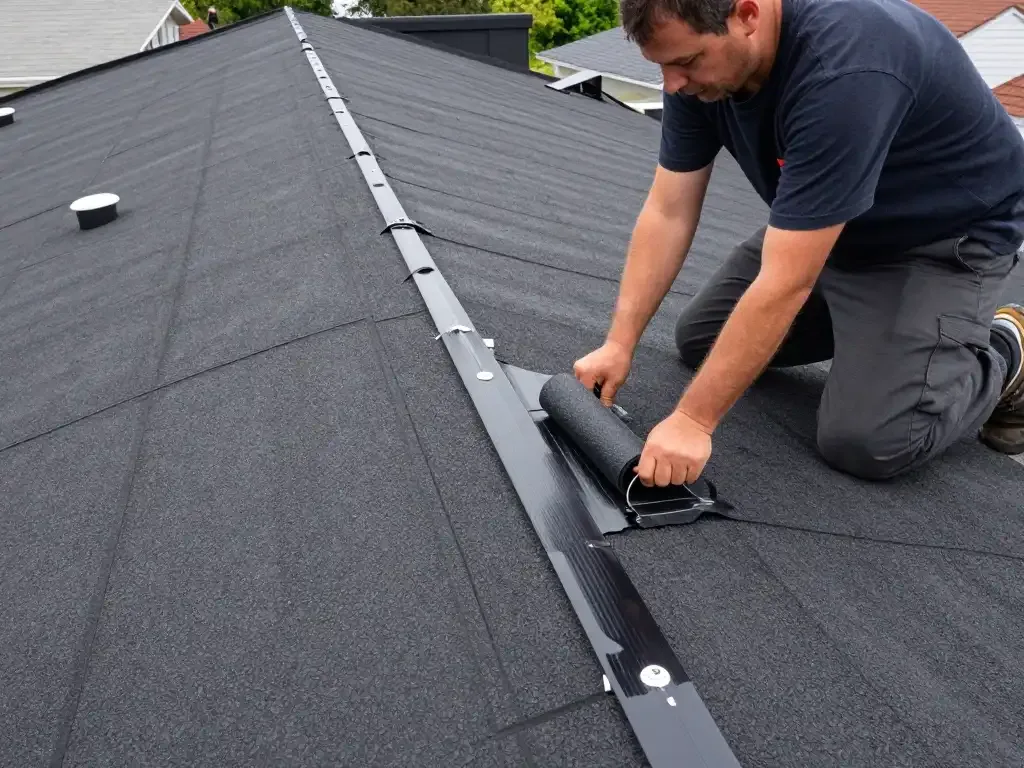
On EPDM, a seam or flashing may rely on the specified bonding tape, primer, and clean contact surface. On thermoplastic material, the weld must fuse the overlap without overheating or leaving a cold channel. We probe finished seams, inspect corners, and verify that patches extend to sound membrane. At a curb, the sheet and flashing must turn into a stable detail. A loose support or moving counterflashing can reopen a repair even when the field sheet remains sound.
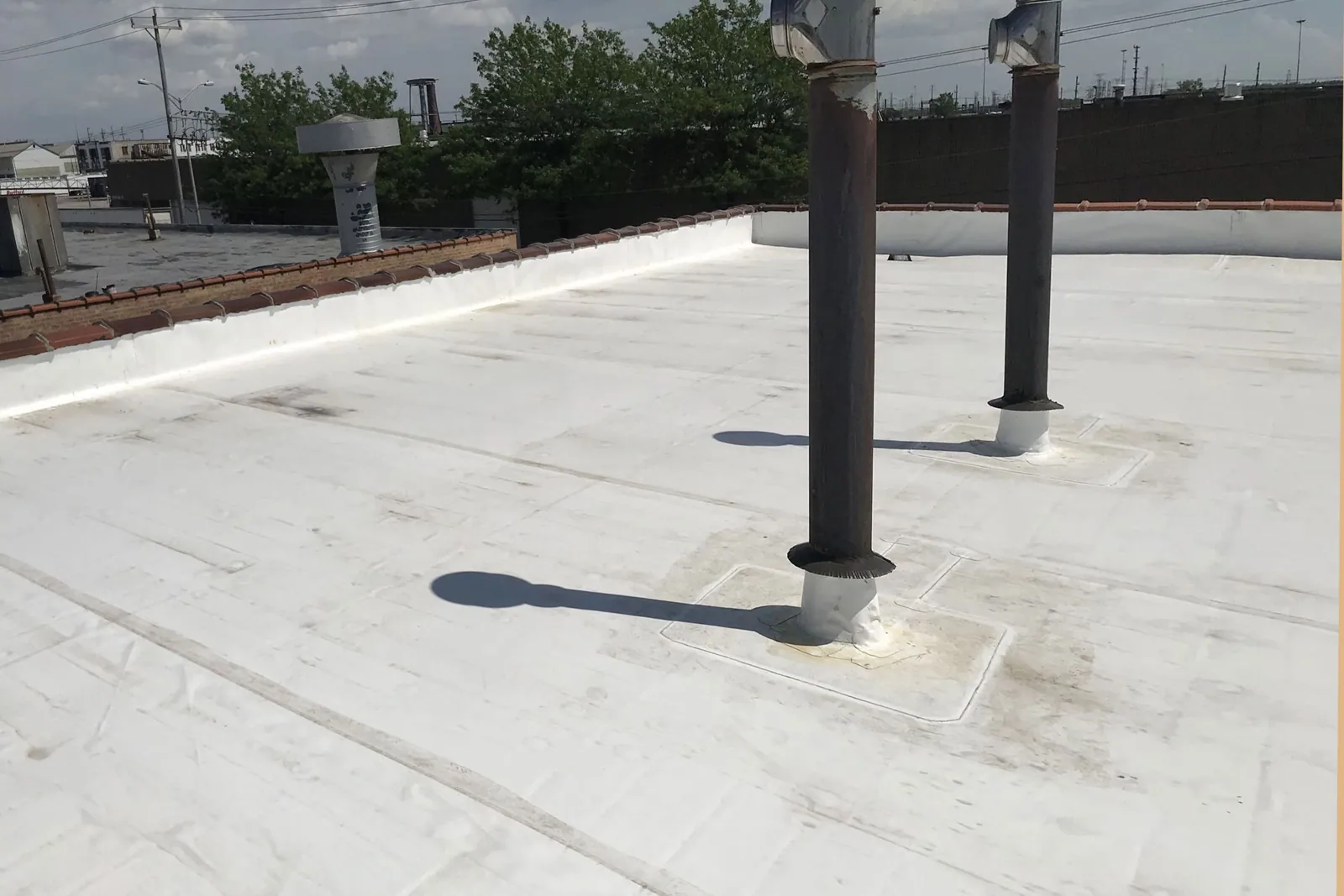
Drain bowls, scuppers, pipe boots, skylights, and parapet transitions each create a different water path. We record the defect and check nearby insulation when moisture may have traveled beneath the sheet. A drain and scupper scope can resolve a confirmed outlet problem. Metal edges need their own inspection; membrane work does not reset a loose cleat or exposed fastener. Our edge and coping repairs are described separately so the owner can see the full perimeter work.
How Do Mesquite Sites Affect the Work Window?
Downtown Mesquite has three subdistricts that transition from the core to surrounding areas. A roof job in that compact, walkable setting needs a clear path for residents, customers, and deliveries. We mark the lift area and keep temporary protection separate from public routes. The Downtown Mesquite district plan supplies geographic context; management confirms the access rules for the specific property.
Spradley Farms combines residential uses with commercial components and open space across a broad area. For buildings there, we check the property entrance, route for materials, and available staging instead of assuming a neighboring parcel can be used. July and August in Dallas-Fort Worth bring hot, humid conditions, with daytime temperatures in the 90s and often at or above 100 degrees. We follow the product requirements for adhesive and welding conditions, then close each exposed section before leaving.
When Is Repair, Recover, or Replacement the Better Path?
A local seam repair makes sense when the surrounding membrane, insulation, and attachment remain serviceable. Broad wet insulation, repeated opening seams, or deck deterioration can shift the scope toward removal. A recover may be practical only when the existing layers, structure, drainage, and code conditions allow another assembly. We compare those options by roof section and identify what evidence supports each one. The proposal separates emergency water control from longer-term work.
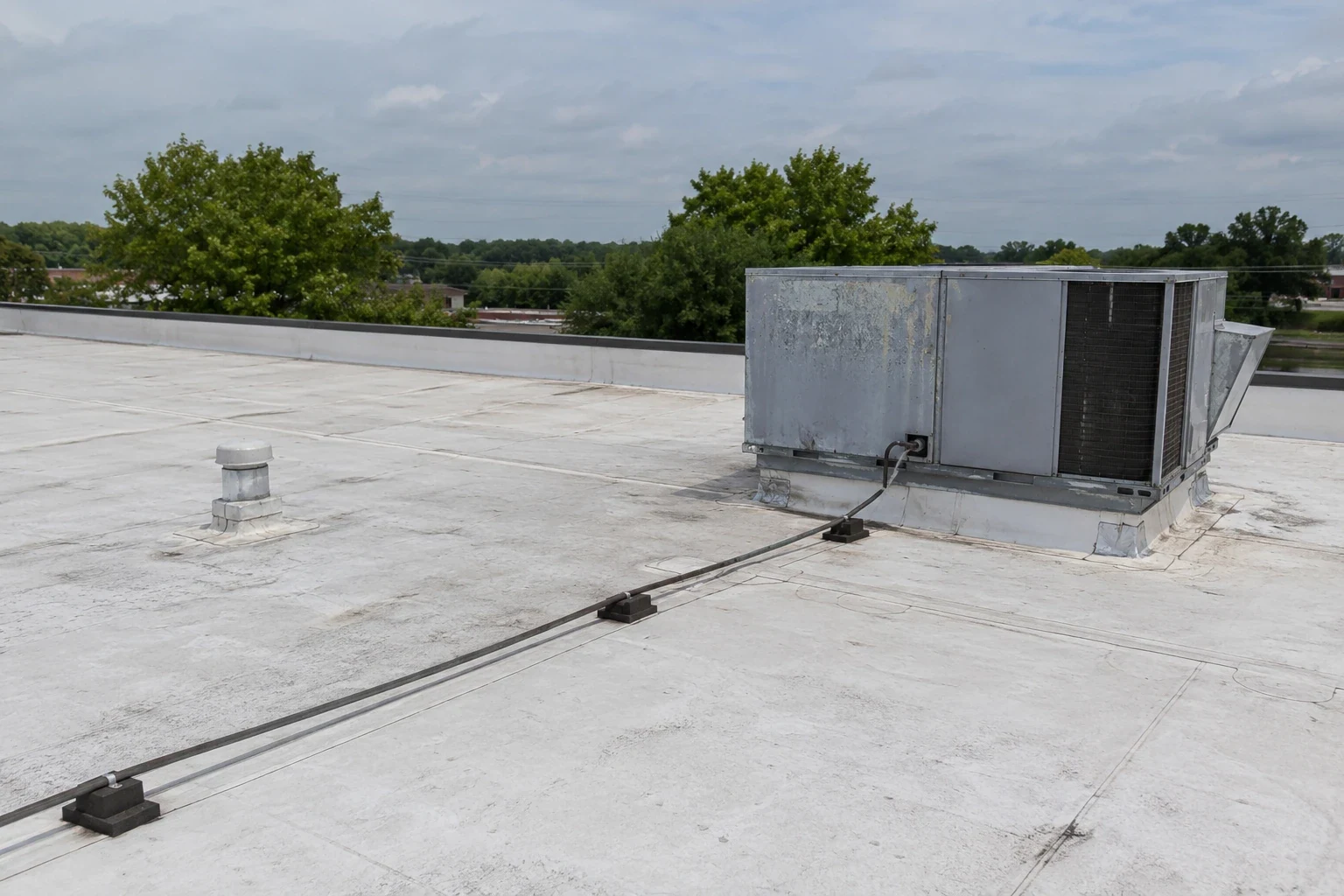
Carlisle component compatibility matters at transitions. Insulation, cover board, adhesive, fasteners, and membrane must match the selected design. If rooftop equipment is being changed, curb work should happen before the new membrane closes around it. A curb and support review can coordinate the roofing detail with equipment access. The final scope also names deck repairs, test openings, interior protection, and any area excluded from the work limit.
What Should the Owner Keep After Installation?
Keep the membrane and component schedule, attachment information, closeout photographs, repair history, and any inspection requirements with the roof plan. Note where test cuts were made and how each opening was closed. A later leak report can then be compared with a known seam, curb, or drain detail. The record should also state whether a repair used a different product from the main roof system. That distinction helps the next crew plan compatible work.
Properties around Towne Centre and Market East include retail, office, industrial, and service uses, so access changes can affect future roof visits. The district's broader land-use context does not set maintenance rules for one building. A photo-based condition report can preserve section-level observations, while scheduled maintenance can check drainage and edge details. If owner records include manufacturer terms, a GAF system comparison should use the same assembly and exposure data for a fair review. For PVC, a Sika Sarnafil system comparison can frame a different detail package.
Commercial Roofing Questions
Can Carlisle TPO or EPDM go over the current roof?
The number of layers, moisture condition, attachment, deck, and drainage decide whether a recover is available. We take test cuts where needed and inspect the transitions that added height would affect. A dry, stable substrate may support a recover design, while broad wet insulation or loose material can require removal. The recommendation lists the areas inspected and the conditions that limit the option.
How do you repair an EPDM seam compared with a welded seam?
EPDM repairs use compatible materials and the preparation required for that system, including attention to primer and bonding surfaces. TPO and PVC need a sound hot-air weld with clean overlap and verified temperature. We identify the membrane first, then use the corresponding patch or flashing method. A repair that only covers the visible edge can fail if the surrounding sheet or substrate is unstable.
Does fleece-backed membrane solve a recover problem?
Fleece-back can be useful in a specified adhered assembly, but the existing surface still has to be suitable. We check adhesion conditions, moisture, layer count, fire requirements, and added height at drains and curbs. A test area may be needed before the design is confirmed. If the old assembly cannot support the new layer, removal is the clearer scope.
What should a property manager prepare before the roof crew arrives?
Send the roof plan, leak log, prior repairs, equipment restrictions, and access hours. Identify loading windows and entrances that need to remain open. We use that information to place the lift and material zone, then document any work area that could affect tenants or operations. The written schedule states where the crew expects noise, deliveries, or temporary closure.
Which records help with a later warranty question?
Keep the final assembly schedule, product documents, closeout photos, inspection notes, and repair invoices together. Warranty coverage depends on the specific system and terms, so we review the records rather than infer coverage from a membrane label. The report can note maintenance items or repair details that should be addressed during a future service visit.
Compare the Carlisle Scope With the Existing Roof
Send the roof plan, assembly records, leak history, and access limits. We will inspect the sections in question, test where useful, and define what should be repaired, recovered, or removed.