Army Installation Roofing in Mesquite, TX
Roof work at an Army property begins with the building boundary, the approving authority, and the access rules for the work area. A leak over an occupied room or protected equipment needs immediate coordination before a crew stages materials. We record the reported condition, map it to the roof section, and separate temporary protection from permanent repair. A commercial roof inspection documents what was observed and which approvals remain before work proceeds.
The scope covers Army installation roof planning as a property type. It does not identify a specific Mesquite installation or confer installation access. The facility owner or contracting authority confirms eligibility, access, security, and scope requirements for its own property.
Who Approves Access Before Roof Work Is Scheduled?
Before a site visit, identify the contracting or facilities contact who can approve the request, name the building and roof section, and confirm any escort, badging, photography, tool, vehicle, or material restrictions. Do not assume that one department's permission covers another area. If access is not confirmed, hold the inspection until the authorized contact defines the route and boundaries.
Map the occupied spaces below the roof, including rooms with communications, electrical, medical, storage, or mission-support equipment. Ask what must remain active and who can authorize a short interruption. Use the property's approved drawings and labels; do not invent a room designation or building number from a street address.
In Seagoville, the 176th Medical Brigade includes subordinate medical, dental, and medical logistics units. The 807th Medical Command serves as the brigade's higher headquarters. Those public organizational facts do not establish the roof conditions or access process at an individual facility. A regional Seagoville-area visit still requires property-specific approval and a confirmed scope.
Keep crew identification, arrival time, vehicle route, staging point, and daily contact in one work plan. If the facility changes an access condition, stop at the approved boundary and contact the authority. No material, photograph, or roof opening should cross an unapproved limit.
How Can the Failure Be Mapped Without Widening the Repair Boundary?
Record when the leak appeared, which room or asset is affected, and whether water is active. Place safe temporary protection first when needed, then trace the path to seams, penetrations, roof-to-wall transitions, drains, scuppers, edge metal, or prior patches. Photograph a broad reference view and the detail that supports the repair limit. Keep the building identifier and roof-zone label consistent across the inspection, proposal, and closeout.
For an active leak, the temporary response should list the protected location, materials used, expected hold, and inspection still required. Do not disturb sensitive equipment or interrupt service without the facility's approval. If a test opening is proposed, identify its location, restoration method, approval contact, and what decision the result will support.
For public regional context, NAS JRB Fort Worth hosts Navy, Marine Corps, Air Force, Army, and Texas Air National Guard units and provides joint training and readiness support. That statement concerns the named installation, not a Mesquite Army site or a customer's authorization. A roof contractor must verify the property, procurement path, and owner requirements for each project.
Mesquite's amended 2024 building code took effect in November 2025. A federal owner's property may use a different authority path, so confirm jurisdiction and project scope first. Confirm the applicable authority and scope-specific requirements rather than applying a municipal code assumption to an installation property.
Which Work Steps Must Fit Around Occupied Operations?
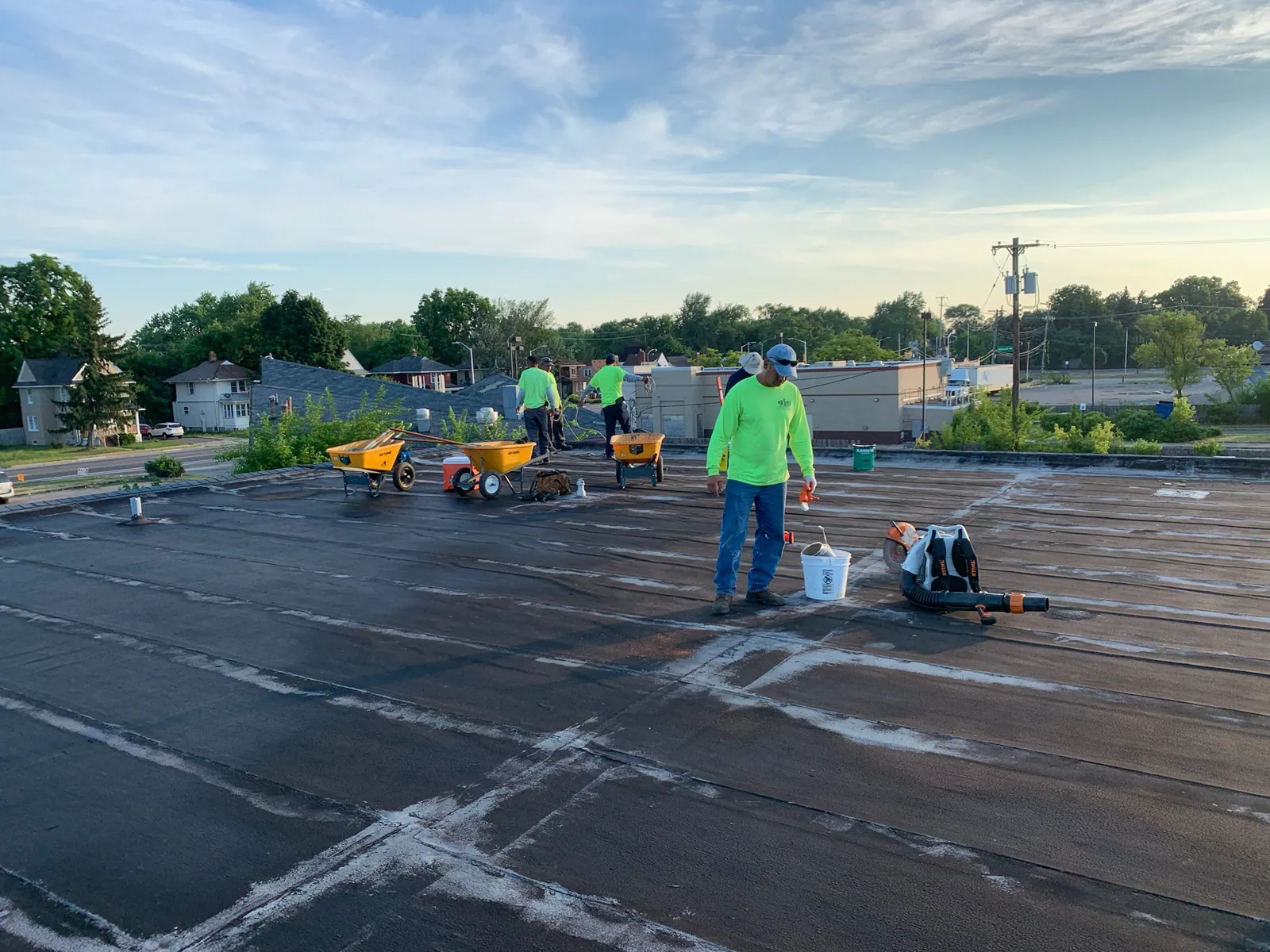
Separate the roof work zone from pedestrian routes, vehicle paths, emergency access, and the building's active operations. Confirm lift placement, overhead protection, debris control, fire lanes, and the dry-in point before tear-off. If the task affects a doorway or equipment area, the authority determines when it can be closed and who receives notice.
Build the work by roof section, not by a broad assumption that the whole building is available. State start conditions, daily stop point, temporary seal, cleanup, and the person who verifies the area at shift end. A replacement sequence should include material staging, tear-off quantities, deck review, insulation, flashing, drainage, and restoration at every approved stopping point.
Near Mesquite, the Military Parkway-Scyene corridor is a real transportation and development area, but it does not define a federal property's access route. A crew working near the Military Parkway-Scyene corridor still uses only the owner's approved entrance, staging area, and delivery window. Verify security and vehicle instructions directly with the facility contact.
Weather changes the sequence, not the approval chain. Check current conditions before opening the roof. If wind or rain makes an exposed section unsafe, stop at the agreed limit, secure the area, and notify the authorized contact. Record the condition and the revised dry-in plan before resuming.
What Scope Follows from the Verified Roof Conditions?
A localized repair can fit a supported defect when surrounding material accepts a durable tie-in and the work stays within the approved area. The repair scope should state preparation, compatible materials, measured limits, exclusions, access conditions, and follow-up. Separate a suspected moisture pattern from a confirmed opening and do not price unseen quantities as established fact.
A wider assessment may be needed when leaks recur across roof zones, moisture extends beyond a detail, drains remain unresolved, or prior repairs fail. The drainage review should document outlet and overflow conditions. Moisture mapping may prioritize tests, but the report must state method and limits. Confirm wet material before changing quantities.
Mesquite's industrial districts include the Skyline Logistics Hub around Big Town and Town East Boulevards between Interstate 30 and Skyline Boulevard. The district's uses and shipping patterns are not evidence about an Army property. If work is near Skyline Logistics Hub, verify public-road deliveries and the installation's actual approved access separately.
For each alternative, show which condition it resolves, what remains, and what approval or test is still required. If structural, fire, environmental, or electrical review is needed, identify that decision before work begins. Keep the technical scope and contracting authorization distinct.
What Needs to Be Recorded at Each Handoff?
At closeout, record the approved work area, completed sections, materials, repair limit, photos permitted by the owner, temporary measures, and remaining conditions. Note whether the area was returned to the facility and who accepted it. Store approvals and change records with the roof plan so a later visit can trace why the boundary changed.
A maintenance inspection can monitor accessible drains, seams, curbs, and prior repairs when the owner authorizes recurring service. A government building roof review also requires a defined public-owner approval path. For clinical buildings, the hospital roof review must account for patient and service continuity.
Mesquite's 2024 International Existing Building Code adoption took effect with local amendments in May 2026. For a project in Mesquite, confirm current local requirements; for an Army installation, confirm the governing authority for the project. A code reference does not replace facility approval, contract terms, or access authorization.
Close the handoff with four facts: what was repaired, what remains uncertain, who owns the next decision, and when the next inspection is due. This keeps the facility manager, contracting contact, and service crew aligned without turning a Diligence Notes into an assumption about a different building.
Commercial Roofing Questions
Can a contractor inspect an Army roof without prior coordination?
No site access should be assumed. The property owner or contracting authority confirms eligibility, scheduling, escort, security, photography, and work-area rules before an inspection is arranged.
What should an Army facility roof scope include?
Include the approved building and roof boundary, observed condition, access limits, temporary protection, proposed materials, work sequence, exclusions, and the authority responsible for each approval.
Does the Seagoville Army Reserve unit establish local roofing demand?
It identifies Army Reserve medical and logistics organizations in Seagoville, not the condition, ownership, procurement, or access rules of any particular roof. Those details must be confirmed for the property.
How should a leak over sensitive equipment be handled?
Notify the authorized facility contact, protect the affected area only within approved rules, and record the roof zone and observed path. Any equipment movement or service interruption requires facility direction.
What happens if weather stops an approved roof repair?
The crew secures the exposed area at the agreed dry-in point, records the condition, and contacts the authorized representative. Work resumes only after the schedule and access requirements are reconfirmed.
Start with the Facility Approval Path
Share the authorized contact, building identifier, approved access rules, and roof plan. We will define the inspection boundary and document the next scope decision.