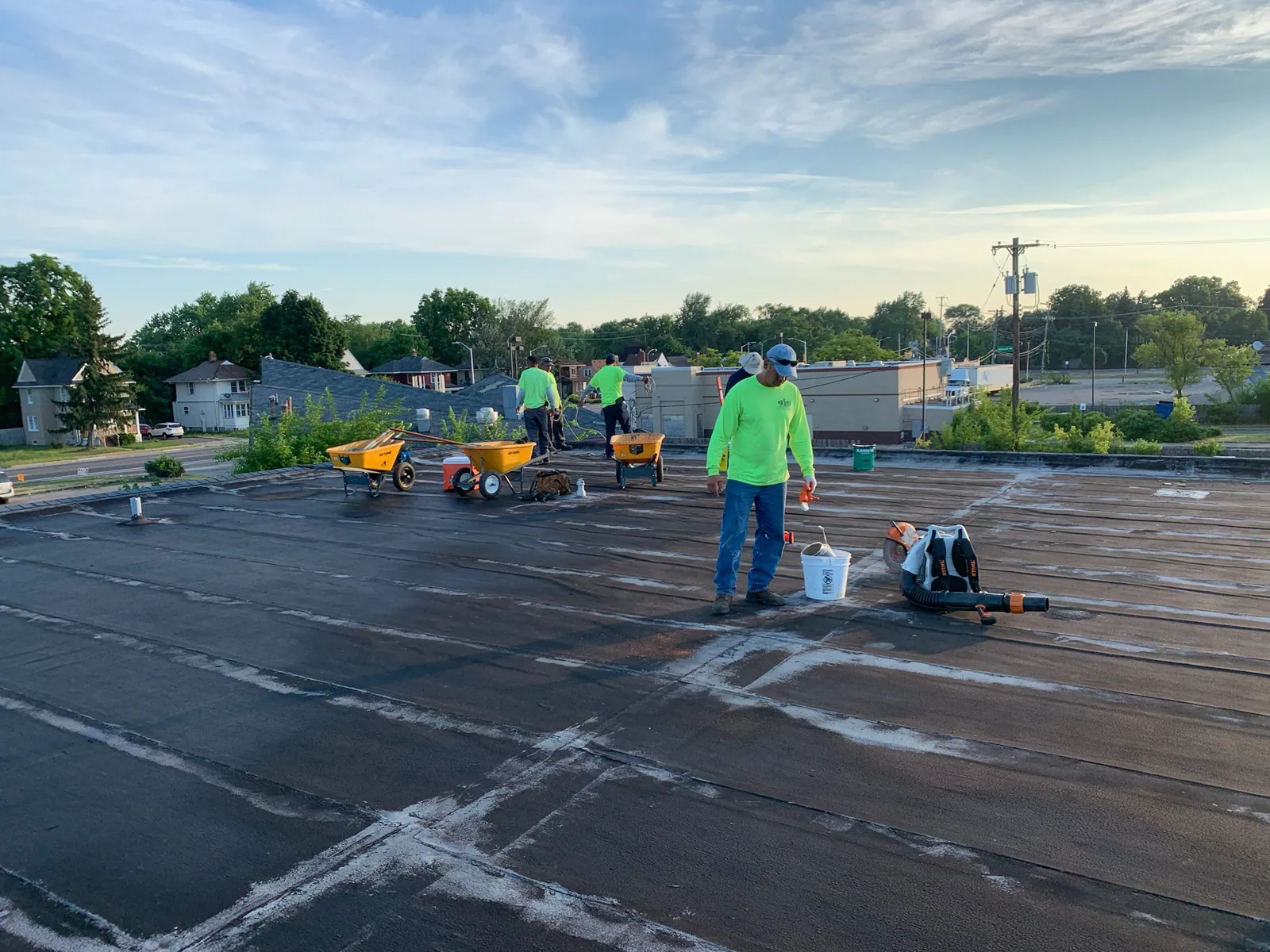
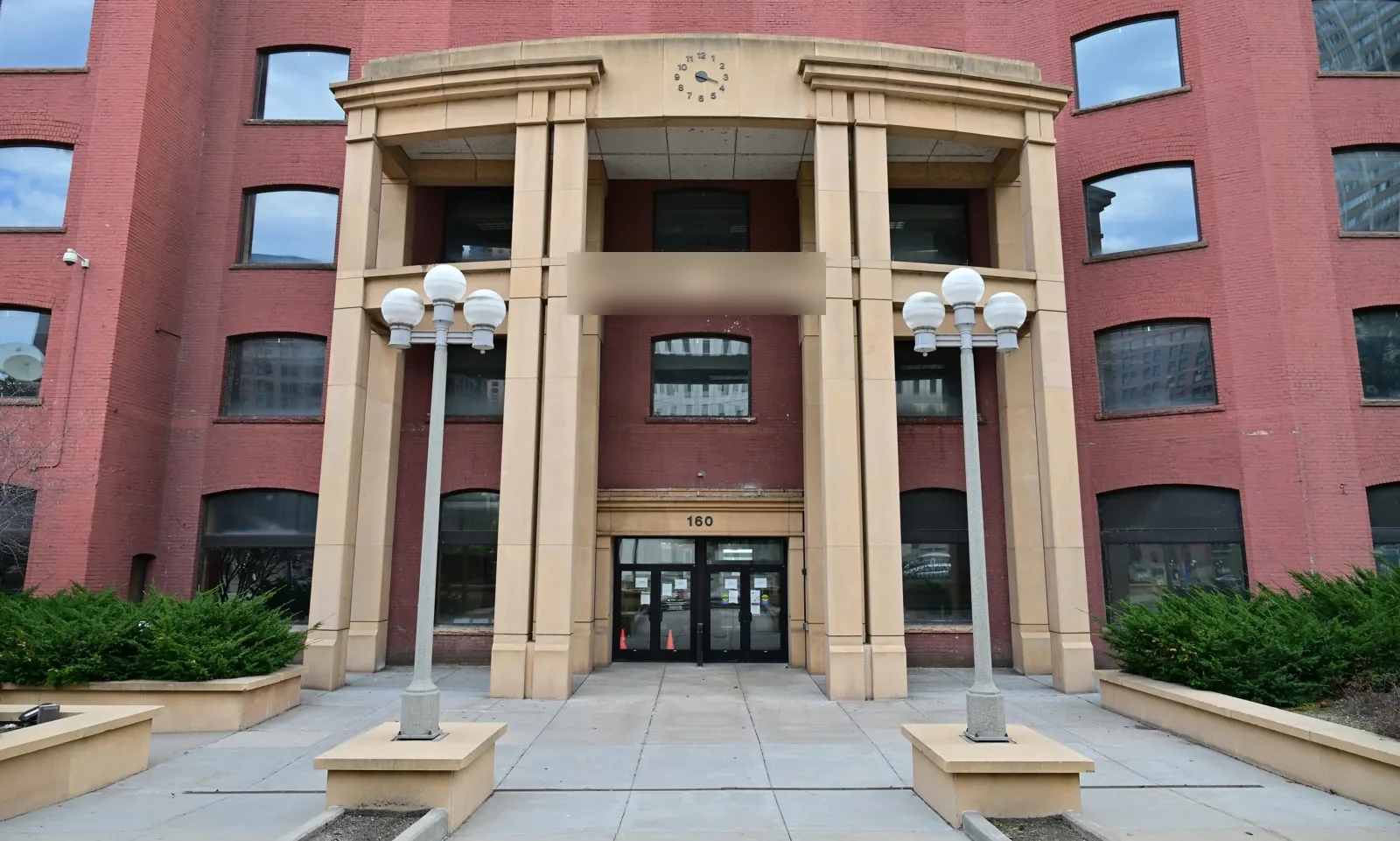
Government Building Roofing in Mesquite, TX
A leak above a public counter or records room creates an access decision before a repair scope is ready. In Mesquite, TX, we identify the room, roof section, public hours, and person who can release the work area. Temporary protection is separate from permanent correction. The inspection maps the suspected path and records what was actually observed.
Government buildings may include offices, service counters, meeting rooms, storage, and public circulation. The work plan must fit the actual use of the property. We mark entrances, accessible paths, records that need protection, and the roof area above each planned task. A phased public-building sequence can keep the crew's work zone separate from public access.
Where Can the Public Still Move?
Mark the entrance, counter, meeting room, or corridor affected by the reported leak. If water is active, identify a safe route around the area and protect records, electronics, and workstations below it. The ceiling symptom does not establish where the roof opened. We inspect the section above, trace plausible paths, and keep a suspected cause apart from a confirmed defect.
The roof map should use the same area labels as the permit package, maintenance log, and repair proposal when those records exist. Photograph the wide area, then the seam, penetration, drain, flashing, or edge detail under review. Note the inspection date, access limit, and what remains concealed. A condition inspection gives the owner a record that can support authorization and later closeout.
Public access changes staging. Confirm whether ladders, lifts, material drops, or debris routes could intersect an entrance, accessible path, or emergency egress. If a room must close, identify the notice period and the official who can approve the closure. A work zone should have a defined opening and return-to-service point, not an assumption that the public will find another route.
Temporary protection needs an owner and a check time. If a ceiling opening is needed, include the room-side barrier, dust control, cleanup, and approval before cutting. The scope should state which records or equipment will move and who will verify their protection. That keeps an urgent leak response from becoming an unplanned interruption to public service.
Which Approval Controls the Roof Work?
A roof repair can trigger permit, plan review, inspection, procurement, or facilities approvals. List the actual steps for the property and scope before setting a start date. For work in Mesquite, the amended 2024 existing-building code has applied since May 2026. The facility representative should verify the review path for this address and work package.
Keep the technical submittal, roof-area drawing, scope version, and inspection hold together. Identify when the authority or owner's representative must review flashing, insulation, deck repair, or membrane before it is concealed. A replacement scope should state tear-off assumptions, substrate allowance, edge details, drains, phasing, and protection. Those items make the price comparable to the work the public agency intends to authorize.
Downtown Mesquite's 2025 zoning district includes shopping, employment, housing, business, and personal services, arranged across three subdistricts. A government property near Downtown Mesquite still requires review by its actual address, building use, and governing authority. District boundaries help place the project geographically; they do not replace the permit check for a specific roof.
Procurement documents should distinguish base scope from optional testing or concealed-condition work. State who may issue a change and what evidence is required. If a test opening reveals wet insulation or deck damage, record the location and approval before quantity changes. The public agency can then compare the approved scope against the final invoice without merging unrelated work.
What Does the Roof Evidence Support?
On a low-slope roof, inspect seams, prior patches, penetrations, drains, scuppers, curbs, parapets, and transitions. On metal, review fasteners, laps, panel movement, closures, and perimeter details. Note whether the assembly is identified from a record or visible condition. Do not infer hidden layers from one surface. Mark areas reached and areas that need a separate opening or test.
A drain correction and a membrane repair may belong on different lines. Photograph outlets, overflow paths, nearby debris, and visible water lines. If ponding is reported, state where and when it was observed. A drainage review can define flow work before the owner treats recurring water as a coating or replacement issue.
Dallas-Fort Worth's spring severe-weather season includes hail, damaging wind, flooding, and tornadoes. That pattern can set inspection timing, but the repair line needs photos from the building.
Town East Retail and Restaurant Area is a contiguous district with retail, restaurant, and entertainment uses. A roof job near Town East may need careful public and delivery routing, but the property manager confirms its entrances and hours. The business-area designation does not establish the design or condition of a government roof.
When Does a Local Repair Need a Wider Review?
A repair line should identify the defect, preparation, compatible material, tie-in, exclusion edge, and closeout check. A bounded repair can be appropriate when evidence identifies a limited opening and the adjacent material can accept the correction. If the path remains uncertain, list a test before presenting the affected area as known.
Compare broader work when similar failures repeat, wet insulation extends beyond a test area, or the deck condition is not established. Recover eligibility depends on existing layers, moisture, attachment, height, and applicable review. Replacement adds removal, insulation, edge metal, drainage, disposal, interior protection, and sequencing. The options should use the same map and state the different assumptions.
Mesquite's economic-development agreements cover office, retail, commercial, manufacturing, and mixed-use projects. A public office still has its own service hours, records, and meeting schedule, which the roof plan must respect.
Timing depends on approval windows, public notice, loading, material movement, weather, and whether the building remains open. Identify a stop-and-notify point for concealed damage and name who can approve added work. The schedule should state when the space is protected, when inspection occurs, and when the agency can reopen the area.
What Should the Facilities File Retain?
Closeout records the approved scope version, roof section, materials, dated photos, repair boundary, exclusions, and authorized changes. Include any inspection result and a list of areas not reached. If temporary protection remains, say who checks it and when. An open condition should have an owner and next review date.
Keep the final roof-area drawing with the permit and procurement file. A later inspector should be able to locate each repair, compare the observed condition, and tell whether an item is new, repeated, or still unresolved. A storm-related assessment should preserve the event report separately from the field evidence so that a regional hazard is not substituted for a roof observation.
For a public building with a school or community program component, the school roof scope may address different occupancy and notification windows. A house-of-worship roof review also uses a distinct event calendar. Keep each property schedule and roof map tied to the building being assessed.
Emergency response is available at any hour, holidays included. We identify the affected room and safe access first. Closeout states whether the roof is protected, repaired, or awaiting a test.
Commercial Roofing Questions
How do we keep a public entrance open during a roof repair?
We map the entrance and work area, then plan staging, overhead exposure, barriers, and debris movement around the approved route. If the area must close, the scope identifies notice and the person who can release it.
What should a government roof bid show?
It should identify roof areas, observed conditions, preparation, materials, exclusions, access limits, permit assumptions, and any concealed-condition allowance. A change needs a named approver and supporting field record.
Does a regional storm report prove roof damage?
No. It can set an inspection window. We photograph roof details and interior effects at the building, then price conditions supported by that record.
When should the city review a replacement scope?
Confirm the current authority, code path, and inspection holds for the address and proposed work. The schedule should identify details that need review before they are concealed.
What belongs in the final public-facility handoff?
Keep the approved scope, dated photos, completed areas, materials, exclusions, changes, permit records, and remaining issues together. Assign an owner and review date to each open item.
Set the Review and Access Path
Send the roof plan, leak timeline, affected public area, review date, and safe access window. We will map the observed condition and identify the approvals needed for a scoped next step.
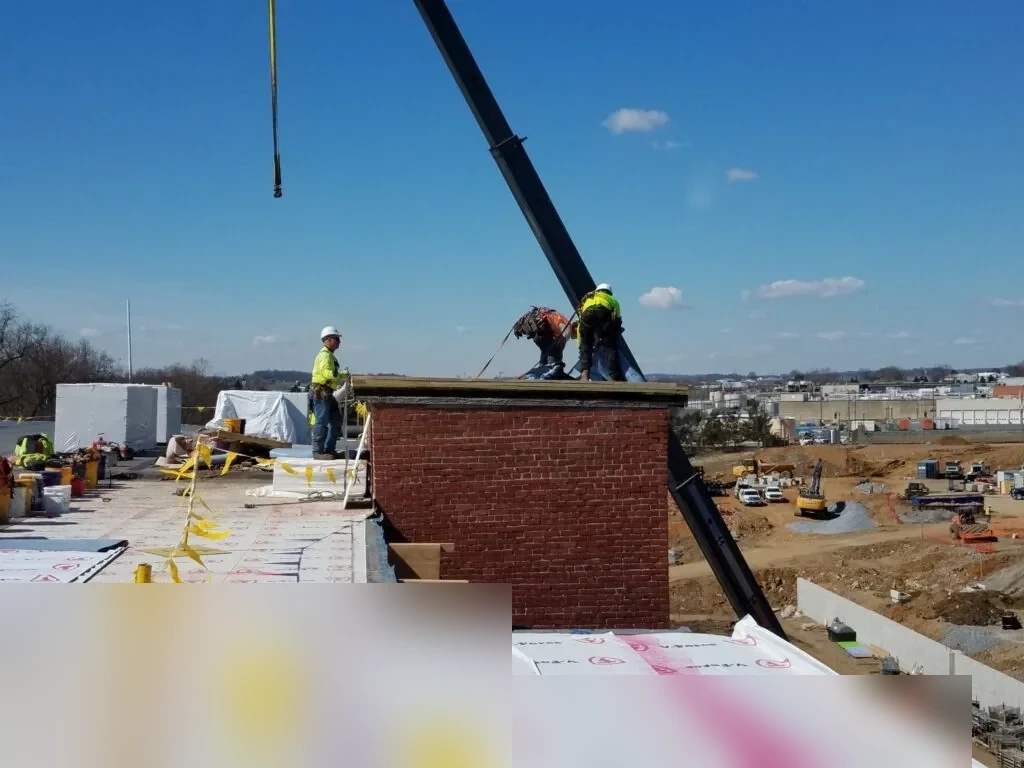
Scope, access and schedule reviewed before work begins.