Church Roof Repair and Replacement in Mesquite, TX
Water above a sanctuary changes the next service before it changes the roof estimate. For a Mesquite, TX house of worship, we first identify the affected room, roof section, event schedule, and safe access window. Temporary protection stays separate from the permanent repair. The inspection then traces the reported path through seams, drains, walls, skylights, or rooftop equipment, with each observed condition tied to a marked area.
Church buildings may include a sanctuary, classrooms, offices, kitchens, fellowship rooms, or gym space. Those uses do not establish the roof layout. We map the actual areas, identify which rooms need protection, and plan noisy or disruptive work around approved access. A phased occupied-building sequence can preserve clear handoffs between events and roof work.
Which Gathering Space Needs Protection?
Start with where water appeared, when it was reported, and whether it is still entering. A stain in a ceiling tile marks an interior symptom, not the entry point above. Water can travel along a deck or insulation before it reaches a room. We identify the corresponding roof area, inspect likely paths, and record which details support the repair boundary.
In a sanctuary, protect seating, sound equipment, lighting, and any area used for services. A classroom or office may have a different access window. Mark the room below the roof section and the route staff use to move people or equipment. If a ceiling opening is needed, identify dust control, barriers, cleanup, and the person who can approve the work before the opening begins.
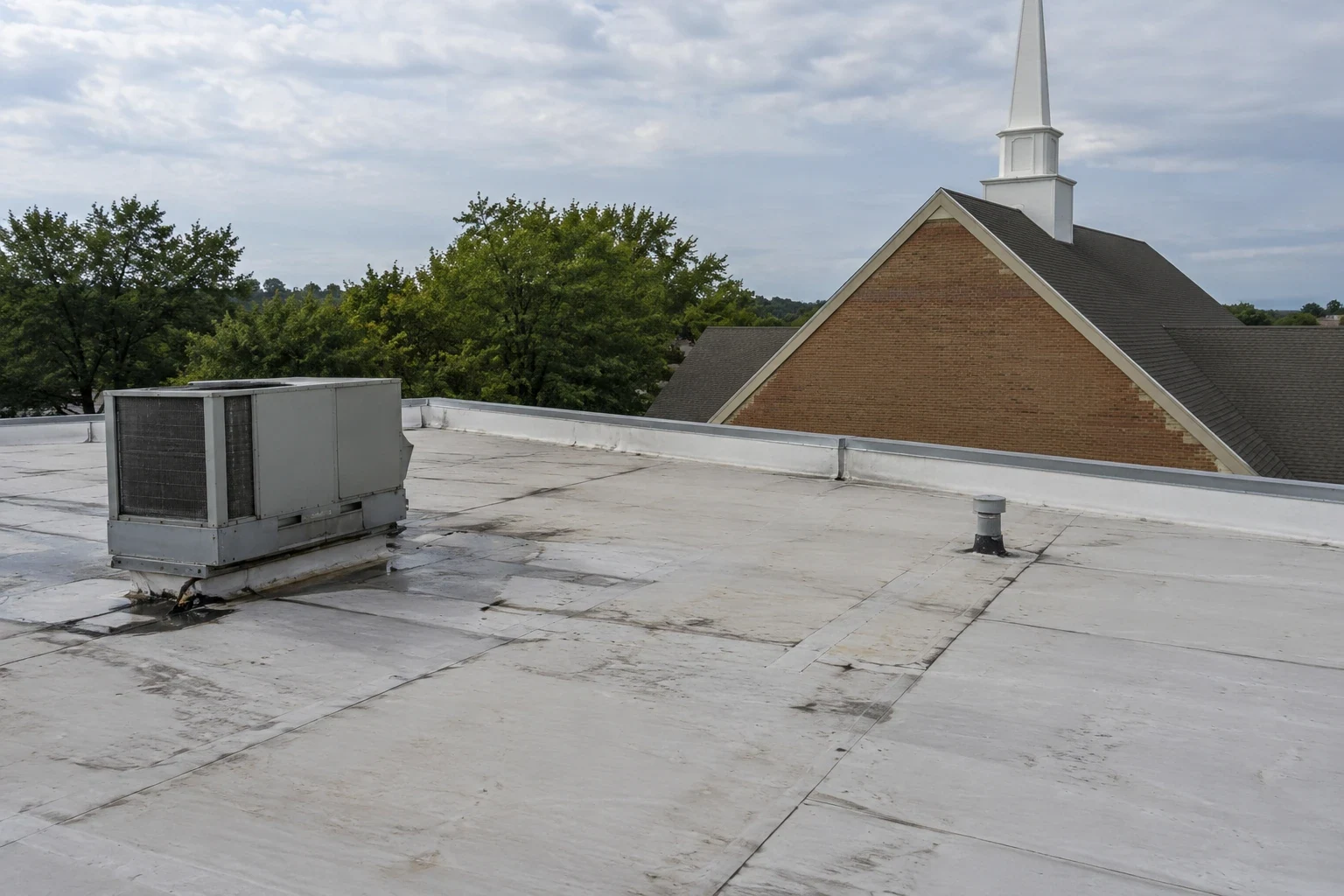
Photos should show the whole roof detail and a closer view of the observed defect. Label each image with the roof section, date, and access condition. For a low-slope assembly, inspect seams, penetrations, parapets, drains, and changes in plane. On metal, review laps, fasteners, movement, and closures. The inspection record distinguishes visible condition from an unconfirmed cause.
Keep active-event protection and permanent correction on separate lines. The temporary measure should state who checks it and when. If water is no longer entering but the roof path is unclear, schedule a follow-up test before marking the issue closed. Do not move a repair boundary into a neighboring roof area without evidence.
How Does the Event Calendar Change the Work Zone?
Worship services, funerals, classes, food service, and community events can reserve different rooms on different days. The facility contact identifies those dates and any room that cannot be closed. We set the work zone around that schedule, then separate inspection, material delivery, removal, tie-in, and cleanup. A weekday delivery may still conflict with a funeral or school event. The site calendar, not a general workweek assumption, controls.
The Town East area includes retail, restaurant, and entertainment uses. Confirm traffic, parking, and delivery conditions at the church address before choosing a work window.
Downtown Mesquite has three subdistricts with different allowed uses. A church roof review near Downtown Mesquite still follows the property's address and approval path.
If a lift, crane, or debris chute is required, check the route and overhead restrictions before the crew is scheduled. Keep entrances, emergency access, and accessible paths clear. Name who can release each room and who receives the end-of-day protection status.
What Roof Details Need a Separate Line?
Identify the membrane or metal system only when visible material or records support it. On a membrane roof, check seam condition, prior patches, flashing terminations, attachment, and transitions. On a sloped metal roof, inspect fasteners, panel movement, ridge and eave closures, and penetrations. A sealant bead may conceal an older repair rather than resolve the detail beneath it. Record the observed condition and any concealed question.
Drainage should be assessed separately from the membrane field. Photograph drain bowls, scuppers, overflow paths, and nearby surface conditions. Record debris or a reported overflow. A blocked outlet, a low area, and a failed seam can produce different corrective scopes. A drainage correction should not be rolled into a patch allowance unless the work is actually included.
Spring is the Dallas-Fort Worth region's peak season for thunderstorms and severe weather, including large hail, damaging winds, flooding, and tornadoes. That regional pattern can inform when to inspect after a report. It does not establish damage to a particular church roof. After a weather event, map edge metal, seams, skylights, and penetrations by section, then compare the findings with prior photos.
Interstate 20, Interstate 30, Interstate 635, State Highway 352, and U.S. Highway 80 cross Mesquite commercial areas. Delivery access may depend on which corridor serves the property, but the actual loading entrance and staging limits govern the sequence. Record those details before setting a lift or material drop.
When Does a Repair Become a Capital Decision?
A bounded repair names the defect, preparation, compatible material, tie-in, exclusions, and final check. If only one flashing or seam is open and adjacent material can accept the correction, the owner may choose that limited work. A repair scope should also state what remains untested so a local fix is not presented as a roof-wide conclusion.
Compare broader work when failures recur across sections, wet insulation extends beyond an opening, or the deck condition is unknown. A recover option requires a review of existing layers, attachment, moisture, height, and code requirements. Replacement assumptions should identify tear-off, insulation, edge details, drains, disposal, protection, and event sequencing. Keep the same roof-area map across the alternatives so totals include comparable work.
Mesquite's 2024 building code carries local amendments adopted in November 2025. The worship property's address and project scope determine which permit steps apply. The facility can confirm the municipal process before promising a start date. A replacement assessment should identify any submittal or inspection hold that changes when membrane, flashing, or a deck repair can be concealed.
Access, material handling, room protection, and weather set the sequence. Name who approves concealed-condition work and how the crew receives that decision before quantities change.
What Should the Facilities Lead Keep?
Closeout should show the final roof section, repair materials, boundary, dated photos, approved changes, and any open condition. If a test opening identified wet insulation or a deck concern, specify the area it represents. Do not carry that finding into an unopened section without testing. Keep event-related protection, access limits, and the next inspection date with the work record.
The facilities lead needs a short handoff before the next service or event: which room was protected, which roof task finished, what remains open, and who owns the next step. If any temporary cover remains, state who will check it and when. A public-building coordination plan may share some access constraints, while a church's event calendar and room use remain distinct.
For properties that also operate a gym or recreation wing, the fitness-building roof scope should identify its own ventilation, rooftop equipment, and occupant schedule. Keep that area on its own map and proposal. One project file can hold the campus overview, but each roof section needs its own observations, approval, and repair limit.
We can respond at any hour, holidays included. For active entry, we identify the room needing protection and the safe access window. Closeout separates stabilization from completed repair.
Commercial Roofing Questions
How should a leak over a sanctuary be handled before an event?
Protect the affected seating or equipment, record where water appeared, and give us the roof plan and access contact. We identify the corresponding roof section, separate temporary protection from the repair, and state what can be completed before the event window.
Can roof work be scheduled between services?
The facility calendar and approved access route set the work window. We separate inspection, delivery, noisy removal, and tie-in so a room can reopen only after the roof and interior protection status are confirmed.
When should a church consider a roof-wide replacement?
Compare replacement when evidence crosses several roof sections, moisture extends beyond a local opening, or repeated repairs leave unresolved conditions. The proposal should show what was inspected, what remains concealed, and how an event schedule affects phasing.
What belongs in the church roof closeout file?
Retain the approved scope, section map, dated photos, materials, repair limits, approvals, and remaining questions. Assign an owner and review date to any area that needs another check.
Set the Roof Work Window
Send the leak timeline, roof plan, affected gathering space, event calendar, and safe access window. We will identify the immediate protection need and the inspection boundary.
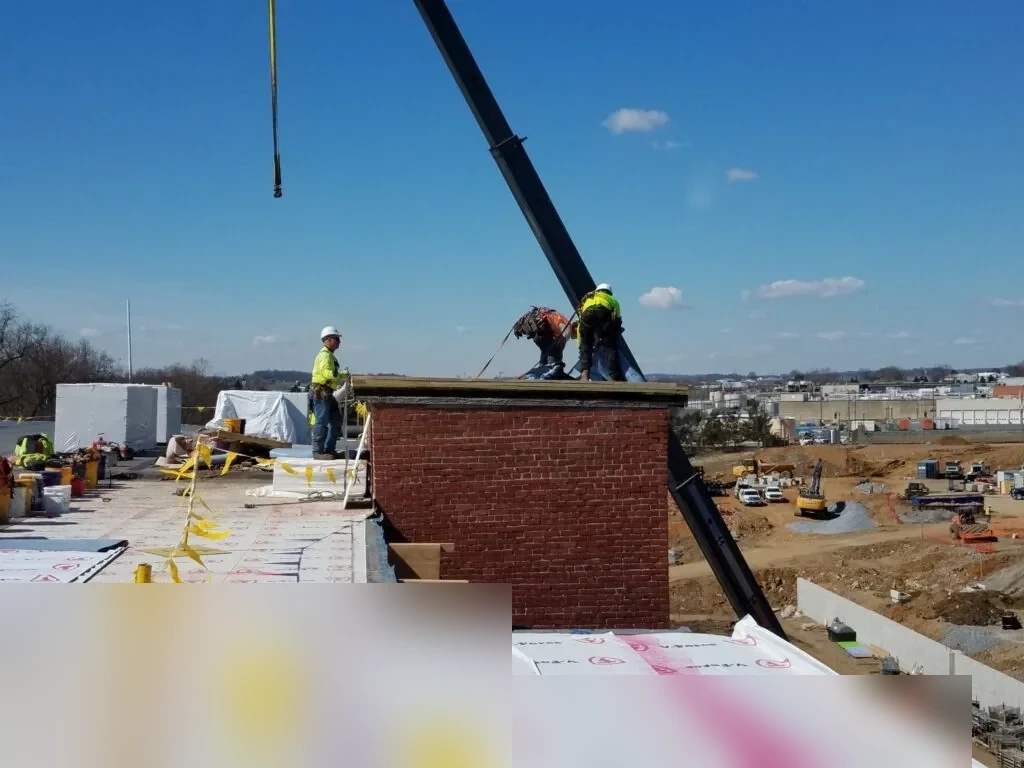
Scope, access and schedule reviewed before work begins.