Big-Box Retail Roofing in Mesquite, TX
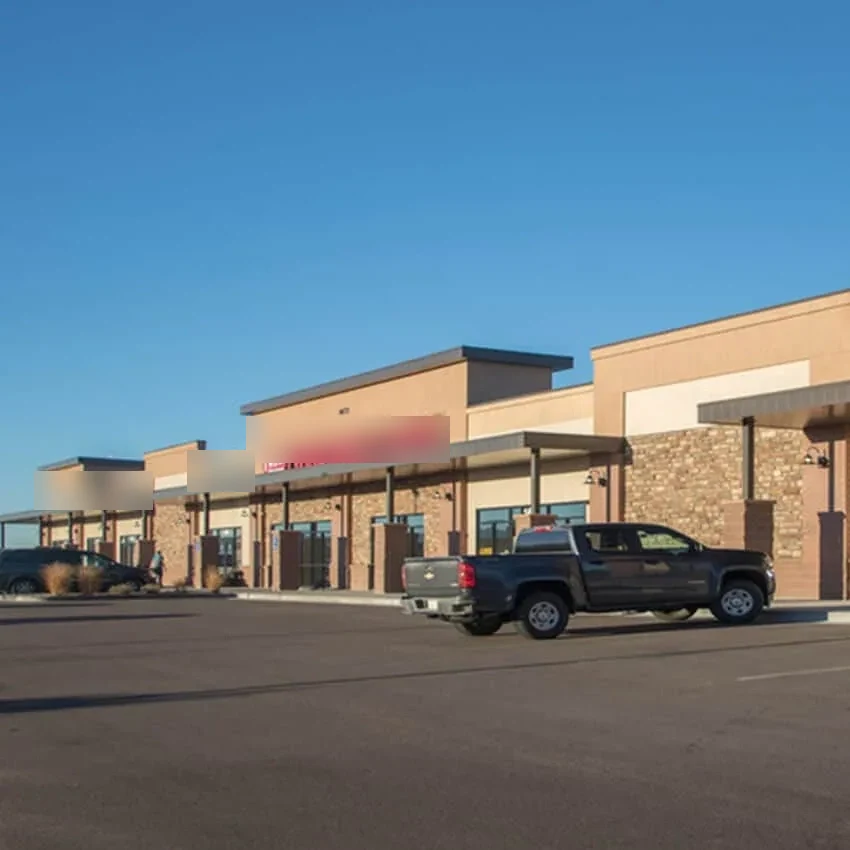
A leak over a sales floor or receiving bay can put inventory, electrical systems, and staff routes at risk. We record where water appears, inspect the roof section above it, and trace seams, curbs, drains, and edge details. Large retail roofs often have long runs and many penetrations, but the repair boundary still comes from field findings. Temporary water control can start while we confirm the permanent scope.
Mesquite's Town East retail area and the broader Towne Centre and Market East reinvestment zone include retail alongside office, industrial, and service activity. That mix makes delivery access and customer circulation part of the work plan. It says nothing about a particular store's roof layers or condition. We review the roof plan, receiving schedule, equipment layout, and open business hours before moving material or setting an exclusion area.
Can the Receiving Lane Stay in Service?
Before work starts, we confirm when trucks arrive, where trailers turn, and which doors must remain available. A roof repair may need a lift, material staging, or a controlled ground zone below the roof edge. We coordinate those needs with store operations, then sequence the work so the receiving route is protected and the roof can be closed at shift end. If emergency dry-in is needed, we mark its limits and next inspection time.
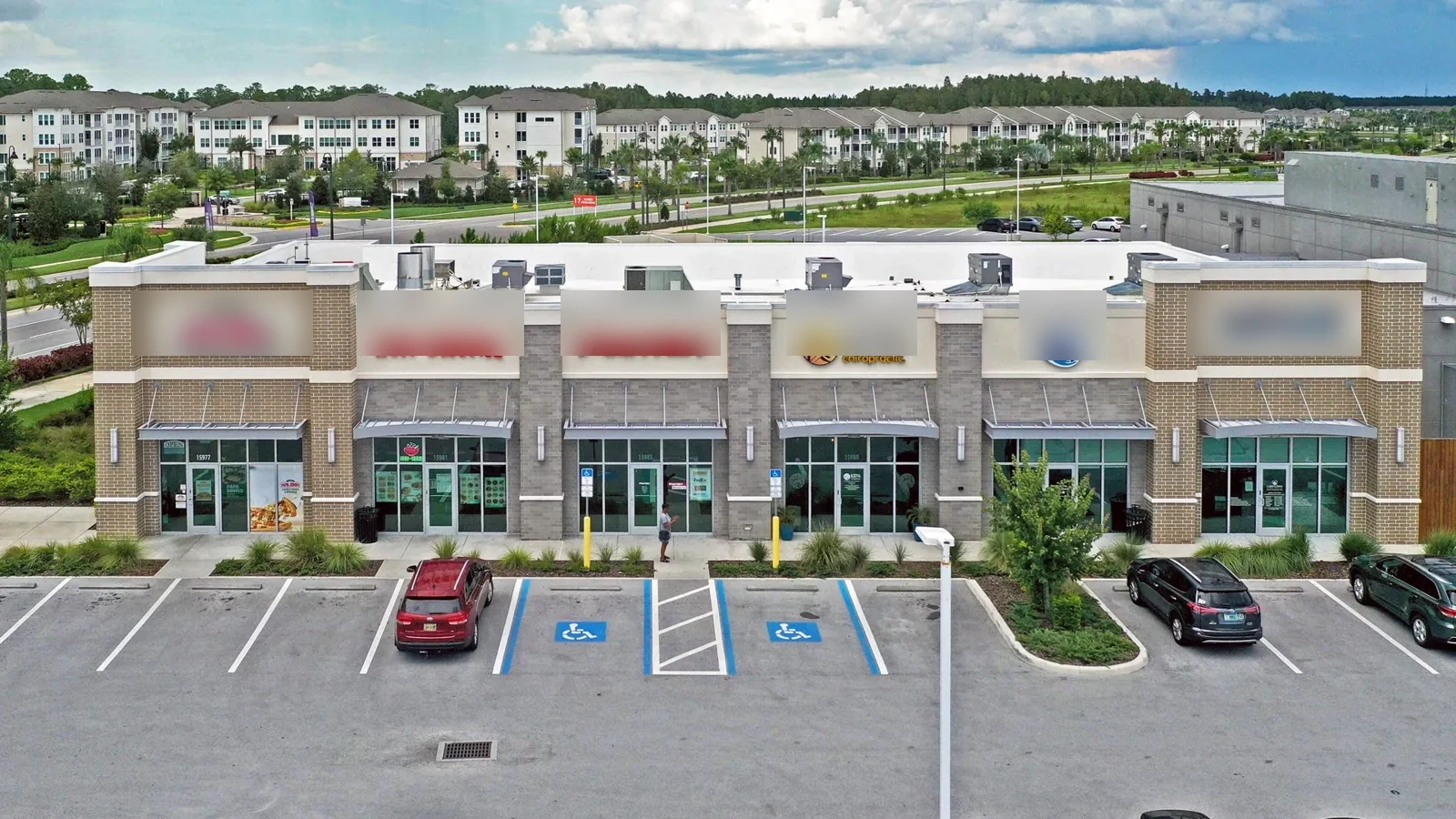
Interstate 635 serves Mesquite's crossroads, and the Towne Centre reinvestment area supports commercial redevelopment along that corridor. A retail operator may also need deliveries routed around other active district traffic. The specific property controls its own schedule. Where the roof spans sales and stock areas, a shopping center roof inspection can address different tenant layouts, while big-box work should account for the store's own receiving and public-entry plan.
Which Curb or Seam Is Letting Water Through?
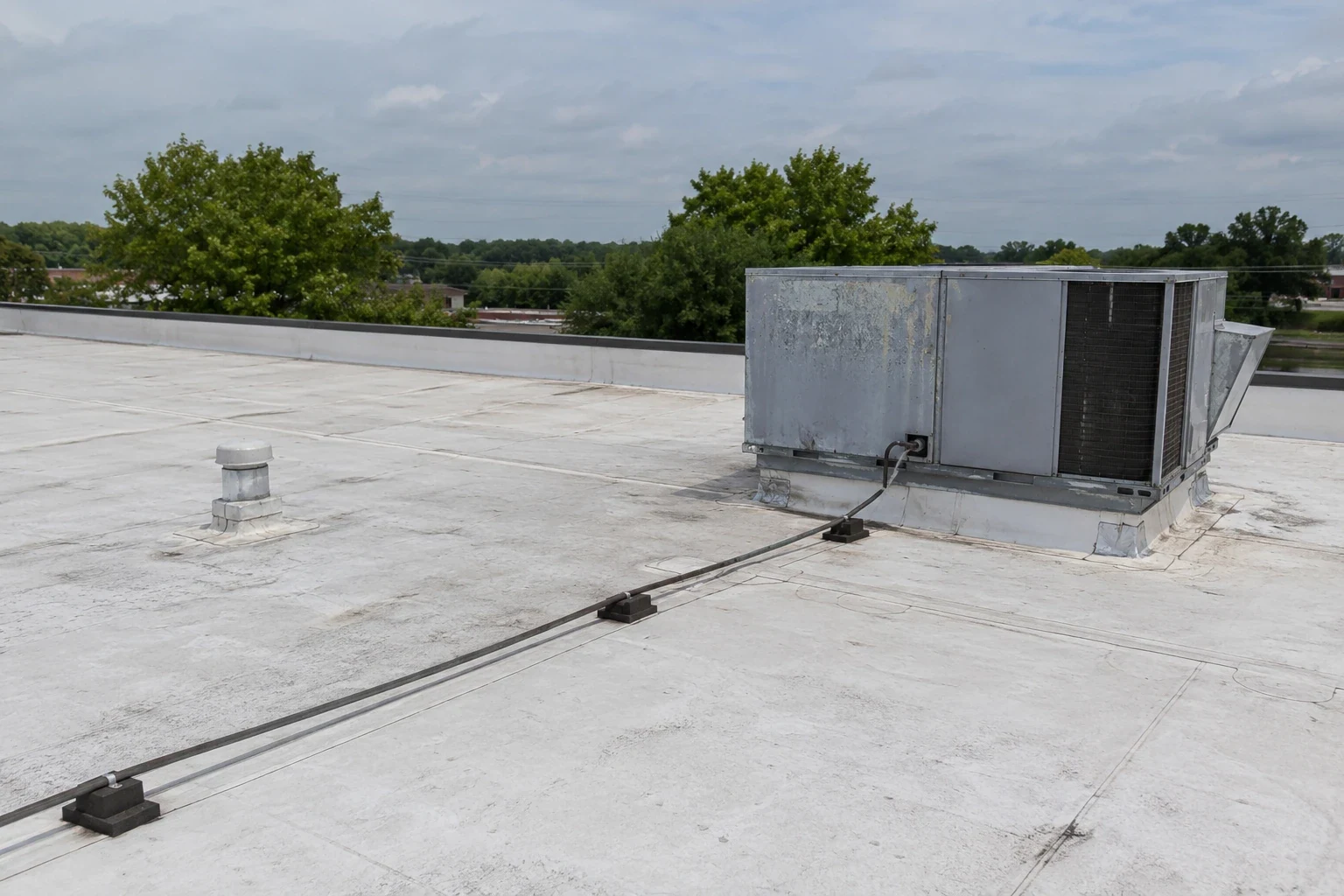
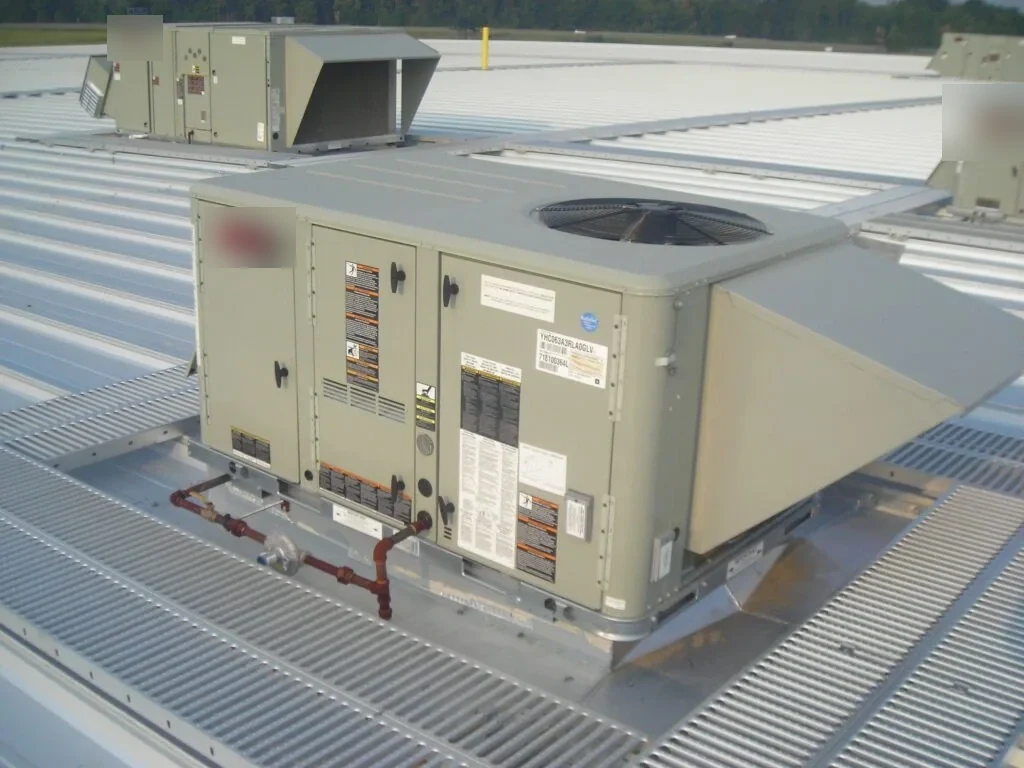
Rooftop HVAC curbs, exhaust equipment, skylights, and service penetrations interrupt the field membrane. We inspect the flashing corners, counterflashing, fasteners, seam welds, and nearby transitions for separation or movement. Water can follow a support or deck before reaching the interior, so the ceiling mark alone does not establish the entry point. A selected test opening shows whether insulation or the deck also needs attention.
Hot, humid Mesquite summers affect surface conditions during membrane and coating work. Regional daytime highs in July and August commonly run through the 90-degree range, with some days at 100 degrees or above. We schedule installation methods against actual weather and product instructions. If the roof has a TPO assembly, curb and equipment support repair can be scoped with the membrane detail. A TPO roof system needs compatible flashing and prepared surfaces at those penetrations.
Where Does Water Collect Before It Reaches a Drain?
Long roof runs can carry water past several tenant or stock zones before it reaches an internal drain. We check the slope, drain bowl, strainer, nearby seams, and any scupper or conductor connection. A blocked outlet and a failed membrane detail call for different corrections. If water remains after rain, the inspection records the depth and location and checks the assembly below before a repair is selected.
Dallas-Fort Worth spring storms can bring large hail, damaging wind, flooding, and tornadoes across the Metroplex nearly every year, though those events do not strike every location annually. We inspect the store itself for impact, displacement, punctures, and drainage trouble. Drain and scupper repairs restore confirmed discharge details. For damage affecting multiple roof sections, a commercial inspection can build one photo record by area before crews sequence permanent work.
Is Repair, Recover, or Replacement Supported?
A limited opening with sound membrane around it may be repaired locally. Widespread wet insulation, loose seams, repeated patches, or a distressed deck can change the decision. We map failures across the roof and use test cuts where readings or interior evidence point below the surface. The report distinguishes what is confirmed from the areas not opened, so the owner can compare repair, selective removal, recover, and replacement on the same basis.
Mesquite's Town East-Skyline Industrial District includes distribution-center uses in a broad commercial and industrial setting. Those neighboring uses affect regional deliveries, not the big-box roof assembly. At the store, we identify the layers and verify structural and drainage conditions before proposing another roof over the existing one. A roof recover assessment checks those limits. If a store has cold rooms or food service, a separate grocery roof review accounts for its own equipment and operating requirements.
What Should the Store Keep After Roof Work?
The closeout should show the repaired roof section, materials used, test locations, affected insulation, and the edge or curb details addressed. We add before-and-after photos and note areas outside the approved scope. That helps facilities staff compare a later leak report with the same location rather than repeat a broad search. Any temporary protection that remains needs a clear inspection point and follow-up action.
Several big-box properties may share an owner but have different roof ages, systems, and access rules. A portfolio record should keep each store's condition separate and identify the next check by roof section. For maintenance, we track drains, seams, flashings, and equipment supports after repair. A roof asset record can organize those Diligence Notes, while a Towne Centre and Market East service area link identifies the broader Mesquite commercial context without treating a district as one building.
Commercial Roofing Questions
Can roof repairs happen before the store opens?
We can schedule specific tasks in a pre-opening window when access, weather, and the repair method allow it. Lifts, roof access, staging, and fire controls may require more time than the repair itself. We confirm which public entrances and delivery doors must remain open and leave the work area secure at handoff. If the roof cannot be closed safely before customers arrive, we plan a different sequence.
Why is a wet spot on the sales floor not the roof repair boundary?
Water can travel along a deck, insulation joint, support, or conduit before it drips. We compare the interior location with the roof plan and inspect uphill details, including seams, curbs, drains, and wall transitions. Moisture checks and selected openings help show how far the assembly is affected. The scope names the verified entry and wet layers, not just the ceiling tile that showed the symptom.
How do you protect merchandise during an emergency leak?
Store staff identify sensitive stock, electrical areas, and safe routes below the leak. We control the immediate opening when access is safe, then trace the roof condition and define any temporary protection. The plan marks the work zone and the point where a permanent repair will begin. We do not close a leak report until the roof assembly and interior exposure have both been checked.
Does hail require replacing the whole big-box roof?
No single weather report determines the scope. We inspect the membrane, metal edges, rooftop equipment flashings, drains, and any reported interior leaks, then photograph actual damage by section. Test cuts are used when moisture or deck condition needs confirmation. A local repair may fit isolated damage; broader failure or wet insulation can support a different scope after inspection.
What makes a roof recover unsuitable for a retail store?
Existing layers, trapped moisture, structural capacity, drainage height, and flashing transitions all affect whether an overlay can be considered. We inspect the assembly, locate wet insulation, and check how another layer would meet curbs, walls, drains, and roof edges. If those details cannot be resolved within the recover design, selective removal or replacement may be needed. The recommendation follows the verified roof conditions.
Set a Repair Window Around Store Operations
Share the roof plan, leak locations, receiving hours, equipment schedule, and customer-access rules. We will map the affected section, document moisture and repair limits, and coordinate temporary protection or permanent work.
Roof conditions recorded with photos and written findings.