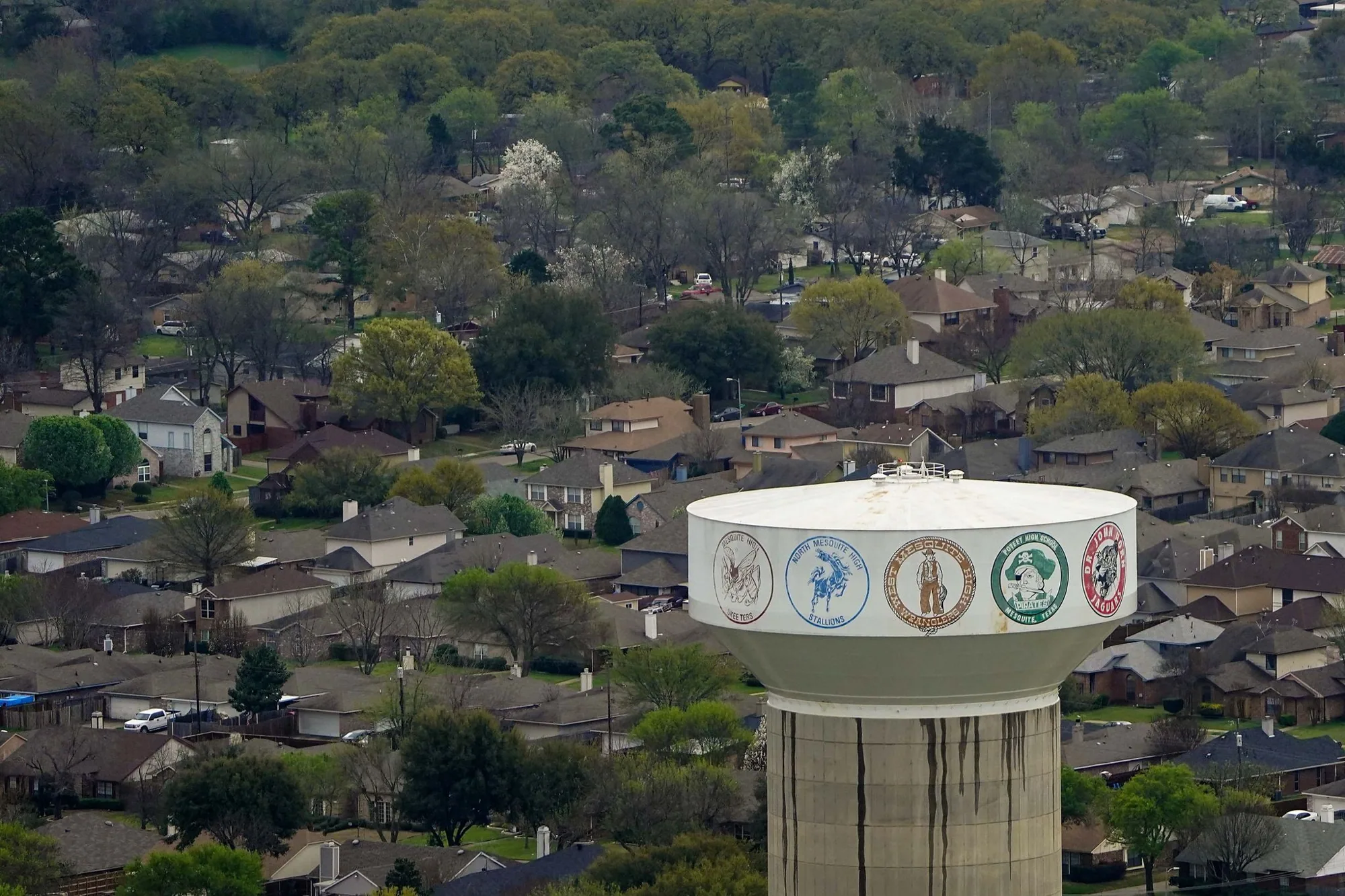
Commercial Roofing in Military Parkway and West Scyene Corridor, Mesquite, TX
A curb flashing failure over an occupied business needs a roof inspection that isolates the opening before a larger area is disturbed. Along Military Parkway and West Scyene Road, we begin at the interior symptom, trace the water path, and set a work zone that keeps nearby activity clear. The Downtown Mesquite district includes properties fronting both roads across a broad multi-block area. That makes the corridor a service-area target, not a claim about any one roof or tenant.
Downtown includes core, mixed-use, and edge areas, alongside business services, retail, and redevelopment. Those activities can affect access and scheduling, but the property contact supplies the actual operating constraints. Those uses can affect access and scheduling, but the property contact supplies the actual operating constraints. We confirm roof entry, parking or lift location, tenant routes, and hours before dispatch. For another district, a Downtown Mesquite roof inspection or Gus Thomasson Corridor repair visit follows its own site plan.
Where Does the Leak Boundary Start?
We record the leak location, time, weather, affected room, and any earlier repair at the same section. A ceiling mark is not necessarily below the roof opening. Water can move along a deck or insulation before it reaches the interior. We inspect uphill from the symptom and check seams, penetrations, curbs, drains, parapets, and the wall transition that could connect the two points.
The roof system must be identified before a material is selected. A membrane seam, metal panel, built-up surface, or coating has different repair preparation. We inspect the adjacent material for movement, moisture, prior patches, and a stable tie-in area. If a test opening would change whether the owner chooses repair or replacement, we mark the exact section and explain what that test can answer.
Active water needs immediate protection, especially where staff or customers use the space below. We can separate temporary water control from permanent repair and document the limit of the temporary measure. If the reported area cannot be reached safely, we tell the contact what access is needed before committing to a repair boundary. A commercial roof inspection can provide a photo record tied to the roof plan.
Which Roof Details Take the First Weather Check?
Sun on a low-slope assembly can age sealant and coating before an active leak forms. DFW afternoons in July and August run warm and humid, with daytime readings routinely in the 90s and sometimes past 100 degrees. We inspect for open laps, brittle sealant, loose edge metal, and changes at curb flashing. That regional condition guides where to look; it does not tell us that a particular address has heat damage.
Storm inspection demand rises during spring. The Metroplex's broader record includes hail, wind, flooding, and tornadoes, but the events and their effects differ by location and year. After a storm, we compare the reported time with the conditions on the roof: impact marks, lifted edges, debris, open seams, and interior leaks. We keep the repair scope limited to what the inspection supports. A wind damage roof check or a hail damage inspection can focus on observed sections.
Rain makes drainage another early check. We follow the path into drains, scuppers, and overflow points, then inspect membrane and flashing around each outlet. If water remains after nearby sections clear, we check whether the area is blocked, low, or holding moisture below the surface. A drain repair does not correct a deck depression, so the finding determines the work.
How Can Work Stay Clear of Frontage and Tenants?
The property contact identifies entrances, deliveries, tenant activity, and any frontage that must remain open. We agree on a roof entrance, staging position, lift route, and ground-level protection before materials arrive. A work zone can be limited to one roof section while other areas remain available, provided the access route is safe. If the approved window is too short for a permanent tie-in, the plan separates temporary closure from the later repair.
For work that affects more than one tenant or operating area, the manager can assign a contact for each handoff. We state which section the crew will reach, when a disruption begins, and what should remain clear below. The field team records a stop point if weather or access changes the sequence. That record matters when one shift hands the condition to another, or when the building team needs to reopen a route before the entire roof scope is complete.
Cost and duration depend on the roof height, area, assembly, compatibility of replacement material, wet insulation or deck findings, lift access, weather, and number of work windows. A concealed condition can expand the repair after removal. We document what changed and ask for direction before permanent quantities grow. The emergency roof response can address immediate water control while a defined inspection scope follows.
What Makes a Patch Hold on This Assembly?
A repair needs stable surrounding material and a compatible tie-in. We clean and prepare the surface, correct the failed detail, and check adjoining seams, flashing, or fasteners that share the same water path. At a curb, the repair has to connect to the membrane and curb face, not just cover the visible corner. At a metal transition, the panel seam and edge detail both matter.
If moisture extends beyond the visible opening, a patch may close the surface while leaving an unresolved wet area below. We identify the section that needs testing and show how the result changes the scope. The owner can compare a localized repair with a recover or replacement plan that identifies what stays and what gets removed. We include protection for occupied spaces and the access sequence that each option requires.
Mesquite's commercial development includes manufacturing, retail, logistics, and distribution activity. The downtown corridor's business services and retail uses make operating hours important to plan, but those broad uses do not establish an individual roof's design. We inspect the actual assembly and coordinate with the property contact. For a surface that needs broader work, a commercial roof replacement assessment can compare the existing repair limit with a larger section.
What Should the Site Contact Receive?
At closeout, the report names the inspected roof section, observed condition, preparation, materials, completed tie-in, and any area not reached. Photos connect the work to a roof-plan reference. Temporary protection is labeled with its limit and next action. If an access restriction left a detail unfinished, the property team receives the remaining exposure and the next safe work period.
Future maintenance can check the same curb, seam, drain, or edge without relying on a general description. A roof condition report with photos keeps the decision with the property file. For surrounding commercial areas, work such as a Town East roof inspection uses its own access instructions and condition record.
To schedule a visit, send the address, roof plan, leak or storm timeline, affected space, and available access window. Include tenant hours, delivery limits, and any frontage that must stay open. We will confirm the work zone, inspect the roof section, and define the repair boundary before permanent work expands.
Commercial Roofing Questions
Can you inspect a roof without blocking Military Parkway frontage?
The site contact identifies a safe staging point and the route to keep clear. We plan lift placement and ground protection around entrances and deliveries, then use the approved window for the roof section that can be safely reached.
Does a property on West Scyene Road have a particular roof type?
The corridor location does not identify the building assembly. We review the records and inspect the roof to determine whether it is membrane, metal, built-up, foam, or coated before choosing a repair method.
What happens when a leak crosses a tenant boundary?
We document the reported area, protect the affected space, and trace the roof path above it. The property manager helps coordinate access and communication. The repair boundary follows the inspected assembly, not the tenant line.
Should severe-weather findings be treated as roof-wide damage?
Only observed and tested conditions belong in the scope. We photograph the affected details, compare them with the leak timeline, and keep areas that were not inspected separate from confirmed repair work.
What changes a repair from one work window to several?
Roof height, weather, access, material preparation, and concealed moisture can affect sequencing. We record the stop point and remaining exposure, then confirm the next approved period.
Set a Roof Visit Around the Frontage
Send the address, roof plan, leak timeline, affected space, tenant hours, and safe access window. We will define the work zone, inspect the assembly, and document temporary protection separately from permanent repair.