
Commercial Roof Insurance Claim Assistance in Mesquite, TX
A claim file is easier to review when the roof condition and the repair scope are kept distinct. We inspect the affected sections, photograph visible damage, and document the work needed to restore the assembly. The carrier decides coverage under the policy. Our role is to give the owner a clear record of what the crew observed and how the proposed repair addresses it. A facility near Urban District 30 may need work staged around operations; a roof in the Skyline Logistics Hub area may require dock access coordination as well as interior protection.
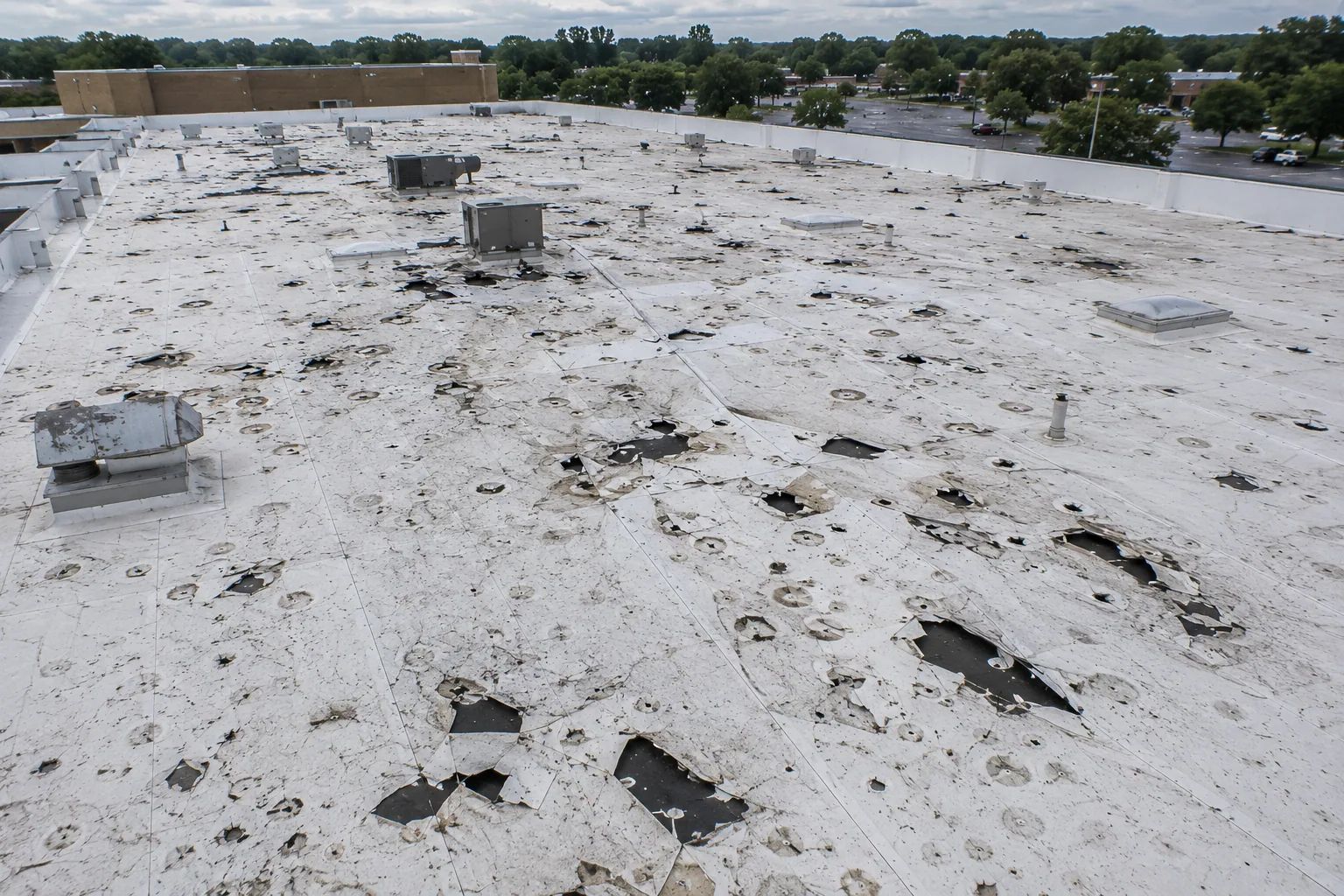
Spring is the Dallas-Fort Worth region's peak season for severe thunderstorms, including hail and damaging wind. That regional pattern can help set inspection priorities, but it does not establish damage at a particular property. We compare the reported event date with the leak timeline, prior repairs, and conditions on the roof. Photos show the actual detail, not just a wide view. A Mesquite inspection in Urban District 30 can be arranged with the facility contact. For urgent water entry, emergency stabilization can be documented separately from permanent repair.
What Should the Inspection Document?
We identify the roof system, affected building section, visible condition, and nearby transitions. The record may include a puncture, lifted edge, separated flashing, hail impact mark, blocked drain, or interior water symptom. We photograph scale and surrounding materials, then note whether a test or opening is needed. A stain alone does not tell us which detail failed. The inspection links an observed condition to a repair action and keeps unconfirmed areas labeled for follow-up.
We also review records the owner provides: roof plans, repair invoices, maintenance logs, equipment changes, and any previous photographs. Those materials can clarify whether a defect is new or has been tracked before. For a large or complex roof, a roof condition report can group images and findings by section. If moisture is suspected beneath the membrane, an infrared survey may help choose test locations. Each method has a defined purpose; none decides policy coverage.
How Is a Repair Estimate Built?
We estimate the work needed to repair the roof condition we inspected. The scope identifies removal, compatible materials, flashing, insulation or deck work, access, temporary protection, and closeout. Quantities are tied to a roof plan or field measurement. If the assembly hides damage, we state the allowance and approval process before opening it. This gives the owner a defensible explanation of the repair without assuming that every cost is covered by a claim.
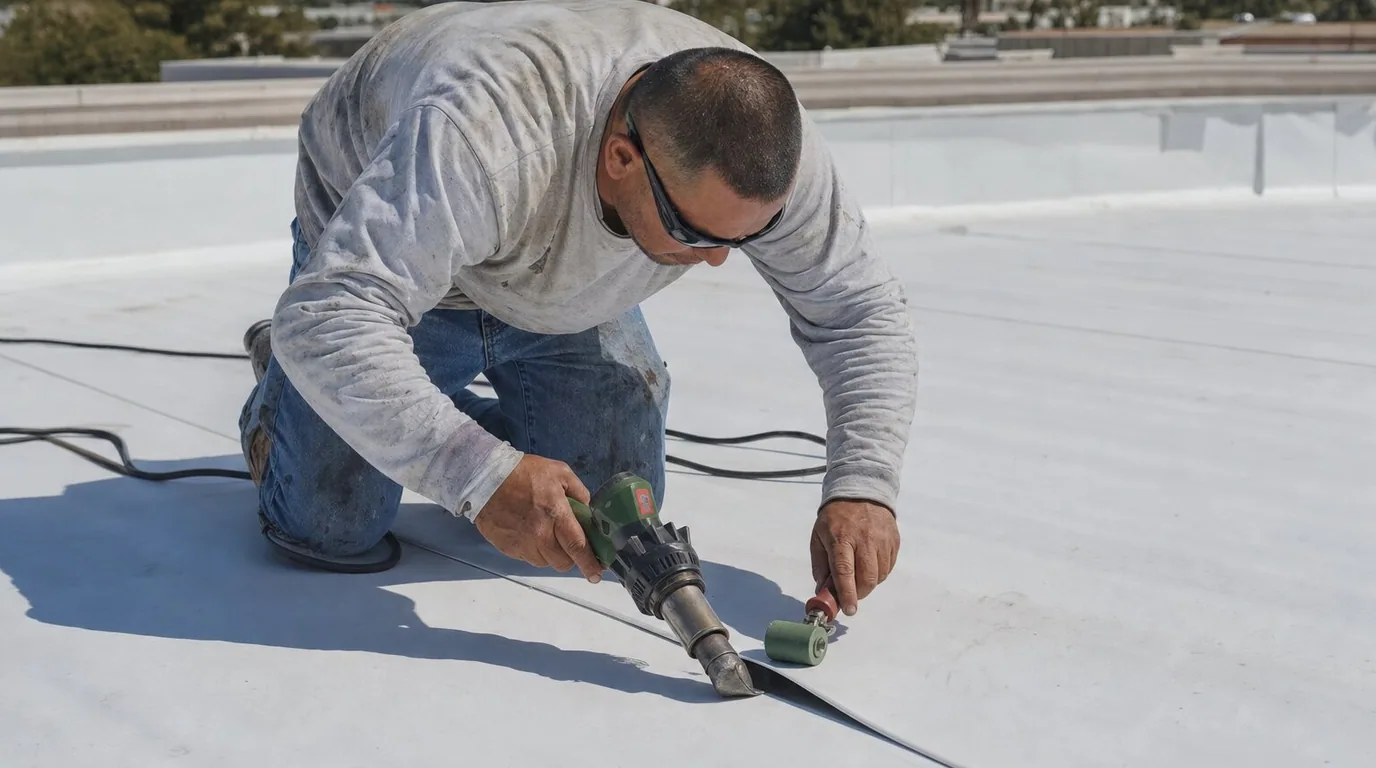
Different roof systems need different repair methods. Welded seams, adhered membranes, metal panels, and built-up assemblies each have details that affect labor and materials. At a curb or edge, the scope may require more than a surface patch. We can compare a targeted repair with broader work when the inspected condition extends beyond one area. A commercial repair proposal describes the physical correction; replacement options are considered when the roof's condition supports a larger project.
Which Decisions Belong to the Owner?
The owner controls access, operations, records, and the work authorization. The carrier applies policy terms and determines coverage. We do not promise a payment, interpret policy language, or suggest that one roof finding decides coverage. We provide the inspection findings, photographs, and repair scope so the owner can share accurate technical information with the carrier. If an adjuster visit is scheduled, we can coordinate safe roof access and point out the documented conditions.
Keep temporary measures separate from permanent repairs. A tarp or patch may protect the interior before a full inspection is finished. The record notes what was stabilized and when, then identifies what remains to be repaired. The owner can use a documented roof survey to compare the scope with prior conditions. For multi-building properties near Mesquite's major highway corridors, we keep each building's findings separate and organized.
How Do We Coordinate the Field Visit?
We confirm site contact, roof access, affected rooms, equipment risks, and any loading or production windows before arriving. The Skyline Logistics Hub is a broad manufacturing and distribution area around Big Town and Town East Boulevards. At a property there, truck movement can shape where ladders, lifts, and materials are placed. We identify the work zone and agree how the crew will protect people and inventory below. The owner receives updates as the inspection moves between sections.
If weather remains active, safe access sets the limit of what can be documented. We can protect a roof opening where conditions allow, then return for the close inspection after the surface is safe. Photos and notes are dated and tied to locations. We avoid speculative cause statements when the roof cannot yet be fully examined. A written record can include what is confirmed, what is concealed, and the next inspection action without overstating the evidence.
What Goes Into the Final File?
The final file can include the inspection date, affected roof sections, field photographs, test results, temporary measures, repair scope, and closeout images. It also identifies any item not included in the work. If concealed conditions changed the estimate, we document the opening and approval before continuing. The owner can then match the completed work to the estimate and preserve the record for future maintenance.
After repair, we can schedule a maintenance follow-up to check seams, drains, and edges. If the roof has broad damage, a capital plan can compare current repairs with future replacement by section. The record is useful whether the claim is accepted, partly covered, or handled outside insurance. It should describe the roof and work accurately, while leaving coverage decisions to the carrier and policyholder.
Commercial Roofing Questions
Will you know whether the carrier will cover a roof claim?
No. Coverage depends on the policy and the carrier's review. We document roof conditions, photos, and the repair scope, then coordinate access for an inspection when requested. We do not promise approval or decide policy terms. The owner can share the technical record with the carrier and ask its representative about coverage questions.
What should we photograph before temporary protection?
When it is safe, photograph the interior symptom, affected equipment or contents, and the time of the observation. Do not climb onto a wet roof or enter an unsafe ceiling area. Leave the roof surface untouched where practical until it can be inspected. We document the roof detail and temporary work separately.
Will you meet with the insurance adjuster?
We can coordinate safe roof access and show the conditions in our inspection record. The owner or authorized representative should manage policy questions and claim communications. We explain the physical roof scope and identify what our field work confirms. Any difference between an estimate and a carrier scope should be handled through the owner's process.
What if the roof was already repaired before inspection?
Send the repair invoice, photos, date, and description of the work. We can inspect the remaining roof and document current conditions, while noting which areas have already changed. A prior patch can limit what is visible about the original opening. We do not reconstruct an unseen condition as fact.
Can a claim inspection also identify maintenance work?
Yes, we can separate storm-related observations from routine maintenance items in the report. Drains, equipment supports, and older seams may need attention even when they are not part of the claimed damage. The owner can authorize those items independently. Keeping the categories distinct makes both the repair scope and future maintenance clearer.
Build a Clear Roof Record
Share the event timeline, roof plan, prior repairs, and facility access rules. We will inspect affected sections, document observed conditions, and prepare a repair scope without making a coverage determination.
Work planned around the building and its daily operations.