Apartment and Multifamily Roofing in Mesquite, TX
A leak over a resident's room needs a clear interior response and a roof inspection tied to that unit. We record when water appeared, check the roof section above, and follow the likely path through seams, drains, curbs, and wall transitions. The stain may be separated from the opening. Moisture checks and selected test cuts show whether insulation or decking also needs work.
Mesquite's 2025 Downtown district allows a mix of housing, shopping, employment, business, and personal services. The Spradley Farms planning area also combines residential uses with commercial components and open space. Those area plans give useful context for resident access and delivery planning. They do not establish the type or condition of a particular apartment roof. We confirm the building layout, roof assembly, and occupied units with property management.
Which Units Need Notice or Temporary Protection?
Before opening a roof section, we identify the units, hallways, balconies, and shared rooms below the work. Management can confirm resident notices, quiet hours, pet or mobility needs, and any units that should remain vacant during a repair. We mark the ground-level work zone and routes for residents, deliveries, and emergency access. If the leak is active, temporary protection should keep water away from interiors while the permanent scope is established.
A multifamily property may contain several connected wings with separate roof sections and drainage paths. We map each area independently and avoid carrying a finding from one wing to another without inspection. For communities with assisted or older residents, a senior-living roof plan addresses additional access coordination. A reroofing sequence for occupied buildings can help management plan notices, work hours, and protected entrances.
Where Does Water Enter the Apartment Assembly?
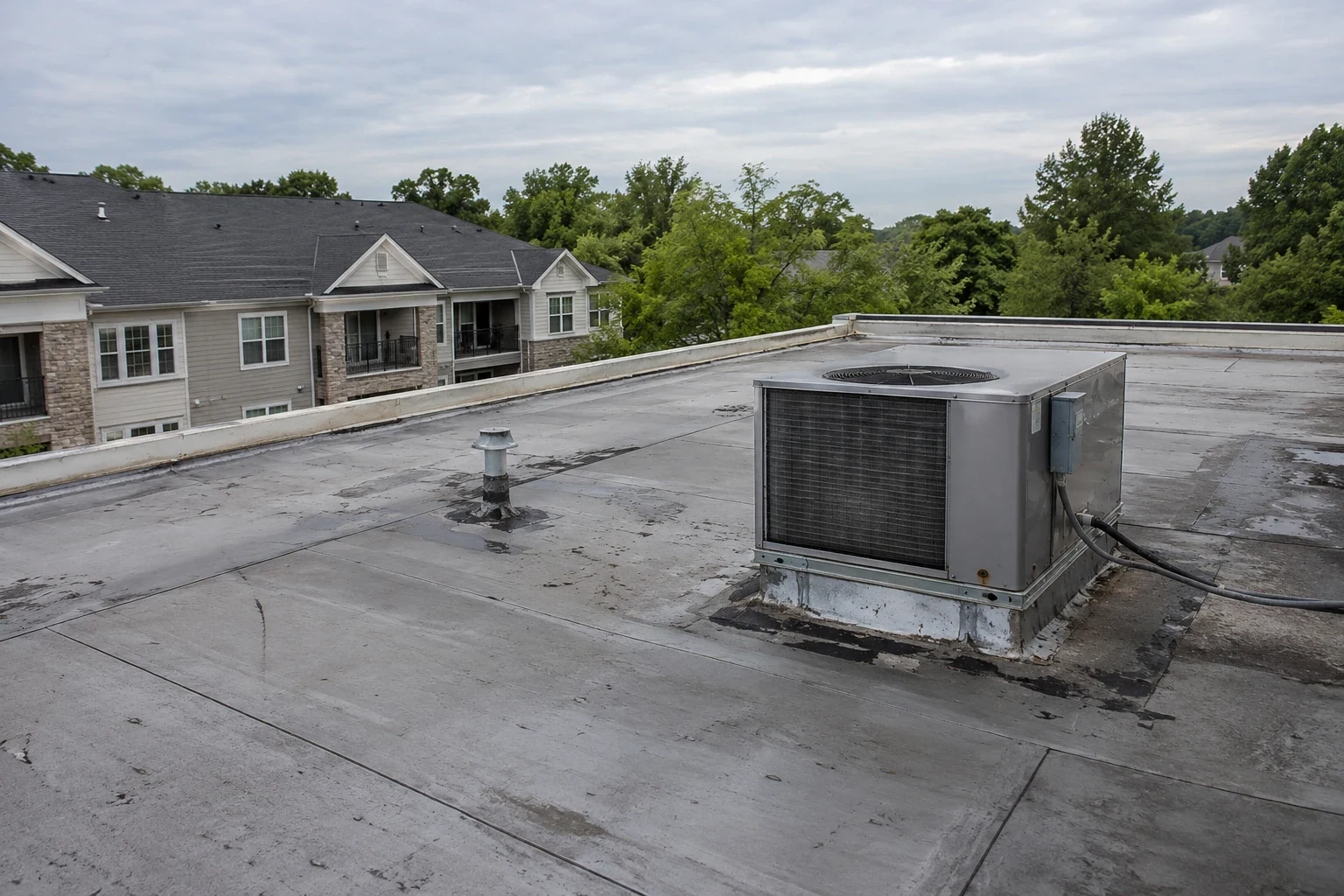
Water can travel beneath membrane, along a deck, or around a plumbing vent before it reaches a ceiling. We inspect the roof directly above and uphill from the unit, then compare seams, penetrations, and wall edges with the interior timeline. A stain near an exterior wall may trace to coping or a parapet transition. A recurring leak at a vent may require new flashing rather than another surface patch.
Residents should not enter a restricted work zone or touch temporary roof protection. Management can move belongings and report whether the ceiling, lighting, or nearby electrical equipment is wet. We document the conditions, then define a repair limit by roof section and affected unit. An inspection with photos gives the owner a field record, while drain and scupper work addresses verified outlet or overflow defects.
Does the Building Have More Than One Roof System?
Multifamily buildings can have flat common areas, pitched sections, additions, and rooftop equipment installed at different times. We identify each assembly, including membrane, shingles or metal where present, insulation, deck, and flashing. Test cuts show whether insulation has retained moisture. The proposed repair needs compatible materials and a sound substrate; covering a wet layer can leave the original problem in place.
For a low-slope section, a TPO roof system has seams and edge details that require proper preparation. Other buildings may need a different assembly or a targeted repair that matches existing materials. We compare the field condition with property records, note overlays, and check how roof drains meet the wall and parapet. A recover is considered only after moisture, attachment, and structural limits have been reviewed.
What Should Management Check After a Mesquite Storm?
In spring, Dallas-Fort Worth sees its peak thunderstorm and severe-weather activity. Hail, damaging winds, flooding, and tornadoes are part of the regional pattern, but a nearby storm report does not prove impact at an apartment building. We check the actual roof for displaced metal, membrane punctures, loose edge details, blocked drains, and new interior leaks. Photos and unit locations help management prioritize occupied areas.
July and August in the region bring hot, humid weather, with daytime temperatures staying in the 90s and often reaching 100 degrees or higher. That affects safe surface work and the conditions for adhesives, coatings, and membrane installation. If the existing roof is suitable, a coating restoration can be evaluated after preparation and adhesion checks. We do not use a coating to cover open seams, wet insulation, or failed flashing.
How Should the Owner Track Work Across Buildings?
Each closeout should name the building, roof section, affected units, materials, test openings, and repair boundary. Before-and-after photos identify the location and help staff respond if another resident reports water. Note any condition left outside scope and whether temporary protection remains. A property record can then track repeat leaks by wing, unit, and roof detail rather than treat the entire community as one assembly.
Downtown Mesquite has a compact, walkable core with three subdistricts; planned improvements in Spradley Farms Mixed-Use Area include mobility and utility infrastructure. Those broader planning contexts make safe pedestrian routes and staging relevant to multifamily projects; the property manager defines actual access. A roof condition report can preserve section-level findings. For a lodging property with guest turnover instead of long-term residents, a hotel roof review has different notice and occupancy timing.
For a property within the Towne Centre and Market East reinvestment area, crews still need a building-level access plan. Town East and Market East include several commercial uses, but district maps do not set access for an apartment parcel. Management should confirm the correct entrance, delivery window, and lift location rather than assume a neighboring site's route is available. We can stage one roof section at a time, keep resident paths separated from material handling, and identify who can approve a temporary change to parking or loading. Record that decision with the work log so the next phase follows the same access rules.
Commercial Roofing Questions
Can residents remain in their units during a roof repair?
We review the work area, noise, dust risk, interior protection, and roof access with property management. A limited exterior repair may allow nearby units to stay occupied. Removal near a leak or work that affects a ceiling may require a unit restriction for part of the shift. Management controls resident notice and assignment after receiving the scope and the expected access window.
What should management do when a resident reports a ceiling leak?
Log the unit, time, weather, and any nearby equipment or lighting affected. Move belongings from the wet area and restrict access if the ceiling is bulging or electrical fixtures are wet. We use the report to plan the roof inspection, then trace the water path and set temporary protection if needed. The permanent repair follows confirmed roof and insulation conditions.
How do you separate a single-unit leak from a roof-wide issue?
We map the report to the roof section and inspect related seams, drains, penetrations, and transitions. A leak in one unit does not prove every connected wing is affected. Moisture readings, test cuts, and additional interior reports help establish the size of the problem. The written scope lists confirmed conditions separately from areas that were not opened or inspected.
Can roof replacement be phased across an occupied complex?
Yes, the project can be sequenced by building or roof section when each phase can be protected and closed safely. We identify resident routes, lift locations, noise periods, and temporary dry-in for every work area. Management sets notice requirements and access priorities. The schedule includes the transition between phases so a completed section is not exposed while crews move to another wing.
What information helps compare a repair with a coating or reroof?
The decision needs roof age records if available, assembly layers, leak history, wet-insulation findings, drainage, and the extent of repeated failures. We inspect and test selected areas, then document what can remain and what requires removal. The proposal can compare a local repair, compatible restoration, and replacement with clear limits, so the owner can weigh service disruption against the actual roof condition.
Map the Roof Work by Building and Unit
Send the leak log, roof plan, resident notice requirements, access rules, and affected unit list. We will trace the roof section, document wet material, and coordinate a safe repair sequence with management.
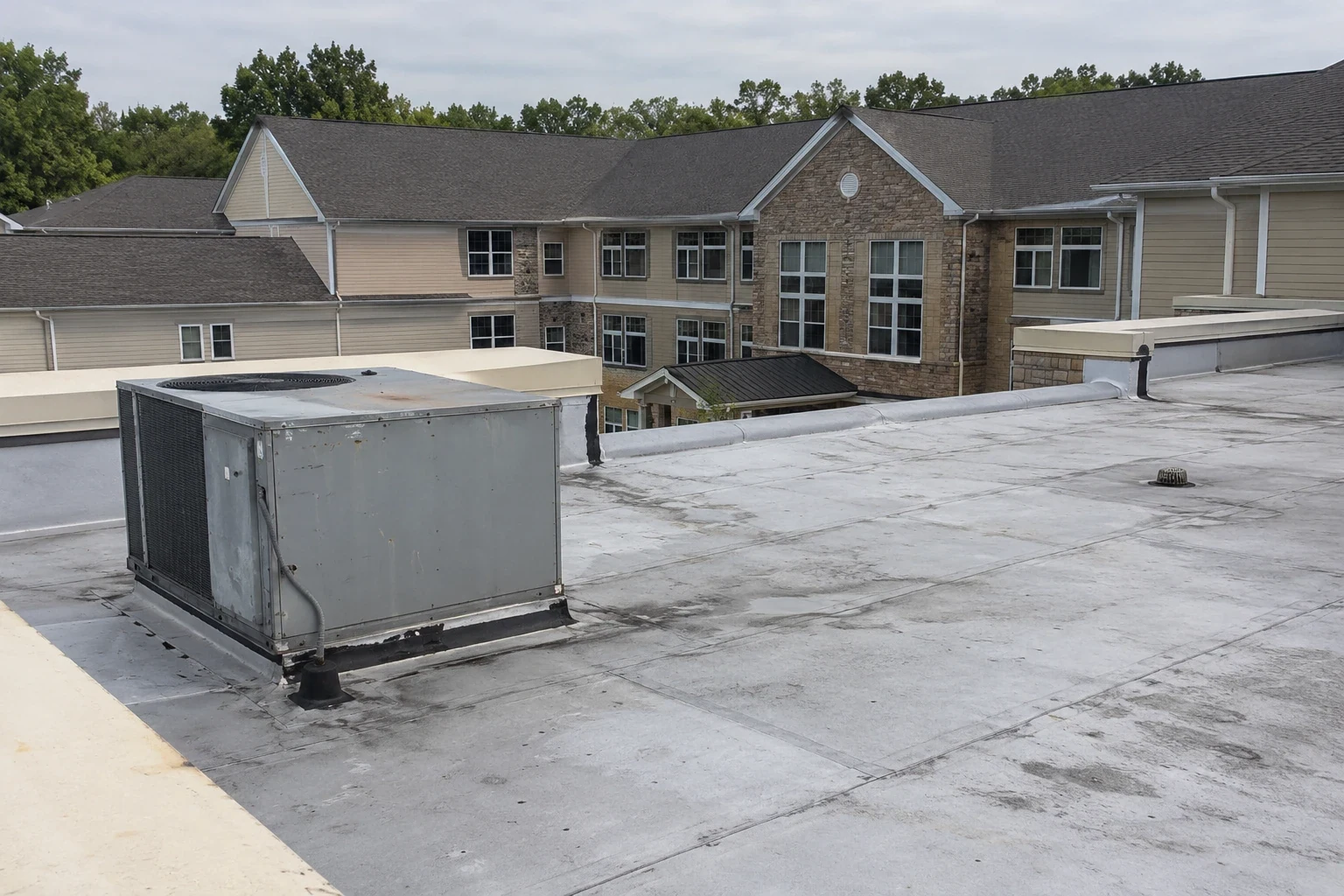
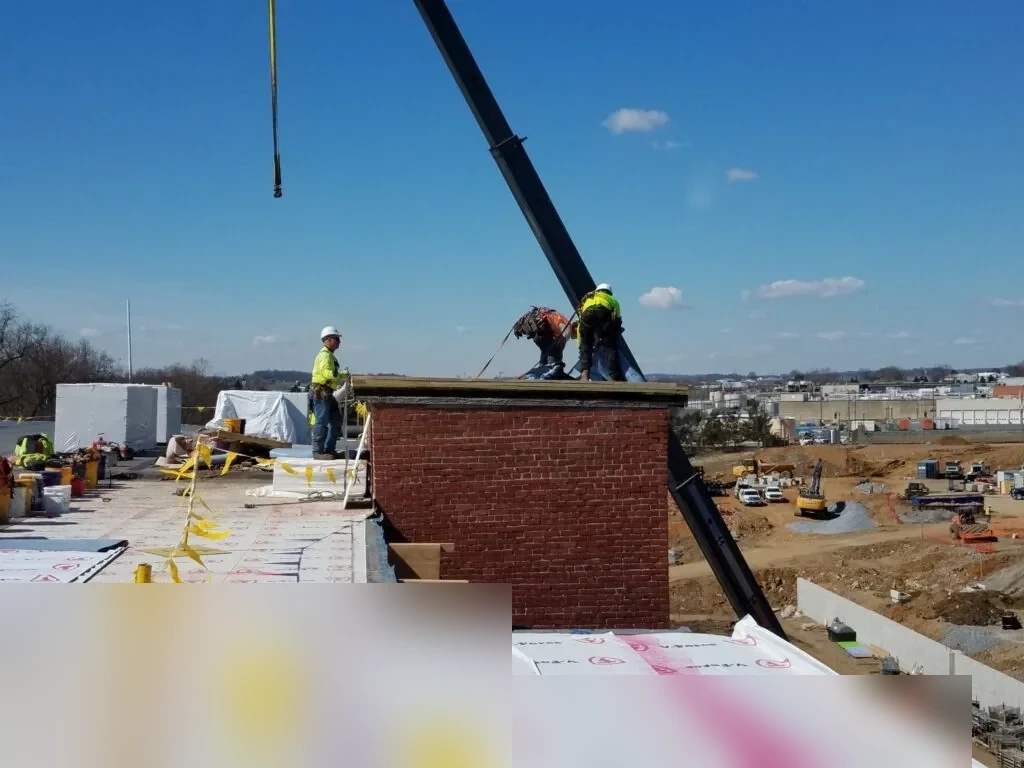
Roof conditions recorded with photos and written findings.