
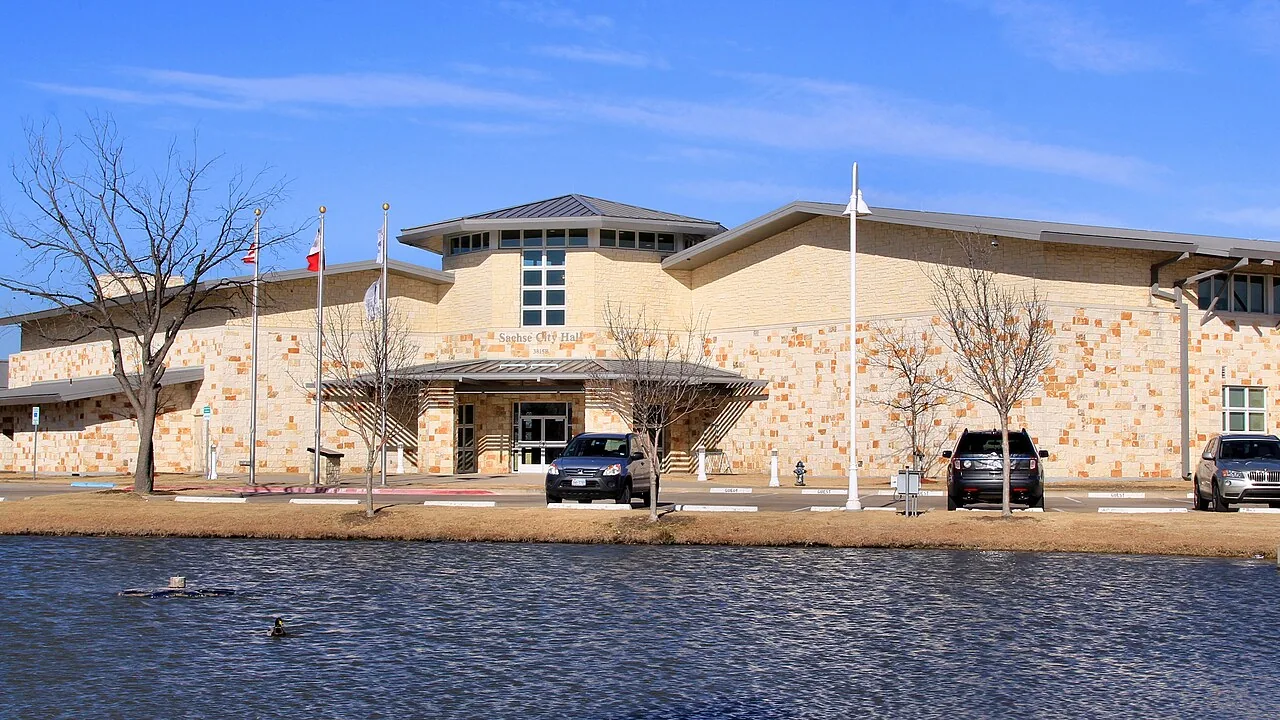
Commercial Roofing in Sachse, TX
Commercial roof planning in Sachse follows the building, not the development label on a map. Highway 78 is a focus for commercial reinvestment and redevelopment, while the President George Bush Turnpike corridor supports business and employment growth. Those growth priorities do not establish the roof type or operating schedule at a particular address. We inspect the actual assembly, confirm who controls access, and locate the reported leak or damage before setting a repair boundary.
A useful first visit starts with the property contact, roof plan if available, and the symptom timeline. We check the route to the roof, staging limits, equipment that must remain on, and the interior area below the reported condition. Then we trace water paths across seams, curbs, drains, and edge details. If a commercial project is near Highway 78, work windows and delivery routes may affect staging, but the site manager confirms what is active. A commercial roof assessment in Garland or roof service in Rowlett receives its own property review; nearby city names do not substitute for this inspection.
What Does Growth Planning Mean for a Roof Visit?
Sachse’s local growth is guided by how business areas are used. Commercial reinvestment along Highway 78 and business and employment growth near the President George Bush Turnpike are local priorities. These area priorities do not confirm whether a project at a specific property is complete. We do not infer a roof assembly, tenant, or building age from a corridor designation. At the property, the contact shows the approved entrance, roof access, and areas that cannot be interrupted.
On a new or changing commercial property, roof records can be especially useful when ownership, occupants, or project phases change. We identify the installed system, visible repair history, drainage points, and any open item that needs a test. If construction trades are still active, the roof scope can state which details remain exposed and who is responsible for protecting them. A roof condition report with marked photos can keep findings tied to a specific section rather than a general corridor description.
Where a business occupies a building during repairs, we agree on work-zone boundaries and a daily closeout. A reroof plan for occupied commercial space can set the sequence, notices, and temporary protection needed to keep approved areas usable. The work sequence follows what the property representative confirms, not assumptions about every business near Highway 78 or the turnpike.
Where Should the Crew Start Looking?
We begin at the reported leak or visible roof change, then follow likely water paths. A ceiling mark may sit away from the opening above it. We compare the interior report with roof slope, seams, curbs, penetrations, drains, scuppers, and wall transitions. Photos record the location of each observation. If the surface cannot be reached safely, the report identifies that limit and the access needed for a complete review.
Drainage deserves more than a glance at the outlet. We check strainers, drain bowls, scupper openings, overflow routes, debris, and low spots that remain wet after the surrounding field dries. A blocked drain and a depressed deck can look similar from below, yet require different work. If standing water persists, a ponding-water roof evaluation can define a test area and show whether moisture below the membrane changes the scope.
Mesquite's DFW market has hot, humid summers, with July and August daytime highs commonly in the 90s and often at or above 100 degrees. That regional heat makes surface condition and material requirements part of the work window. We inspect for brittle coating, open seams, loose edge details, or sealant changes, then verify the roof system before recommending a compatible repair. A TPO membrane inspection applies only if the building's installed assembly is TPO.
When Can a Localized Repair Hold?
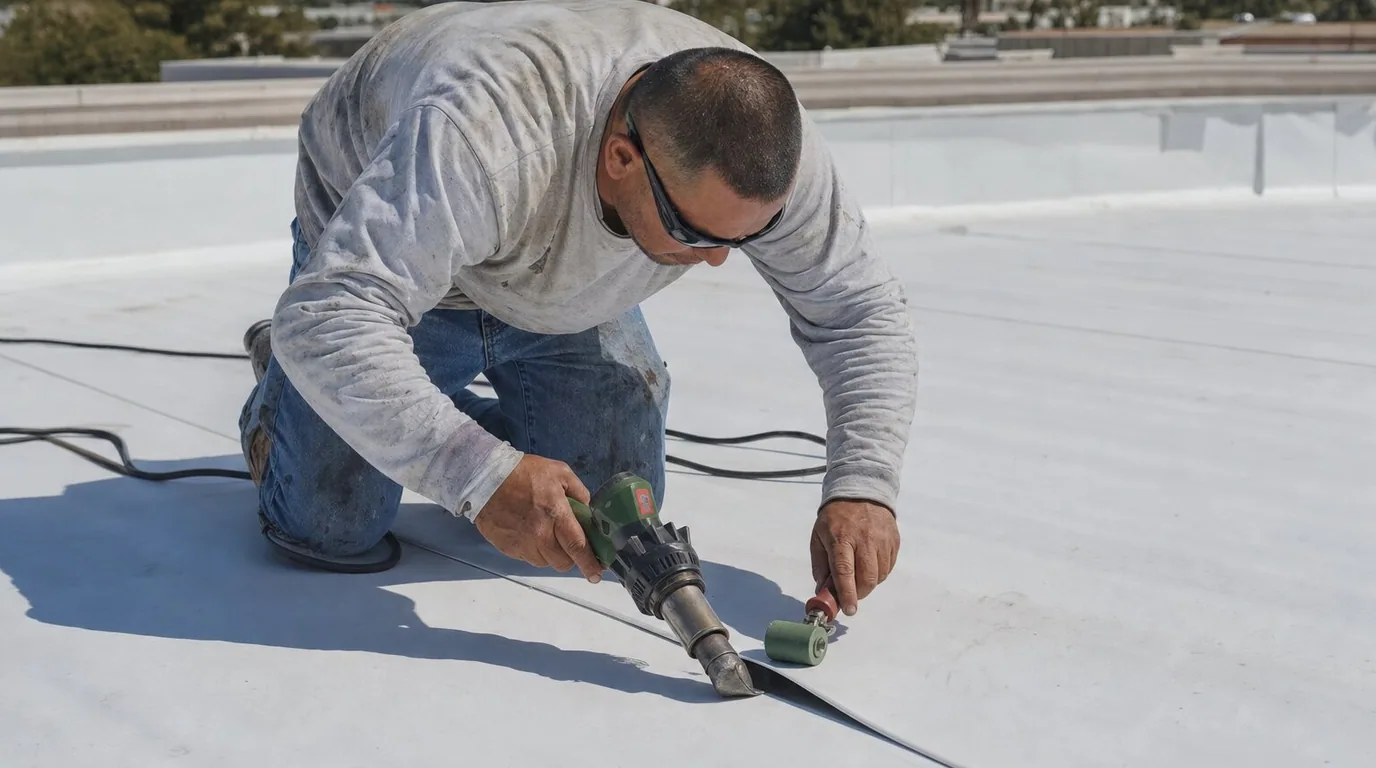
A patch or flashing repair can be appropriate when the surrounding material is sound and the defect has a clear limit. We identify the roof system, prepare the surface, and tie the repair into stable material. At a curb, the scope follows the flashing transition beyond the visible corner. At a metal seam, we inspect adjoining panels and fasteners before deciding what must be reset or replaced. The proposal names the materials, preparation, repair area, and any condition that would require approval to expand.
If insulation may be wet, a controlled test opening can show where removal should stop. We photograph the layers, mark the test location, and separate confirmed quantities from allowances. A local surface repair does not dry concealed material. Where findings extend beyond one detail, the owner can compare a broader restoration or replacement with the same roof sections and access assumptions. Commercial roof repair can address bounded failures; a replacement scope is evaluated when the assembly or moisture findings support a larger project.
For active water entry, temporary protection may reduce immediate exposure while the permanent detail is planned. We state what the temporary measure covers, what remains open, and when the roof can be revisited. The closeout distinguishes a temporary cover from completed repair work so the property manager can track the next action.
How Do Weather and Access Change the Schedule?
Spring is the busiest severe-weather period in the broader DFW market. Regional reports include hail, damaging wind, flooding, and tornado activity in most years, but that calendar is a reason to inspect, not a finding on a Sachse roof. We use the property's post-event observations to check impact, lifted perimeter metal, separated seams, punctures, and wind-blown material. The event report helps set timing; the roof walk establishes the observed condition. A storm-damage inspection can document the work area before repair quantities are set.
Wind at roof height, rain timing, surface moisture, and product requirements can change which tasks are safe that day. We check the forecast and the roof surface before opening a section. If a seam repair needs dry material or a coating needs suitable conditions, we protect the boundary and move that task to a workable window. The site contact receives an updated sequence rather than an incomplete closeout.
Cost and duration depend on measured area, roof height, assembly, lift access, material availability, moisture or deck findings, and the number of work windows. We confirm parking, deliveries, occupant notices, and equipment constraints before scheduling. If conditions change after the first visit, the proposal identifies which assumptions need to be reconfirmed.
What Should the Property Manager Keep?
The closeout lists the roof section, repair limit, preparation, materials, and photos. We annotate the plan with adjacent drains or penetrations that affected the scope and note any test result or access item still pending. If moisture or deck conditions were tested, the record distinguishes measured findings from an allowance or an area that remains untested.
That file helps a future manager compare a new leak with prior work. It also separates completed repair from maintenance or a capital decision that has not been approved. A well-labelled roof record can organize condition notes and completed scopes across planning cycles.
To schedule commercial roofing in Sachse, send the property address, roof plan, symptom or storm timeline, site contact, and safe access window. We will confirm roof entry, inspect the reported area, and explain the repair options supported by the field findings.
Commercial Roofing Questions
Does Highway 78 development tell you what roof a property has?
No. The corridor has reinvestment and redevelopment priorities. We identify the installed roof, its condition, and access requirements at the actual building before recommending work.
Can a repair be scheduled around business hours?
Yes, when the property contact confirms a safe access route and workable window. We can divide the roof into sections and list what must be protected or closed at each shift.
What should we send before the inspection?
Provide the address, roof plan if available, symptom timeline, interior location, site contact, and any lift, delivery, or equipment restrictions. That helps us confirm a suitable visit.
How do you handle water that has reached insulation?
We identify a test area and explain what the result will change. If wet material is found, the repair boundary includes removal and restoration to sound layers, with quantities documented before expansion.
Will a storm report determine the repair price?
The report helps focus the inspection, but price follows measured damage, system details, access, material, and any concealed conditions. We document those drivers before setting the work scope.
Arrange a Commercial Roof Inspection in Sachse
Send the property address, roof plan, reported condition, access contact, and operating window. We will inspect the approved area and return a documented repair path.
Work planned around the building and its daily operations.