
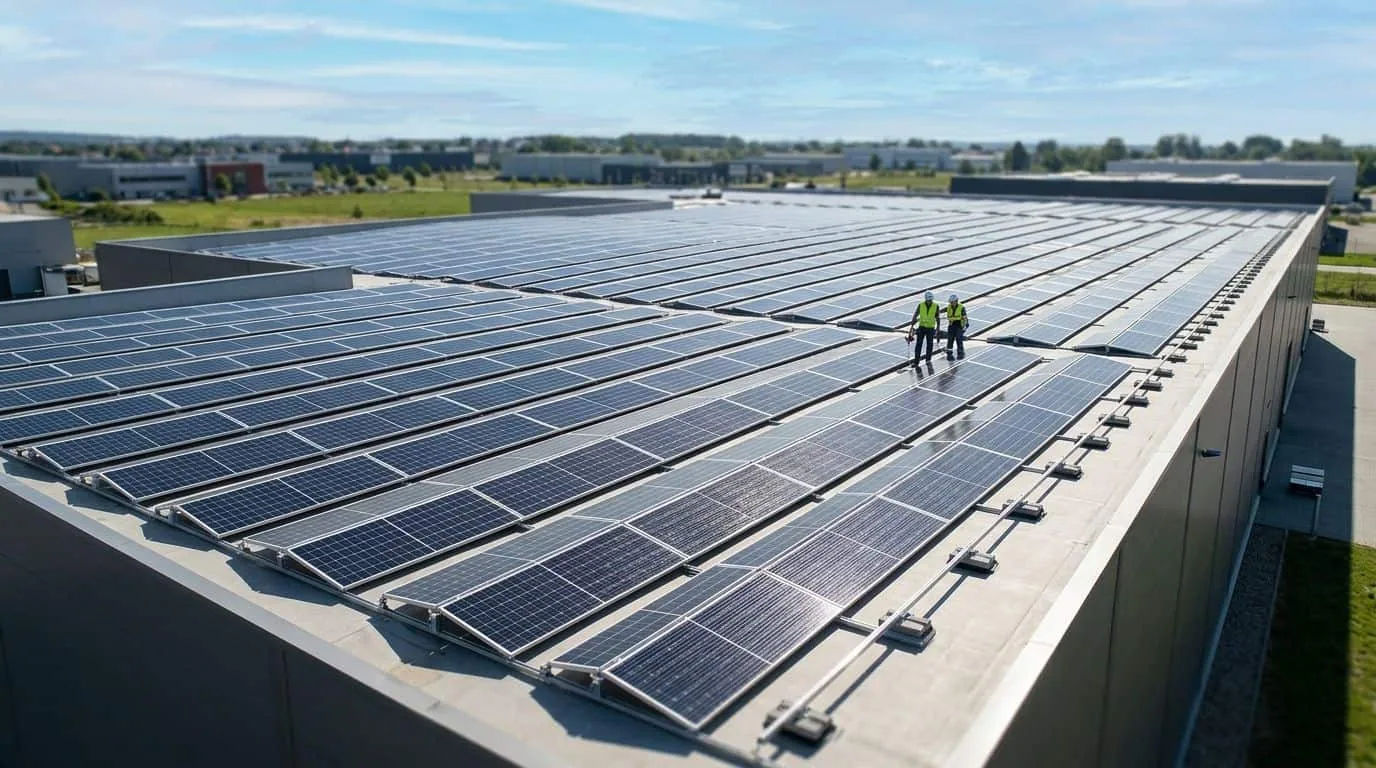
Solar-Ready Commercial Roofing in Mesquite, TX
A solar array can outlast the roof below it. Before panels cover seams, drains, or repair areas, we inspect the roof and set a plan for both systems. That review checks membrane condition, insulation, slope, penetrations, attachment routes, and future access. We coordinate the roof scope with the structural engineer and solar installer around confirmed loads, penetrations, and service paths.
Mesquite's industrial and commercial districts put different demands on roof access. The Skyline Logistics Hub area includes manufacturing and distribution uses near Big Town and Town East Boulevards, where material staging can affect loading windows. Urban District 30 is an approved industrial business-park development close to Interstate 30 and Republic Parkway. Those area facts do not establish a roof's solar capacity; each building needs its own assessment. A solar-ready roof review near Skyline Logistics Hub can coordinate the membrane survey with facility access. We start with the roof plan and the project schedule, not a panel layout alone.
Will the Roof Remain Serviceable Under Panels?
We inspect the roof's age and condition, prior repairs, moisture, attachment, seams, and drainage before recommending a solar sequence. A roof with active leaks or wet insulation should be corrected before an array limits access. We mark areas that need repair or replacement and identify the maintenance route that must remain clear. The owner can then compare installing solar now with completing roof work first.
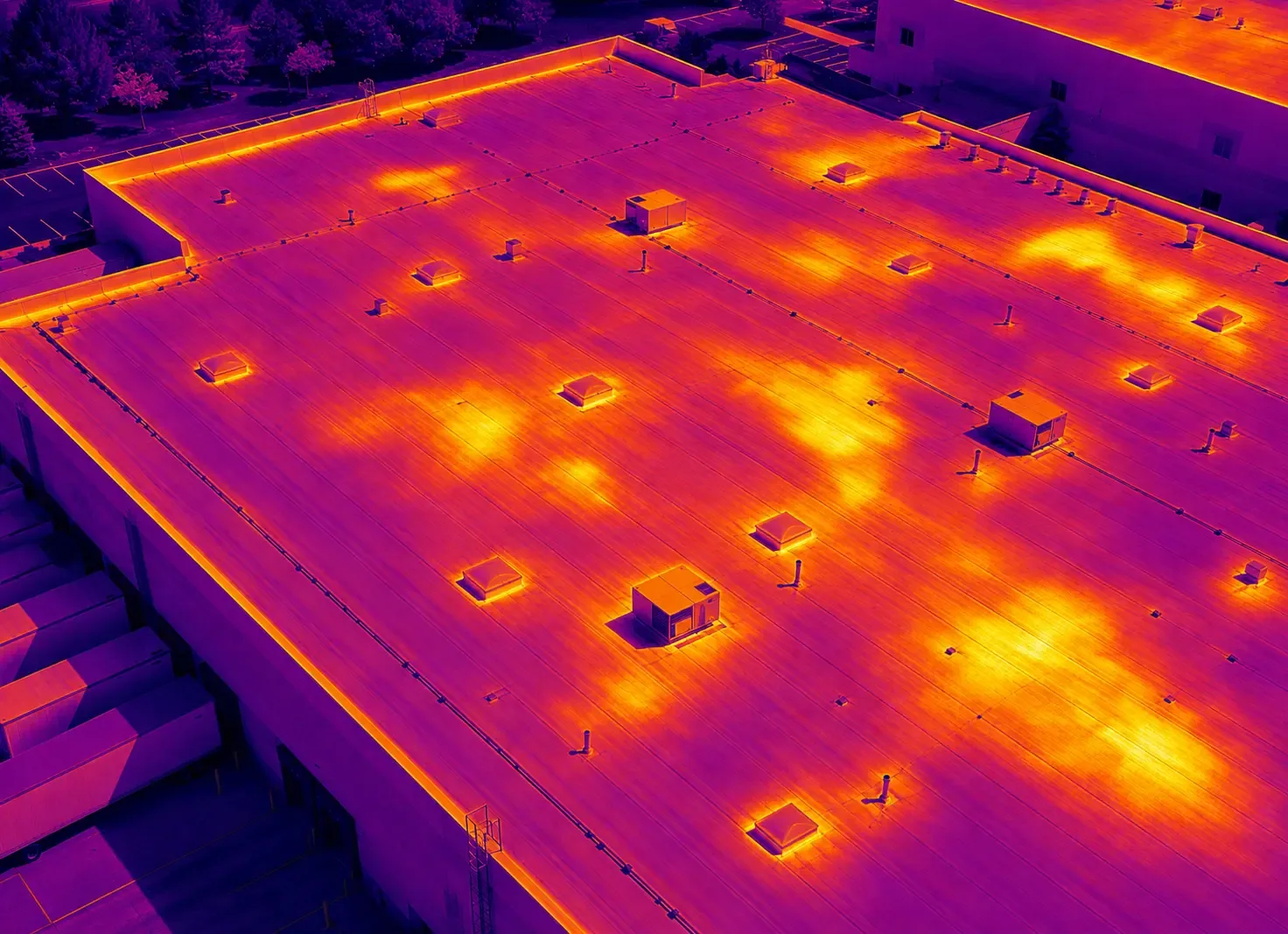
Panel rows can shade membrane and make later inspection more difficult. Walk paths, drain access, perimeter clearance, and routes to mechanical equipment need to be considered before the array is placed. We check whether the proposed layout blocks scuppers or hides seams that require periodic observation. A roof condition inspection can map defects and confirm where the membrane remains serviceable. If moisture is suspected, moisture mapping and test cuts can narrow the affected area before solar work begins.
How Will the Array Attach to the Roof?
Attachment may use ballast, mechanical connections, or another system selected by the solar and structural teams. Each option affects the roof differently. We review the proposed attachment locations, flashing needs, and roofing system with those teams. Roof work can prepare sound membrane and protected transitions, but the structural engineer must determine capacity and the solar contractor must define its equipment. We record the interface so responsibility stays clear at penetrations and supports.
Where penetrations are proposed, each needs a compatible flashing detail tied into the existing roof membrane. Conduit and supports should not cross drains or create new low points. The curb and support review can coordinate roof transitions for equipment bases and pipe supports. A drainage assessment can keep outlets reachable after the array layout is set. If the project uses a membrane recover or replacement, roof replacement planning can place curbs and attachment details before the new surface is installed.
Urban District 30's industrial business-park plan is near the Interstate 30 and Republic Parkway area. For any property there, the roof's actual deck, framing, and membrane remain the evidence for a solar-ready scope. A commercial roofing review in Urban District 30 can document the roof details for the owner and project team without assuming structural capacity.
Should Solar Follow Roof Replacement?
If the roof needs extensive repair, installing panels first can make later access and membrane work harder. We compare the roof's remaining service condition with the solar schedule and identify which areas need attention before the array. A recover may be suitable in some situations, while wet or unstable material may call for removal. The roof contractor documents those conditions; the owner and project team decide how they affect the overall investment sequence.
North Texas spring storms can bring hail, damaging wind, and heavy rain across the Dallas-Fort Worth region. The regional weather pattern does not show what a particular roof has sustained. We inspect for actual damage and account for a future repair route beneath or around the panels. The storm repair assessment can address confirmed damage, while a recover feasibility review can evaluate an existing membrane that may remain suitable.
Where one project includes several buildings, the multi-building roof program can sequence surveys and repairs by site. Mesquite properties near the IH-20 Business Park may have loading and cross-dock activities, but a facility's actual schedule comes from its contact. We plan roof openings and material moves around the project's confirmed work windows.
Who Owns Each Roof Interface?
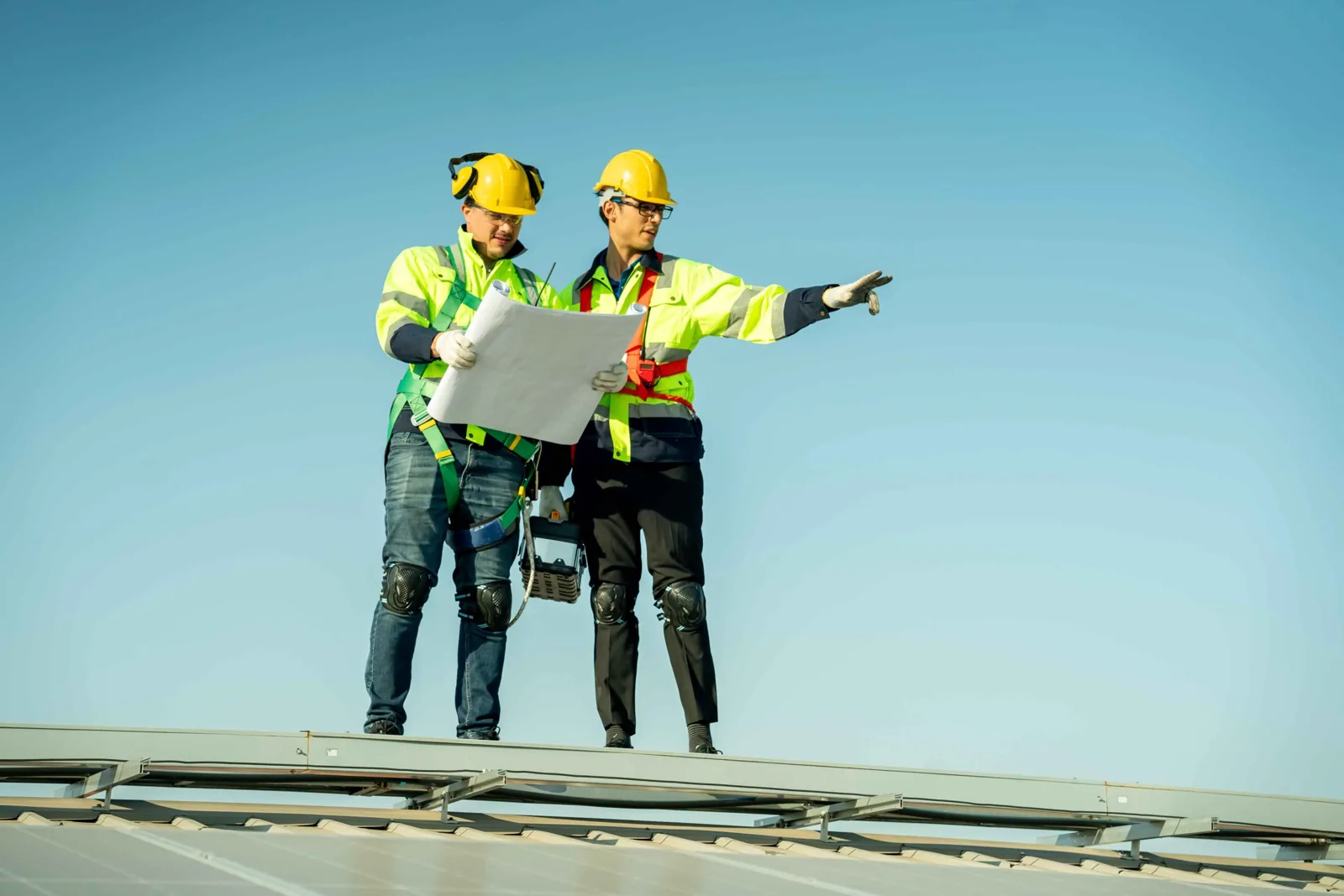
Before work begins, the owner, roofer, solar installer, and structural engineer should identify who handles each attachment, penetration, flashing, and future repair. We define where roofing work ends and solar work begins. That avoids an unflashed conduit, a support installed through a finished membrane without coordination, or a panel row blocking a drain. The plan shows temporary protection and the dry-in point for each shift.
Equipment shutdowns, crane access, staging, and interior protection may also affect the sequence. In a facility near Big Town Boulevard, a material delivery can conflict with outbound freight. The facility contact sets the loading window and lift route. A roofing sequence for an active building can coordinate notices and access boundaries. If solar contractors need roof access after closeout, their route should avoid seams and keep drains available for inspection.
We retain roof photos, test locations, repair limits, and membrane information with the closeout record. The solar project file should identify the final panel layout and attachment points so future roof work can be planned around them. Changes in array location should be sent to the roofing team before supports move or new penetrations are cut.
What Makes a Roof Ready for the Next Phase?
A useful handoff identifies the inspected roof areas, completed repairs, membrane condition, drainage access, and unresolved items. We show where a future penetration would need flashing and where access must remain open. The roof is ready for the next phase only within the work boundary that was inspected and repaired. Structural capacity, electrical design, panel output, and project economics remain with the qualified members responsible for those decisions.
After installation, a roof maintenance visit can check accessible membrane, drains, and flashing around the array. If the owner needs a long-term view, a condition report can preserve baseline photos and remaining work. We keep the record practical: which roof section was reviewed, what changed, and where the next inspection can reach the membrane.
Commercial Roofing Questions
Should we replace the roof before installing solar panels?
We inspect the membrane, moisture, attachment, and repair history, then show which areas are serviceable and which need work. If a roof is near replacement condition, panels can complicate future access. The owner compares roof life, solar schedule, and project constraints with the design team. We do not decide structural capacity or project economics from a roof inspection.
Can you confirm that the structure will carry a solar array?
Structural capacity is determined by the structural engineer using the building information and proposed array. We can document the roof assembly, membrane, deck observations, and attachment interfaces for that review. Our scope can prepare flashing and roof surfaces, but it does not substitute for engineering approval. The project should keep those responsibilities clear before equipment is staged.
What roof details should the panel layout avoid?
The layout should preserve drain access, scuppers, roof hatches, equipment service routes, and membrane areas that need inspection. It should identify every planned penetration and support. We compare the proposed plan with the roof surface and flag conflicts before installation. The solar team can then adjust the array or coordinate a compatible roofing detail.
Can a roof be coated before solar is installed?
A coating can be evaluated only if the existing assembly is suitable, dry, and prepared for that system. We check adhesion, seams, drainage, and the future attachment method. The solar team must confirm compatibility with its supports and work sequence. If the roof needs replacement or wet insulation removal, those items should be resolved before a reflective finish is considered.
What should the roofing closeout provide to the solar installer?
Provide a roof plan with repair areas, membrane type where identified, photos, drain locations, and details around curbs or penetrations. The installer should return the final array and attachment plan for the roof record. That creates a shared reference for service access and future repairs. Any scope left incomplete should remain visible in the handoff.
Put the Roof Review Ahead of Panel Placement
Send the roof plan, proposed array layout, repair history, and project schedule. We will inspect the assembly and identify roof work, access routes, and interfaces that need coordination before panels cover the surface.
Work planned around the building and its daily operations.