Duro-Last Commercial Roofing in Mesquite, TX
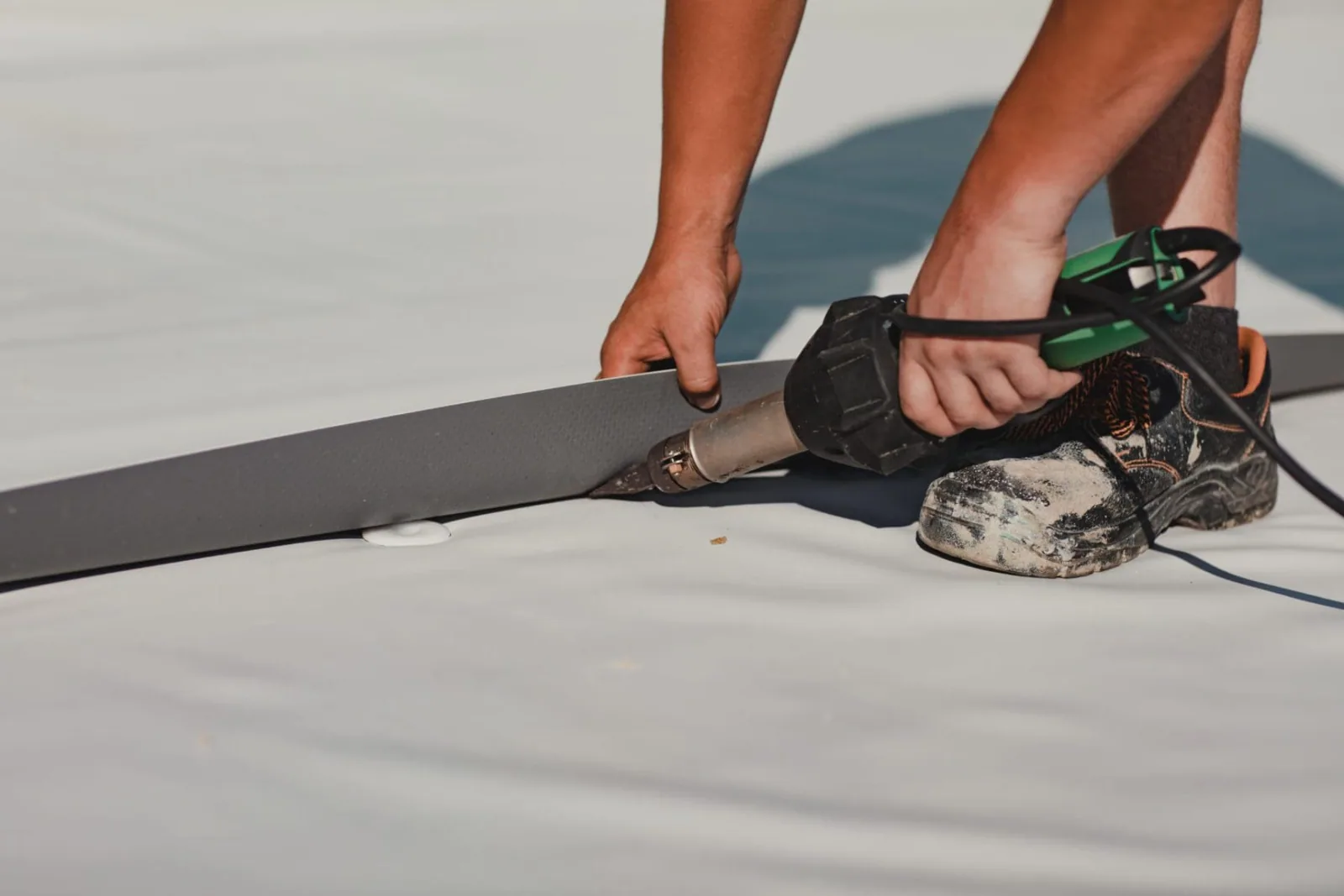
A prefabricated PVC detail can need field adjustment when a curb, wall, or drain differs from the drawings. We check the sheet, welds, terminations, and substrate before opening the roof. Duro-Last systems use PVC membrane and custom-fabricated components. Project records and field conditions confirm what was supplied and how it was attached. We also inspect drainage and prior patches so a replacement detail does not conceal a second entry point. Each finding is photographed.
Mesquite's Alcott Logistics Station district is planned for industrial buildings west of the airport and southwest of Scyene Road. A repair at a distribution property must protect inventory and respect the loading schedule. We set an access window and separate temporary water control from permanent seam work. A PVC roofing assembly inspection begins with the sheet and each field transition.
Does the Detail Match the Roof?
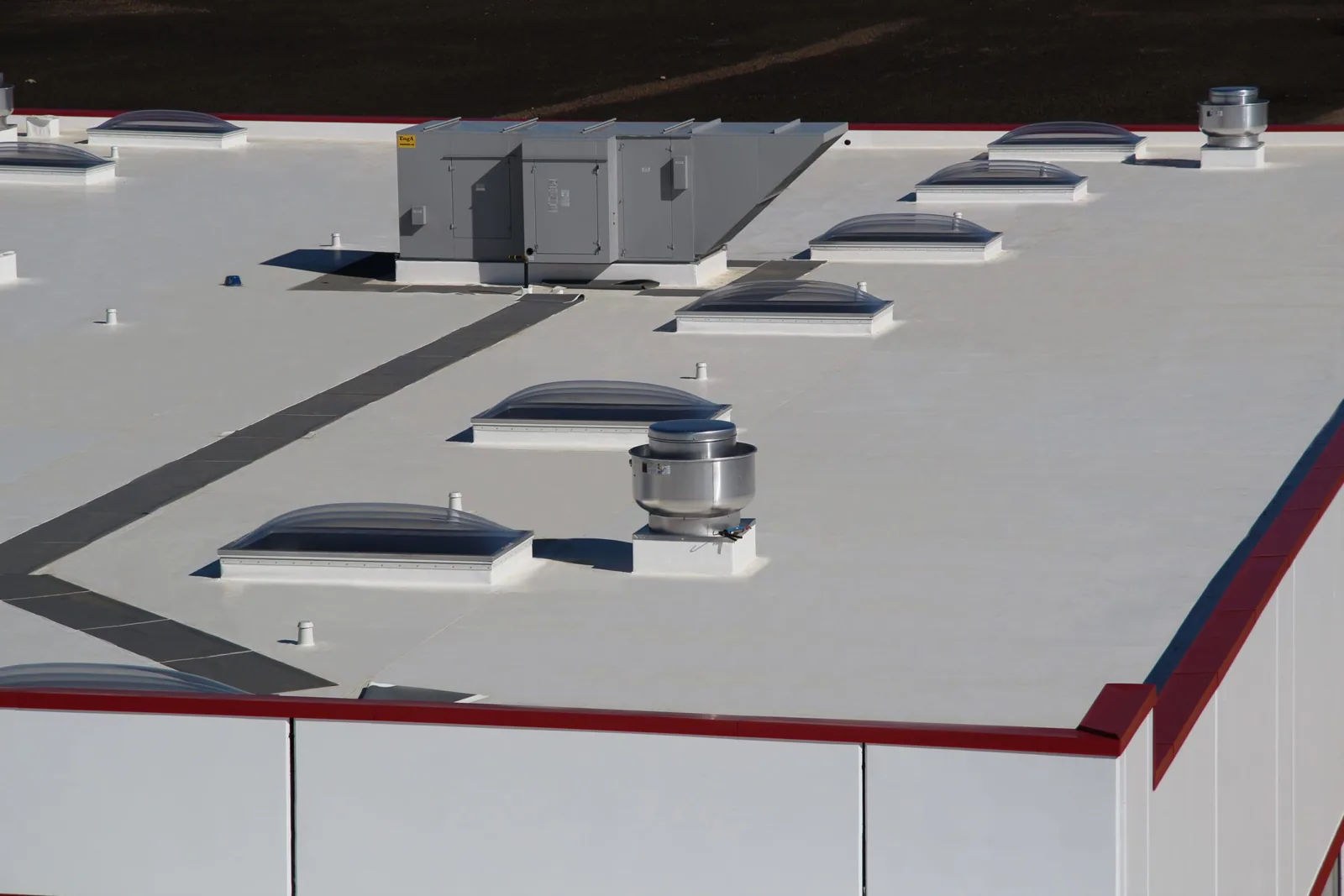
We compare the curb or drain with the roof plan, then look for wrinkles, open welds, loose terminations, and cuts around equipment. A prefabricated piece can reduce field seams, but it cannot correct a shifted curb or a flange that differs from the order dimensions. We check corners and edges before treating a gap as a surface defect.
The crew confirms attachment and surrounding sheet condition. A probe tests weld edges; a test opening can reveal wet insulation. If the PVC was patched before, we identify the patch material and confirm a compatible weld instead of judging by color.
Seagoville borders Mesquite and includes planning for the Environmental Way Industrial Park and downtown revitalization. We inspect each facility's roof records, staging path, and affected interior before scoping Duro-Last repair. The Seagoville commercial roof work area is place-based; the repair limit stays specific to the building.
Where Does the Leak Begin?
A leak near a prefabricated curb does not prove that the curb caused it. Water can enter at a weld, move through insulation, and emerge elsewhere. We trace uphill from the interior symptom and inspect nearby laps, penetrations, drains, and edges. A roof inspection with section-by-section findings records the symptom and related details.
If moisture may be trapped below the sheet, a survey can select test locations and an opening confirms the assembly. Wet insulation must be removed to a sound boundary. We photograph the layers and rebuild the detail to match the verified system. The record distinguishes an isolated penetration issue from wider membrane damage.
Spring storms in Dallas-Fort Worth can bring hail and damaging wind, but that pattern does not establish what happened at one address. After a reported event, we inspect edges, fasteners, welds, and corners for movement or impact. A loose edge-metal piece is a separate finding from a prefabricated detail.
What Can Be Repaired Without Widening the Scope?
A repair can stay small when PVC is sound around the defect, attachment holds, and insulation is dry. We prepare the sheet, weld compatible material to a clean surface, then probe the cooled edge and photograph the boundary. Corners need a close check because water can pass a loose termination.
If a curb is out of square or differs from its prefabricated component, the detail may need rebuilding. We check dimensions, base condition, flashing height, fasteners, and equipment clearance. A curb flashing repair corrects a failed transition; drain and scupper work addresses another connection. The scope identifies what was restored.
Summer afternoons in Dallas-Fort Worth regularly climb into the 90s in July and August, and readings can move past 100 amid humid conditions. That affects the safe work window and exposed surface condition, not the diagnosis. We inspect welds and attachment, then follow the system instructions.
When Does the Roof Need a New Assembly?
Replacement enters the discussion when failures repeat, the membrane has lost strength, attachment is loose, or wet insulation is widespread. We map affected areas and compare section repair with tear-off. A recover is considered only after checking layers, drainage, structure, and project rules. The recommendation marks what must be removed and where new details tie.
Sunnyvale's planning work addresses commercial and employment areas, transportation, infrastructure, and future land use. That context may matter when roof work coincides with building improvements, but it does not tell us the roof type. We verify the assembly and timing requirements. A Sunnyvale commercial building roof plan begins with its roof records, access route, and occupied hours.
Duration and cost depend on tear-off, deck repairs, insulation, crane access, and details needing new flashing. We check custom-fabricated components against field dimensions and plan dry-in sections that can close within the shift.
What Should the Duro-Last Record Include?
The closeout notes the membrane and attachment observed, repaired detail, material used, and any area excluded. Photos show the curb before repair and after the weld is checked. We mark the roof plan and list concealed insulation or deck conditions still requiring attention.
We confirm drainage remains open, edge transitions are secure, and loose material is removed. The record can note prefabricated dimensions checked in the field and adjustments during installation. A roof condition report with photographs helps ownership see which findings were addressed.
Other PVC assemblies require their own review. A Sika Sarnafil system and Versico membrane should match their records, attachment, and repair materials. Send the leak timeline, roof plan, prior notes, photos, and safe access window. We will check the Duro-Last assembly and set the repair boundary. That keeps the next service visit tied to an actual detail and its repair history.
Recurring seam issues can be tracked during maintenance by roof section and reported before a later wet-weather call.
Commercial Roofing Questions
Can a Duro-Last prefabricated detail be repaired in the field?
It can be repaired when the existing sheet and detail are identified and the repair material is compatible. We inspect the weld, corner, curb base, and nearby attachment, then prepare the surface and complete a field repair where conditions allow. If the component no longer fits or the substrate is wet, the scope may require removal and rebuilding of the transition.
How do you confirm the correct Duro-Last materials are on the roof?
We compare project records with labels, visible membrane, attachment, and details in the field. Earlier repairs can leave different materials on the same roof. If records are incomplete, we document what can be identified and avoid assuming a patch is compatible by color or appearance alone. A test area can confirm the weld approach before the repair proceeds.
What should we do if water is entering around a curb?
Protect the interior area first, then report the leak location, equipment schedule, roof access, and any active operations below. We inspect uphill from the symptom and check the curb flashing, welds, fasteners, and nearby seams. Temporary protection can control water while the inspection determines whether the detail or another roof section is the entry point.
Does custom fabrication remove the need for field measurements?
No. The roof and curb can differ from the original drawings after equipment changes or prior repairs. We compare the supplied component with field dimensions, corners, base condition, and required clearances before welding it in. A fit check helps prevent a prefabricated piece from being forced onto a detail that needs correction first.
When should a Duro-Last roof be replaced instead of patched?
Recurring leaks across sections, weakened attachment, or moisture through the insulation can move the scope beyond a patch. We also check drainage, edges, and existing layers. The written recommendation separates confirmed repair from replacement and marks any condition concealed until the roof is opened.
Check the Detail Against the Roof
To start, send the facility roof layout and the date sequence for the leak. Include interior and roof photos, prior work notes, the person who controls roof access, and the window when operations can accept a crew. We will inspect the Duro-Last details and report a repair boundary supported by field findings.